
PTUN Expert: Licensed Glass Lift Project Cannot Be Arbitrarily Halted
Investment and capital placement law expert Faisal Santiago has stated that a project which has already obtained a permit cannot simply be stopped without a legal basis. According to him, halting a project should begin with a written notice or warning if suspected violations are found.
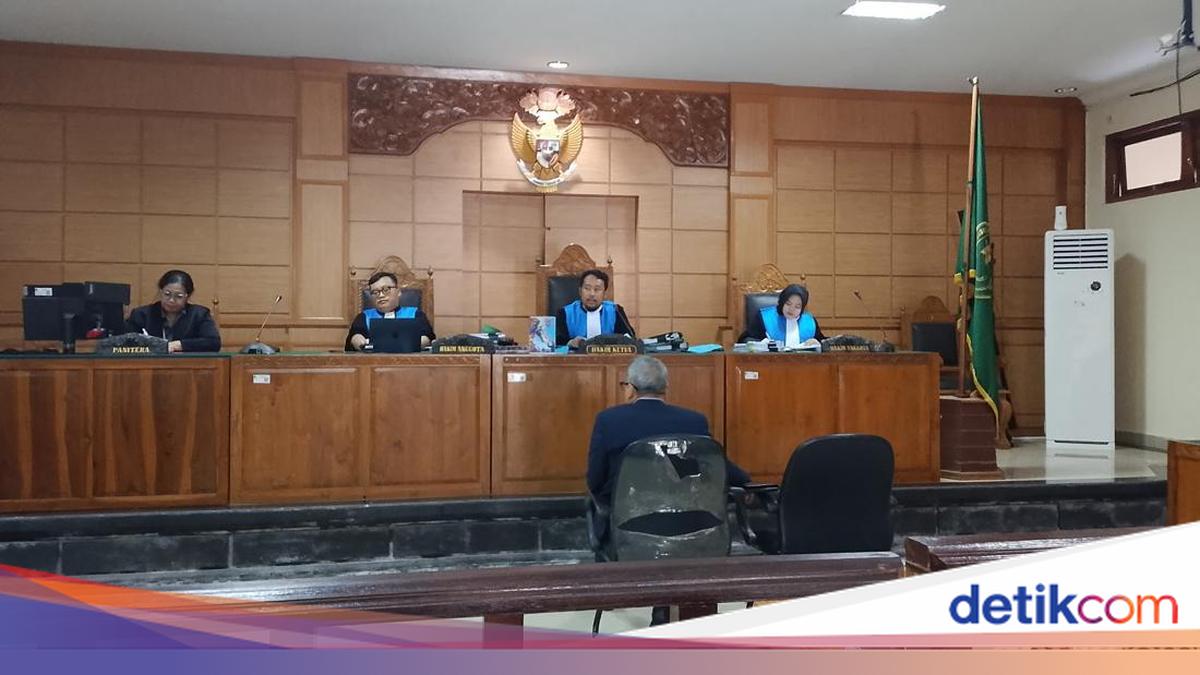
Faisal expressed this view whilst serving as an expert presented by the plaintiff, PT Indonesia Kaishi Tourism Property Investment Development Group, during a hearing on the lawsuit over the glass lift project at Kelingking Beach, Nusa Penida, Klungkung Regency, at the Denpasar State Administrative Court (PTUN) on Tuesday (21/7/2026).
Before the panel of judges, Faisal explained that he had been asked to provide an opinion on aspects of capital investment and investment licensing, particularly regarding a project that had already secured a permit but was subsequently halted during the construction process.
According to Faisal, foreign capital investment (PMA) refers to Law Number 25 of 2007 on Capital Investment as well as provisions under the Job Creation Law. He said the licensing system through the Online Single Submission (OSS) was designed to simplify bureaucracy whilst providing legal certainty for investors.
For that reason, Faisal said, a permit would not be issued if all administrative requirements had not been fulfilled.
“As long as the requirements have been met, the licensing process will proceed. Moreover, PMA investment through OSS applies the precautionary principle,” Faisal said.
Project Cessation Must Follow Procedure
Faisal said a permit that has been issued remains, in principle, valid as long as it has not been revoked through a legal mechanism. Therefore, the halting of the project — which, according to the plaintiff’s legal counsel, had reached approximately 80 per cent of construction — must have a legal basis and follow administrative procedures.
“If a permit has been issued after fulfilling the requirements, then legally that permit is valid. If construction is already under way, why should it then be stopped? There must certainly be a legal basis for it,” he said.
He also stressed that the sealing of the site by the Civil Service Police Unit (Satpol PP) does not automatically revoke a permit. According to him, sealing is an act of administrative order or guidance, whereas the revocation of a permit must be carried out through the applicable legal mechanism.
Faisal argued that if suspected violations are found, government administrative officials should first issue a written notice or warning to the permit holder so they are given the opportunity to make corrections.
“As government officials, if deviations are found, they should be notified first so they can be corrected. If the opportunity is given and still not fulfilled, only then can action be taken in accordance with the provisions,” he said.
He added that cessation measures that do not follow administrative procedures have the potential to give rise to administrative law problems. According to him, every action by a government official must be guided by the principle of legal certainty, carried out carefully, must not exceed their authority, and must continue to respect the rights of the party that has obtained the permit.