
PTPN Plantation Holding Targets Sugar Production of 5.46 Million Tonnes by 2030 as Digitalisation Accelerates
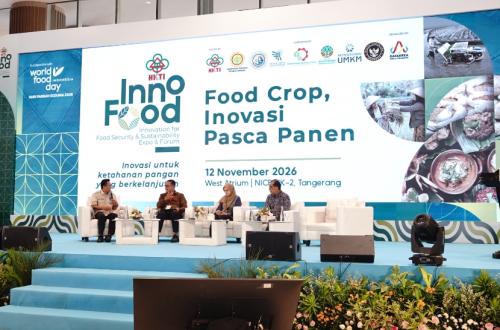
JAKARTA – PTPN III (Persero), the Plantation Holding, is targeting sugar production of 5.46 million tonnes by 2030 to support self-sufficiency in industrial sugar. Alongside increasing output, PTPN Group aims to raise plantation productivity by up to 15 per cent through digitalising operations, from estates to marketing.
Rizal H. Damanik, PTPN III (Persero)’s Director of Production and Development, outlined the plantation transformation strategy at INNOFOOD 2026, held on 11–14 November 2026 at NICE PIK 2, Banten. The event’s theme was “Innovation – Innovation for Sustainable Food Security”.
Rizal said PTPN Group is targeting an increase in sugar production from 882,000 tonnes in 2025 to 2.16 million tonnes in 2028 to support self-sufficiency in consumer sugar. Production is then expected to reach 5.46 million tonnes in 2030 to meet industrial sugar demand.
“PTPN Group is targeting an increase in sugar production from 882,000 tonnes in 2025 to 2.16 million tonnes in 2028 to support self-sufficiency in consumer sugar. In 2030, production is targeted to reach 5.46 million tonnes to support self-sufficiency in industrial sugar,” Rizal said in a written statement in Jakarta on Sunday (15 November 2026).
As a step towards that target, PTPN Group’s sugar production in 2026 is forecast to reach 1.2 million tonnes, or around 43.6 per cent of national consumer sugar requirements. Through PT Sinergi Gula Nusantara (SGN), PTPN Group partners with sugar-cane farmers to produce consumer sugar.
“Co-operation between state-owned enterprises on the marketing side helps distribute sugar from factories in line with market needs, while maintaining price stability for the public,” Rizal added.
The sugar business development is in line with the government’s mandate for PTPN Group to develop and add downstream processing to 15 strategic plantation and agricultural commodities. The mandate forms part of the company’s transformation to strengthen supply chains from upstream to downstream, while supporting food and energy security.
Beyond increasing production, PTPN Group is relying on digitalisation to improve operational efficiency. The use of technology on plantations, in factories and in marketing is projected to raise productivity by 8–15 per cent. At holding-company level, digitalisation and improved operational efficiency are also expected to generate savings of up to Rp2.2 trillion.
One application is the transport of fresh fruit bunches (FFB) from oil palm estates to factories. GPS-based monitoring enables staff to track deliveries in real time, helping reduce potential losses or shrinkage during transport.
“Staff can now monitor them in real time via GPS. Shipments of FFB from plantations to factories can be tracked, reducing potential losses or shrinkage in transit,” Rizal said.
PTPN also uses a business cockpit, a dashboard that displays plantation, factory and marketing performance data on a single screen. The system helps the company identify areas needing attention, speed up action and assess plantation productivity.
Rizal said PTPN’s plantation productivity was improving and could compete with that of similar plantation companies. The operational transformation is also being supported by the renewal and development of human resources across the organisation.
Of PTPN’s nearly 75,000 employees, around 25,000, or one-third, are aged 40 or younger. They contribute at various levels of the organisation, from operational roles to management positions.
“Of PTPN’s nearly 75,000 employees, around 25,000, or one-third, are aged 40 or younger and contribute at various levels of the organisation, from operational roles to management positions,” Rizal said.
PTPN is strengthening young employees’ foundational plantation knowledge and leadership skills to prepare them for greater responsibility. Understanding crop conditions and team activities is considered important so estate leaders can set priorities and make sound decisions in the field.
At INNOFOOD 2026, PTPN Group also promoted downstream processing and stronger collaboration with farmers and state-owned enterprise partners to support national food security.
Source: jawawa.id (https://jawawa.id/newsitem/ptpn-plantation-holding-targets-sugar-production-of-5-46-million-tonnes-by-2030-as-digitalisation-accelerates-1794729071)
Originally published by Republika (https://ekonomi.republika.co.id/berita/toj5ik416/holding-perkebunan-nusantara-bidik-produksi-gula-546-juta-ton-pada-2030-digitalisasi-dikebut), translated from Indonesian