
PTPN I Trials Garlic Planting on 20 Hectares to Support Self-Sufficiency
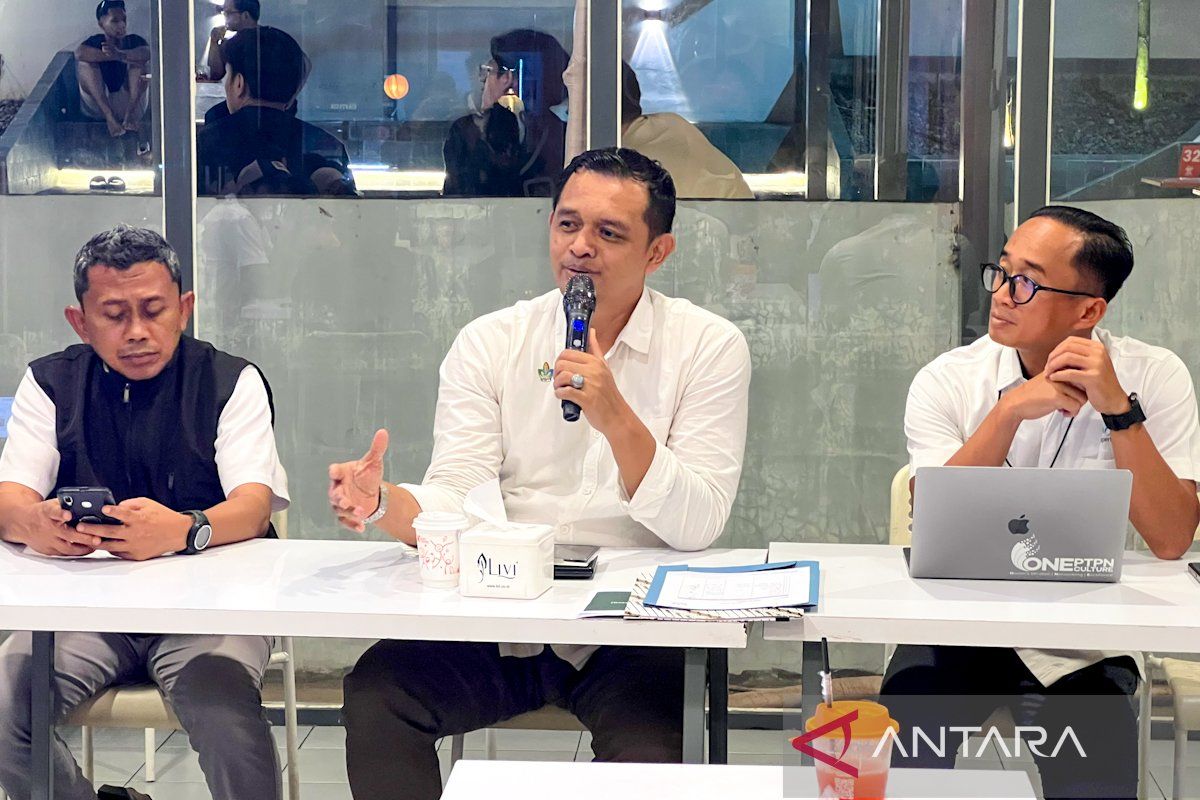
PT Perkebunan Nusantara (PTPN) I has initiated a trial planting of garlic on 20 hectares in the Gunung Mas area of Bogor, West Java, as an initial step to support national food self-sufficiency and reduce import dependency. Corporate Secretary Aris Handoyo stated the programme is part of the company’s commitment to backing the government’s agenda under President Prabowo Subianto to achieve sustainable national food independence. “We are now trying to plant a trial 20 hectares in the Gunung Mas area in West Java. This is a form of PTPN I’s commitment to support the government’s downstreaming efforts, the Prabowo administration through the Ministry of Agriculture, we support it, PTPN I is very supportive,” Aris said during a media discussion in Jakarta on Monday evening.
According to Aris, garlic is a commodity receiving special attention because national demand is still largely met through imports. He explained that developing garlic is not an easy task because the crop requires specific geographical conditions, particularly highland areas with a suitable climate. National garlic production centres have historically been limited and are mostly found in mountainous regions with sufficient altitude to support optimal growth. “Then we have the task of garlic self-sufficiency, garlic is a commodity that is not common in Indonesia, rarely planted. It exists perhaps in Temanggung (Central Java Province) where there is quite a lot because the land is high,” he said.
Therefore, PTPN I chose to conduct a trial first before expanding the planting area to ensure the technical aspects of cultivation and productivity can meet expectations. Aris noted the company does not yet have extensive experience in garlic development, so a learning process is necessary before entering a larger business scale. Beyond cultivation experience, the company is also studying other technical aspects such as seed provision, planting patterns, and the most suitable land management. The 20-hectare trial is expected to serve as an initial foundation for gathering field data that can be used as a basis for further development.
Aris expressed hope that the programme’s success could help reduce Indonesia’s dependence on garlic imports, particularly those originating from China. “The hope for garlic is that it can reduce imports from China in particular. However, locations with suitable altitude are not many. Almost everywhere is lowland. Lowlands are certainly not suitable for garlic,” he explained. PTPN I will also identify company land deemed suitable for garlic development without disrupting existing productive commodities. Land not planted with tea, coffee, or other main commodities could potentially be utilised for garlic development if the trial results show positive prospects.
He added that the Ministry of Agriculture’s target for garlic development is around 5,000 hectares, but the company is choosing a gradual approach to ensure the programme is effective and sustainable. PTPN I is opting for a phased development because garlic cultivation requires adequate human resources, technical experience, and management capability. Data from the Central Statistics Agency (BPS) shows that Indonesia’s garlic imports over the past five years have tended to decline in net weight. In 2021, garlic imports were recorded at 602,175 tonnes. This volume fell to 566,175 tonnes in 2022, a year-on-year decrease of about 6.07 percent. The decline continued in 2023 with a volume of 564,027 tonnes, down 0.38 percent from the previous year. In 2024, imports shrank further to 555,886 tonnes, a 1.44 percent annual decrease. The sharpest drop occurred in 2025, when garlic imports fell significantly to 450,339 tonnes, or about 18.99 percent compared to 2024. By country of origin, Indonesia’s garlic imports throughout 2021-2025 were overwhelmingly dominated by China.