
PTPN I Safeguards Dignity and Economy of Landowning Farmers in Jember
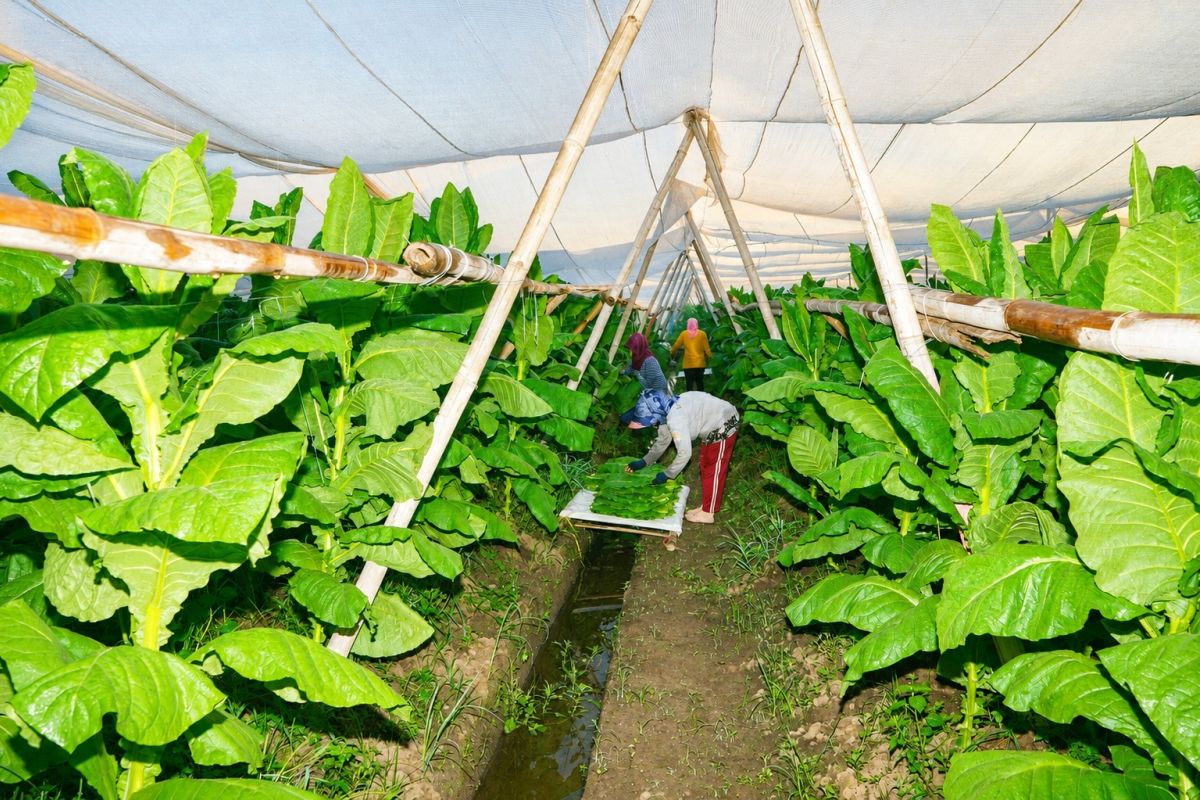
The village of Ajong in Jember Regency, East Java, is further cementing its international reputation as the epicentre for premium shade-grown tobacco (TBN) cultivation produced by PTPN I (Persero) Regional 5. Despite the lucrative export potential, the state-owned plantation company has chosen not to monopolise the foreign exchange earnings. Instead, PTPN I management has opted for a populist approach that favours the people to meet growing global demand. This strategic move is realised through an inclusive, professional, and competitive partnership scheme with the local community.
PTPN I President Director Dr. Abdul Rivai Ras stressed that partnering with local communities is a state mandate that must be carried out. In the context of Jember, PTPN I is embracing paddy and secondary crop farmers to participate in the global tobacco supply chain through a sustainable business model.
“This agribusiness collaboration in Ajong, Jember, is designed as an inclusive and sustainable business model. On one hand, PTPN I strengthens its position in the international market through TBN excellence, and on the other, local farmers offer extraordinary land asset potential. Through a crop rotation scheme, we competitively lease the farmers’ paddy fields, with a full commitment that production and cultivation activities on the ground will empower the landowners themselves. With this dual approach, farmers are entitled to receive rent upfront as well as wages for their work. This approach ensures their ‘praja’, or self-esteem as paddy field owners, remains fully intact. This is a highly productive form of collaboration,” said Abdul Rivai Ras in Jakarta on Thursday (9/7).
The land partnership scheme run by PTPN I Regional 5 in Ajong is projected to become a national pilot for future agribusiness partnership models. Rivai explained that the compensation value for leasing paddy fields in Ajong is considered highly competitive and economically valuable. Although their land is leased to the corporation for export tobacco cultivation, farmers do not lose legal or physical access to their land assets. Landowners remain directly involved in the fields, safeguarding their own assets, and have the opportunity to gain transfer of cutting-edge agricultural cultivation technology.
“Landowning farmers essentially need certainty of yield, security of their assets, and self-confidence before others. Far more importantly, these secondary crop and paddy farmers, who generally still practice traditional cultivation, can now absorb knowledge and direct experience from modern agricultural models, such as science-based smart farming. With this transferred knowledge, PTPN I (Persero) hopes they can become more independent and prosperous in the future,” Rivai added.
Through this massive expansion of the partnership scale, PTPN I positions local landowning farmers as strategic partners in the corporation’s circular economy. This mutually beneficial cooperation bond places the Ajong community as a new centre of economic growth in the national plantation sector. The tangible benefits of this partnership are directly felt by Supardi (48), a landowning farmer in Ajong Village who usually grows rice. He described PTPN I’s initiative to lease villagers’ paddy fields with a labour-intensive pattern as a concrete corporate step in building inclusive collaboration.
“We feel very fortunate with this land partnership programme from PTPN I Regional 5. The compensation payment settled upfront provides us with certainty to meet our family’s needs as well as capital for the next planting season. Moreover, we do not lose our livelihoods because we are still involved in working our own land for a very decent daily wage. This way, we still have a sense of pride and dignity because we are looking after our own land,” Supardi stated.
The inclusive collaboration model initiated by PTPN I continues to receive an extraordinary response from the Jember community. Evidenced by the fact that in every single planting season, high enthusiasm from residents is able to drive the absorption of hundreds to thousands of hectares of paddy fields for lease and cooperation. Through this commitment, PTPN I reinforces its role as a down-to-earth driver of the people’s economic welfare.
Source: jawawa.id (https://jawawa.id/newsitem/ptpn-i-safeguards-dignity-and-economy-of-landowning-farmers-in-jember-1783612412)
Originally published by Antara (Indonesian) (https://www.antaranews.com/berita/5643027/ptpn-i-jaga-praja-dan-ekonomi-petani-pemilik-lahan-di-jember), translated from Indonesian