
PTPN I Fully Supports Acceleration of National Energy Security
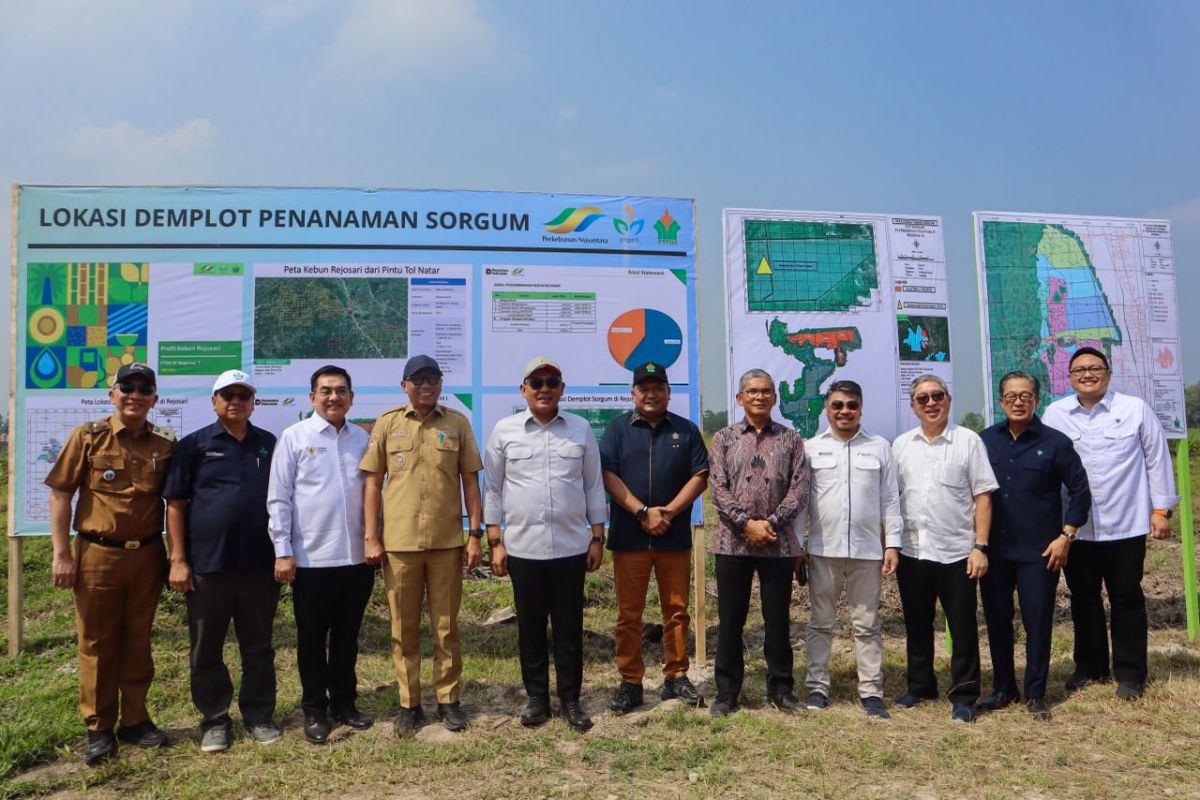
Jakarta (ANTARA) - The Deputy Minister of Investment and Downstreaming, Todotua Pasaribu, inspected the PTPN I Regional 7 site in Rejosari Plantation, Natar, South Lampung, on Tuesday (10/06/2026). Accompanied by the Governor of Lampung, Rahmat Mirzani Djausal, and the President Director of PTPN I, Teddy Yunirman Danas, the Deputy Minister—who also serves as the Deputy Head of the Investment Coordinating Board (BKPM)—stated that PTPN I possesses the necessary resources to support the President’s programme regarding national energy security.
“Food and energy security are Presidential programmes that require acceleration due to their high urgency. The option lies in bioenergy processed from plants. As a state-owned plantation enterprise, PTPN I has the most prepared resources to meet these demands. That is why we are collaborating with PTPN I on this programme,” Todotua told the media during the site inspection.
The President Director of PTPN I, Teddy Yunirman Danas, welcomed the significant trust placed in the company by the central government. In his remarks, Teddy emphasised PTPN I’s full commitment, as part of the Nusantara Plantation Holding, to optimise assets and land to support national energy self-sufficiency, specifically through integrated sorghum cultivation.
“PTPN I is ready to carry out this mandate. The planting of sorghum in the Rejosari Plantation is a strategic step and a tangible contribution from PTPN I in supporting the bioenergy-based downstreaming initiated by the government. We are not only preparing potential land but also ensuring that the management of this sorghum cultivation is conducted optimally, efficiently, and sustainably so that it can immediately produce the renewable energy raw materials required by the nation,” Teddy asserted.
The Governor of Lampung, Rahmat Mirzani Djausal, also expressed his support for the selection of Lampung Province, particularly the PTPN I Regional 7 land, as one of the starting points for this strategic project. He expressed hope that the synergy between the central government, regional government, and this state-owned plantation enterprise could serve as a new economic driver for the local community while strengthening Lampung’s position as a national food and green energy granary.