
PTPN I and Bappenas Accelerate Welfare-Based Plantation Downstreaming in East Java
Jakarta (ANTARA) - PT Perkebunan Nusantara (PTPN) I (Persero), in collaboration with the Ministry of National Development Planning (PPN)/Bappenas, is accelerating the national plantation sector’s downstream agenda through a strategic collaboration to develop coconut, coffee, and cocoa commodities, integrated with the strengthening of social welfare for workers and the community.
This strategic step was realised through a field inspection by the President Director of PTPN I (Persero), Teddy Yunirman Danas, alongside the Bappenas Coconut Downstreaming Programme Acceleration and Planning Task Force Team at the PTPN I (Persero) Regional 5, Kalisat Jampit Estate, Banyuwangi, East Java, on Saturday (27/6).
This field agenda serves as a concrete implementation of the Memorandum of Understanding (MoU) between both parties to accelerate the increase of value-add for plantation commodities at the downstream level to support national economic independence.
During the event, the Chairman of the Bappenas Coconut Downstreaming Task Force, Sukmo Harsono—represented by a Special Assistant to the Minister and representative of the Dwija Pratama Task Force Secretariat—alongside development partners, participated in several activities, including a joint coffee harvest, the distribution of social care programmes, and the handover of employment social security rights.
As a demonstration of care for the environment surrounding its operations, the company implemented the distribution of assistance packages to 11 impoverished individuals and 5 orphans living in the area near the estate.
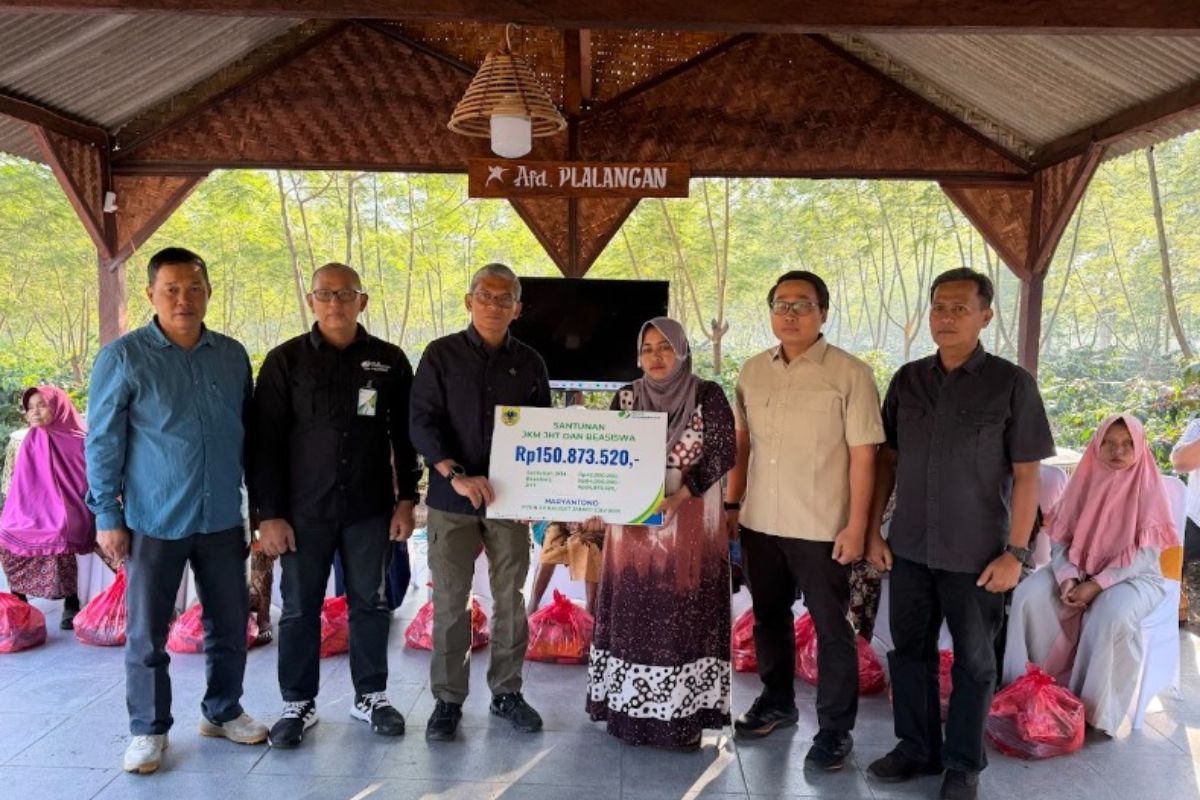
Furthermore, the management of PTPN I, together with BPJS Ketenagakerjaan, symbolically handed over Death Benefits (JKM), Old Age Benefits (JHT), and scholarships totalling Rp150.8 million to the heirs of an employee, Maryantono, from the PTPN I Kalisat Jampit Estate.
President Director of PTPN I, Teddy Yunirman Danas, emphasised that the development of the plantation sector must not rely solely on economic aspects but must also align with social and humanitarian dimensions.
“Plantation downstreaming must go hand in hand with the strengthening of community welfare and protection for workers. Through this activity, PTPN I reaffirms its commitment to providing real benefits to the environment surrounding the estates, in line with the ‘One PTPN One Culture’ spirit which upholds the values of care, mutual cooperation, and sustainability,” said Teddy.
Teddy added that the distribution of assistance to residents near the estate operations is an effort by the company to maintain harmonious relations with the community. Meanwhile, the synergy with BPJS Ketenagakerjaan serves as evidence that social security protection for plantation workers is a top priority for management to ensure security.
The coffee harvest momentum at the Kalisat Jampit Estate also serves as a symbol of the success of managing flagship commodities at PTPN I Regional 5. This area is known as a centre for high-quality coffee production with great potential to be integrated into downstreaming programmes.
Meanwhile, a representative of the Bappenas Coconut Downstreaming Task Force, Dwija Pratama, expressed appreciation for PTPN I’s commitment to overseeing the government’s inclusive downstreaming agenda. According to the representative, PTPN I’s approach, which balances corporate business growth with worker welfare and social protection, deserves to be a national pilot project.
“Bappenas highly appreciates the concrete implementation by PTPN I (Persero) in the field. The downstreaming of plantation commodities will not achieve optimal goals without strengthening the social and community foundations surrounding them. This synergy, involving employment security and social care, proves that the industrial transformation of State-Owned Enterprises (BUMN) in the plantation sector can proceed alongside a commitment to prospering workers and local residents,” said Dwija Pratama.
Through close collaboration between the government, SOEs, BPJS Ketenagakerjaan, and the community, the national plantation ecosystem is expected to become stronger, more sustainable, and capable of providing a wide positive impact for all stakeholders.