
PTPN Develops 10,000 Hectares of Cassava to Boost Downstream Industry and Bioethanol
PT Perkebunan Nusantara III (Persero) is strengthening its role as a driver of the national economy through the integrated development of cassava as a commodity. The move is part of the state-owned enterprise’s efforts to create added value while sustainably improving public welfare.
Through a downstreaming approach, PTPN Group is building a cassava ecosystem from upstream to downstream to support national food and energy security. The development also opens new economic opportunities for farmers and local businesses, in line with the President’s Asta Cita agenda of strengthening food and energy self-sufficiency and promoting inclusive economic growth.
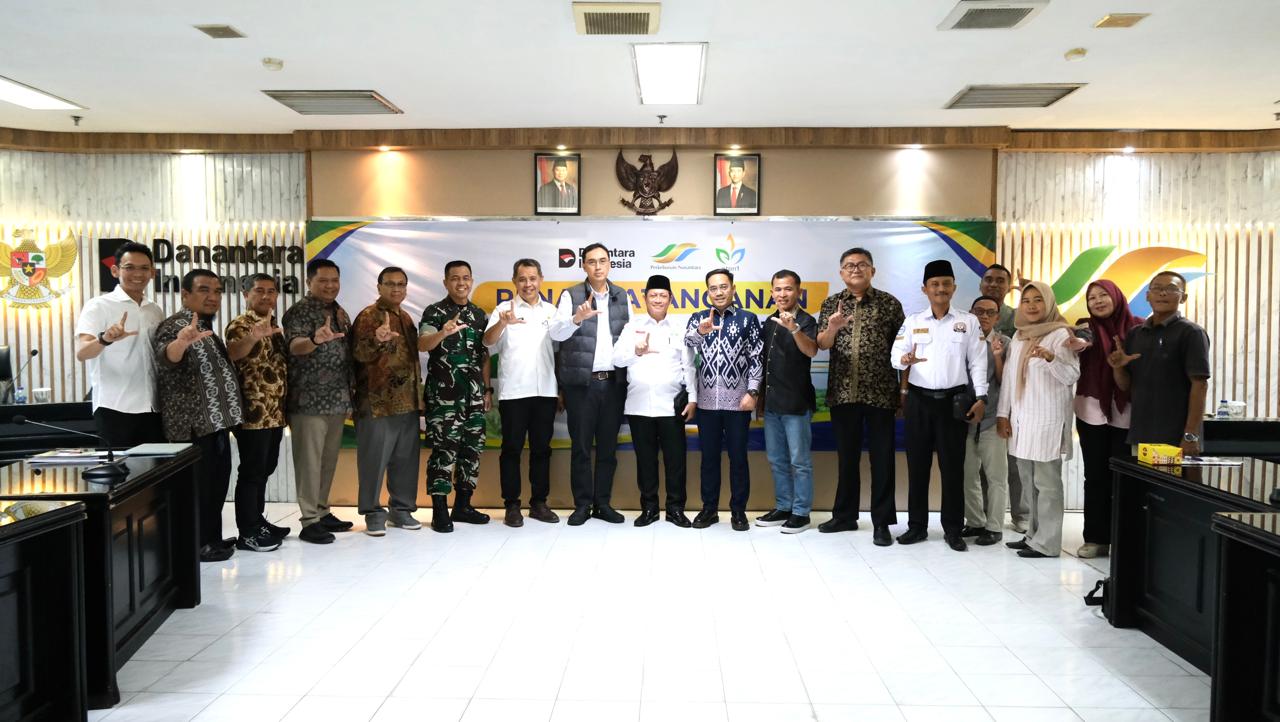
As a concrete step, PTPN III, through its subsidiary PTPN I (Persero), signed a Memorandum of Understanding (MoU) for joint business cooperation with 11 strategic partners comprising private companies, regional-owned enterprises (BUMD), village-owned enterprises (BUMDes), cooperatives, and foundations. The signing took place at the PTPN I Regional 7 Office in Bandar Lampung on Wednesday (12/8).
The MoU was signed by Acting Region Head of PTPN I Regional 7 Iyan Heryanto and witnessed by President Director of PTPN III (Persero) Denaldy Mulino Mauna and Director of Marketing & Asset Management of PTPN I (Persero) Arif Budiman. The cooperation with the 11 partners marks the initial stage of a target to develop 10,000 hectares of cassava land in Lampung Province.
In the first phase, the partners have planned planting on 7,313 hectares, which will be optimised through an integrated cultivation programme. The remaining land will be developed gradually as partnerships expand and land readiness improves.
President Director of PTPN III (Persero) Denaldy Mulino Mauna said the multi-party collaboration reflects PTPN Group’s commitment to building an equitable business ecosystem. He said the role of state-owned enterprises is not only oriented towards achieving land development targets, but also towards improving the quality of life of communities through job creation, technology transfer, and strengthening village economies.
“We are building a complete value chain, from upstream to downstream. On the on-farm side, we focus on land optimisation, cultivation technology, and the development of superior varieties,” said Denaldy.
On the downstream side, cassava development is directed towards the processing industry, including its use as a raw material for bioethanol. The commodity is therefore expected to provide dual benefits for national food and energy security while increasing farmers’ incomes.
Denaldy stressed that the success of the programme depends heavily on collaboration with various stakeholders. PTPN III is ensuring the involvement of the Lampung Provincial Government, BUMDes, cooperatives, BUMD, and the community in building an inclusive value chain.
“We appreciate the support of the Lampung Provincial Government. This synergy is a concrete step to encourage the downstreaming of the region’s leading commodities, create jobs, and strengthen national energy security,” he said.
Director of Marketing & Asset Management of PTPN I (Persero) Arif Budiman said the company is ready to implement the programme in stages, from land preparation, strengthening partnerships, developing cultivation, to integration with downstream industries.
“We are optimistic that this collaboration will have a real economic impact on the community, especially farmers and local businesses. We are committed to making this programme a sustainable modern agribusiness model,” said Arif.
Going forward, the development of the cassava ecosystem in Lampung will be strengthened through research, technological innovation, human resource capacity building, and the expansion of downstream industries. The move is expected to produce value-added products while contributing to food security, energy security, and regional economic growth.