
PTK Combines Coastal Education and Clean-Up for Students at Tangkoko Beach
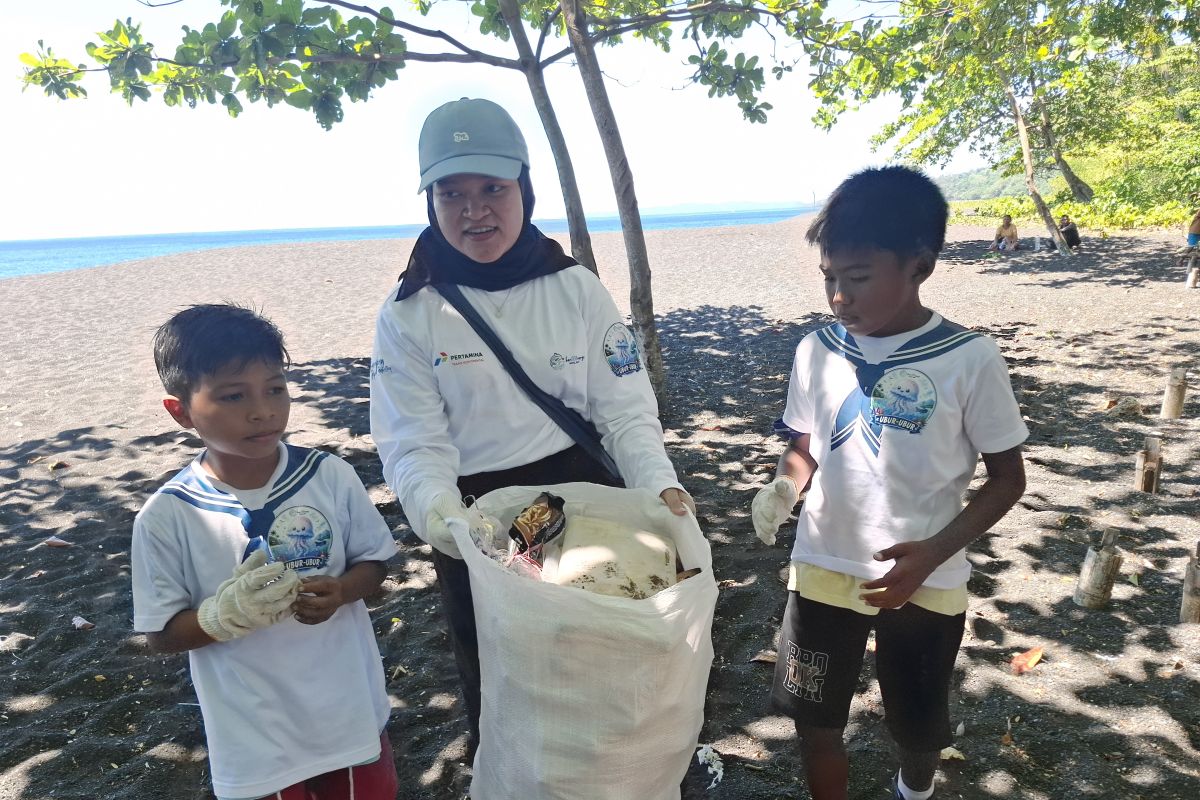
PT Pertamina Trans Kontinental (PTK) combined coastal environmental education with a clean-up of Tangkoko Beach for primary school pupils in Bitung City, North Sulawesi, to foster the younger generation’s care for coastal ecosystems, which also underpin the region’s tourism potential.
Acting President Director of PT Pertamina Trans Continental Eko Cahyadi said the educational element was added so the activity would not stop at waste collection, but would also drive behavioural change in the community from school age.
“Today we are carrying out a Coastal Cleanup aimed at preserving the beach whilst also educating the children that environmental conservation is important for the sustainability of life and of business,” Eko said at the Coastal Education event at Tangkoko Beach, Bitung, on Saturday.
Unlike the previous three years, which focused solely on beach clean-up actions, this year PTK added a Coastal Education component, providing learning materials to pupils on coastal ecosystems, waste management and the impact of plastic waste on marine life.
The learning materials, delivered by the marine conservation organisation Sea Soldier, introduced North Sulawesi’s position within the Coral Triangle region and the importance of building the habit of sorting waste from an early age.
The event involved primary school pupils from around the Tangkoko area, local residents, the Bitung City Government, the Bitung Class I Harbourmaster and Port Authority Office (KSOP), environmental communities, and several Pertamina Group entities.
Eko said Tangkoko Beach was chosen for its ecological value and tourism potential, as well as its proximity to Pertamina’s operational area at the Bitung Integrated Terminal.
According to him, cleanliness and coastal preservation can strengthen the area’s tourist appeal, creating a multiplier effect for the local economy.
“The beach is so beautiful. Bitung has both mountains and coastline in full. This has great potential to be developed into a tourist area, but we must preserve the coastal environment and keep it clean,” he said.
After the education session, participants carried out a beach clean-up as a practical application of the material on waste management and coastal ecosystem protection.
PTK also handed over maritime education books, stationery and waste-sorting facilities to the participating schools to support environmentally friendly habits.
Audy Lengkong, Head of the Environmental Management Division at the Bitung City Environment Office, said collaboration between government, the business community, civil society groups and residents is needed to maintain coastal areas given the limited resources for environmental management.
He said Tangkoko Beach’s cleanliness is important to maintain because the area is a tourist attraction as well as a research site visited by researchers from home and abroad.
“The government also encourages beach cleanliness in this area to be treated as highly important, in order to increase the contribution to the community, both economically and in terms of tourism,” Audy said.
The coastal preservation effort aligns with the government’s programme to strengthen waste management and reduce waste entering the sea.
The Ministry of Marine Affairs and Fisheries runs the Healthy Sea Free of Waste (Laut Sebasah) programme, targeting a phased 50 per cent reduction in marine waste by 2029 through an upstream-to-downstream approach, covering rivers, coasts, ports, small islands and vessel activities.
The Tangkoko programme is a continuation of PTK’s Coastal Clean Up activities previously held in Semarang in 2023, Kulon Progo in 2024 and Cilacap in 2025.
According to PTK data, the series of activities from 2023 to 2025 has collected 37.82 tonnes of waste, involved more than 3,972 participants and generated a potential emission reduction of 31.4 tonnes of carbon dioxide equivalent (CO2e).