
PT Timah directs mining in Bangka Belitung to strengthen regional economy
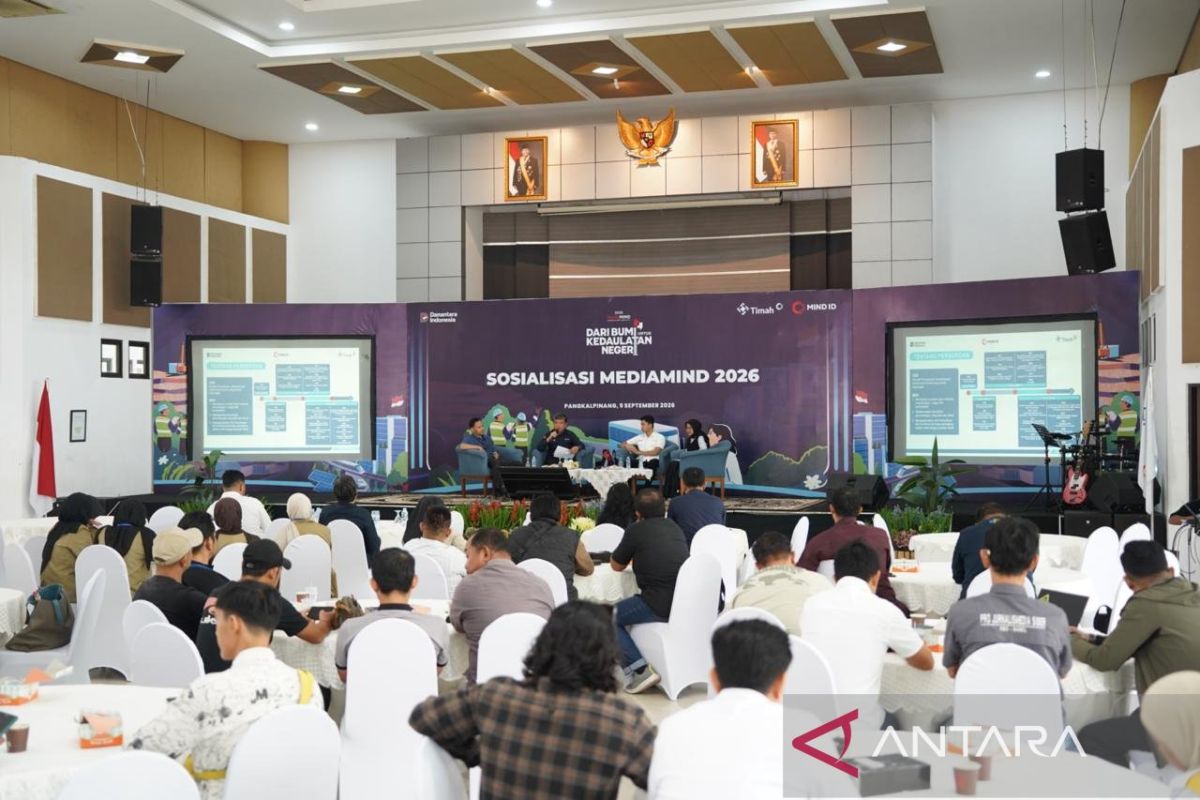
The benefits of the mining industry are not only seen through production activities but also through its ability to create economic activities that can be felt by the community.
Jakarta (ANTARA) - PT Timah Tbk has stated that tin mining activities in the Bangka Belitung Islands (Babel) are being directed to strengthen the economy of the local community.
PT Timah Tbk CSR Division Head, Rahmat Taufik, stated in Jakarta on Thursday that the benefits of the mining industry are not merely measured by production levels, but also by its capacity to generate economic activities that benefit the public.
According to him, economic empowerment must be strengthened alongside education and health programmes to ensure that the mining industry maintains an increasingly significant connection to the lives of local residents.
“The company does not only engage in mining activities but also strives to provide benefits to the community through economic empowerment, education, health, and sustainability programmes,” he said.
Rahmat added that an understanding of the link between the mining industry and regional economic development needs to be fostered through communication involving the company, the media, and academics.
The involvement of various parties is necessary to provide a more holistic perspective on mining, including how industrial activities intersect with the socio-economic conditions of the surrounding community.
One such effort is being carried out through the socialisation of MediaMIND 2026, an initiative by the Indonesian Mining Industry Holding, MIND ID, at PT Timah Tbk in Pangkalpinang.
Alza Munzi, a journalist from Jurnal Indonesia, noted that journalists in Bangka Belitung have a close connection to tin mining activities, allowing them to present community perspectives on the industry’s development.
“Journalists in Bangka Belitung have extensive experience and stories regarding tin mining that can be brought not only to the national level but even further,” she said.
According to Alza, reporting on mining presents unique challenges, ranging from accessing sources to managing field dynamics.
However, these experiences provide space for journalists to observe firsthand the connection between mining activities and community life.
She noted that one perspective that can be developed is the condition of vulnerable groups, including women and children, living near mining activities.
She emphasised that these issues are important to address because mining activities are not only about the utilisation of natural resources but also bring about social changes related to the lives and economic activities of the community.
Therefore, news coverage regarding mining should more broadly highlight economic benefits, empowerment programmes, and the changes occurring within communities surrounding mining areas.
“Thus, the management of natural resources can be viewed through its contribution to regional development,” she concluded.