
PT Petrokimia Gresik encourages farmers to boost chilli productivity
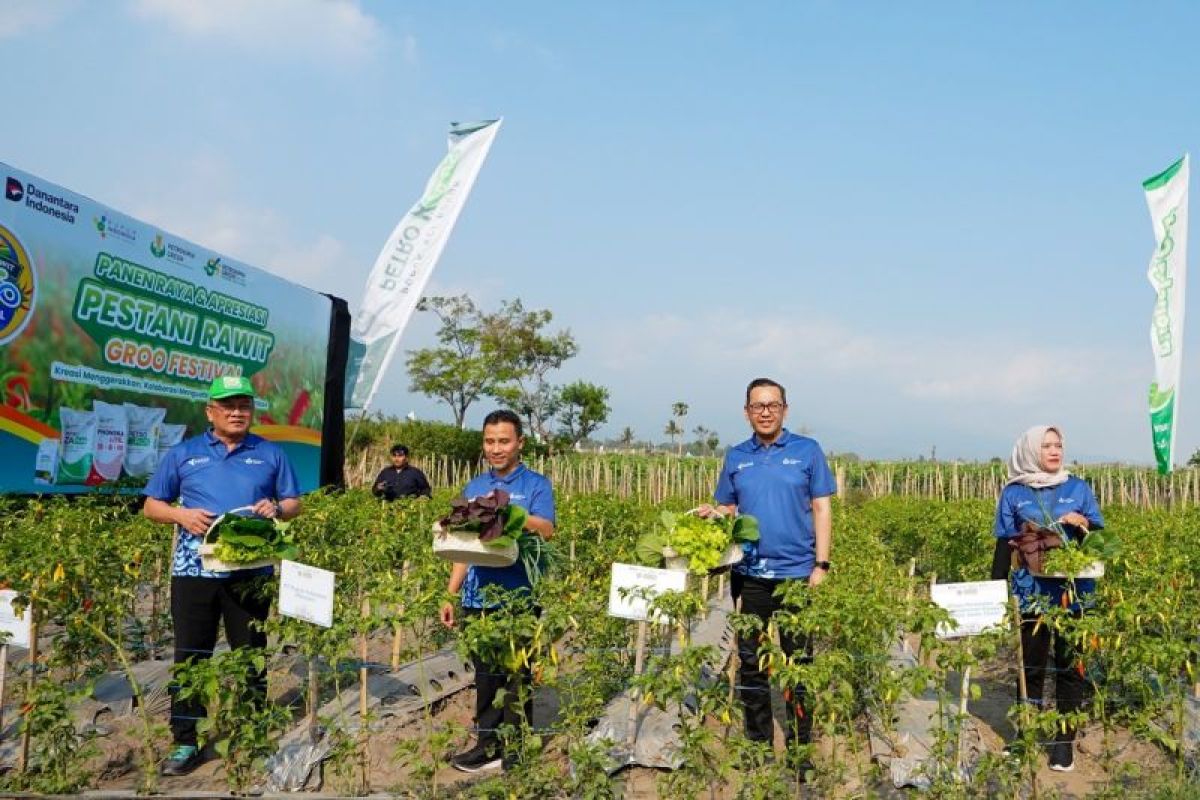
PT Petrokimia Gresik (Persero) is encouraging bird’s eye chilli farmers in East Java to increase their harvest productivity through more targeted cultivation practices under the ‘Pestani Rawit Groo Festival’ programme. A total of 270 farmers from Malang, Kediri, Mojokerto, Blitar, and Probolinggo regencies took part in the programme held in Belung Village, Poncokusumo District, Malang Regency, applying technology-based fertilisation and cultivation on their own land.
Finance and General Affairs Director of Petrokimia Gresik Adityo Wibowo said the cultivation practices had shown positive results. Through demonstration plots, harvests reached 11.5 tonnes per hectare, an increase of around 13 to 15 per cent compared with the previous yield of 10 tonnes per hectare.
“We want to encourage bird’s eye chilli farmers in East Java to continue increasing yields through balanced fertilisation, use of technology, and appropriate cultivation practices, so that harvests improve and farming becomes more profitable,” he said.
Adityo explained that East Java plays an important role in national bird’s eye chilli production. Around 35 per cent of national production comes from East Java, with total output exceeding 600,000 tonnes. Improving productivity is therefore important to maintain chilli supply and support food security.
Through the Pestani Rawit Groo Festival, the cultivation process and its results are also contested. In the Groo Field Creation category, participants apply a cultivation package prepared by Petrokimia Gresik from planting to harvest. “We want to show that productivity improvements can start from simple, precise, and consistent cultivation practices,” he added.
Besides the field competition, the festival also featured Groo Plant Creator, involving 270 urban farming enthusiasts from 27 provinces across Indonesia. Through this programme, participants shared their chilli cultivation experiences, from planting to harvest, via social media. The programme was further strengthened through Groo Plant Partner, involving 54 influencers, agricultural extension workers, and stakeholders to broaden agricultural education and bring farming closer to the public, especially the younger generation.
Overall, the Groo Festival involved 540 participants comprising farmers and urban farming enthusiasts from various regions in Indonesia. According to Adityo, the competition not only seeks farmers with the best harvests but also encourages participants to learn and directly prove the application of more targeted cultivation on their own land.
“We hope these cultivation practices that deliver optimal results can be replicated by other farmers in East Java, so that the programme’s benefits become even wider,” he said.
Adityo explained that the company introduced a technology- and data-based farming approach in this programme to help farmers make more precise cultivation decisions. The Pestani Rawit Groo Festival is part of the Pestani Programme developed by Petrokimia Gresik as a space for farmer empowerment and cultivation competition in East Java.
As of June 2026, the Pestani Programme had reached 782 farmers in 14 regencies through several leading commodities, namely watermelon in the Tapal Kuda area, melon in the Pantura region, shallots through Pestani Bawang Merah Nyawiji, and bird’s eye chilli through the Pestani Rawit Groo Festival.
Head of the Horticultural Crops Division at the East Java Provincial Agriculture and Food Security Agency Pudjiati Ningsih expressed hope that more farmers would be able to benefit from the programme. She said the activity provides real benefits in driving productivity and yield improvements, and is well targeted in East Java given that the province is Indonesia’s largest producer of bird’s eye chilli. She also expressed hope that the programme could be applied to other commodities in East Java beyond bird’s eye chilli, watermelon, and melon already optimised through the Pestani Programme.