
PT Indonesia Tri Sembilan Strengthens Human Capital to Drive Business Growth
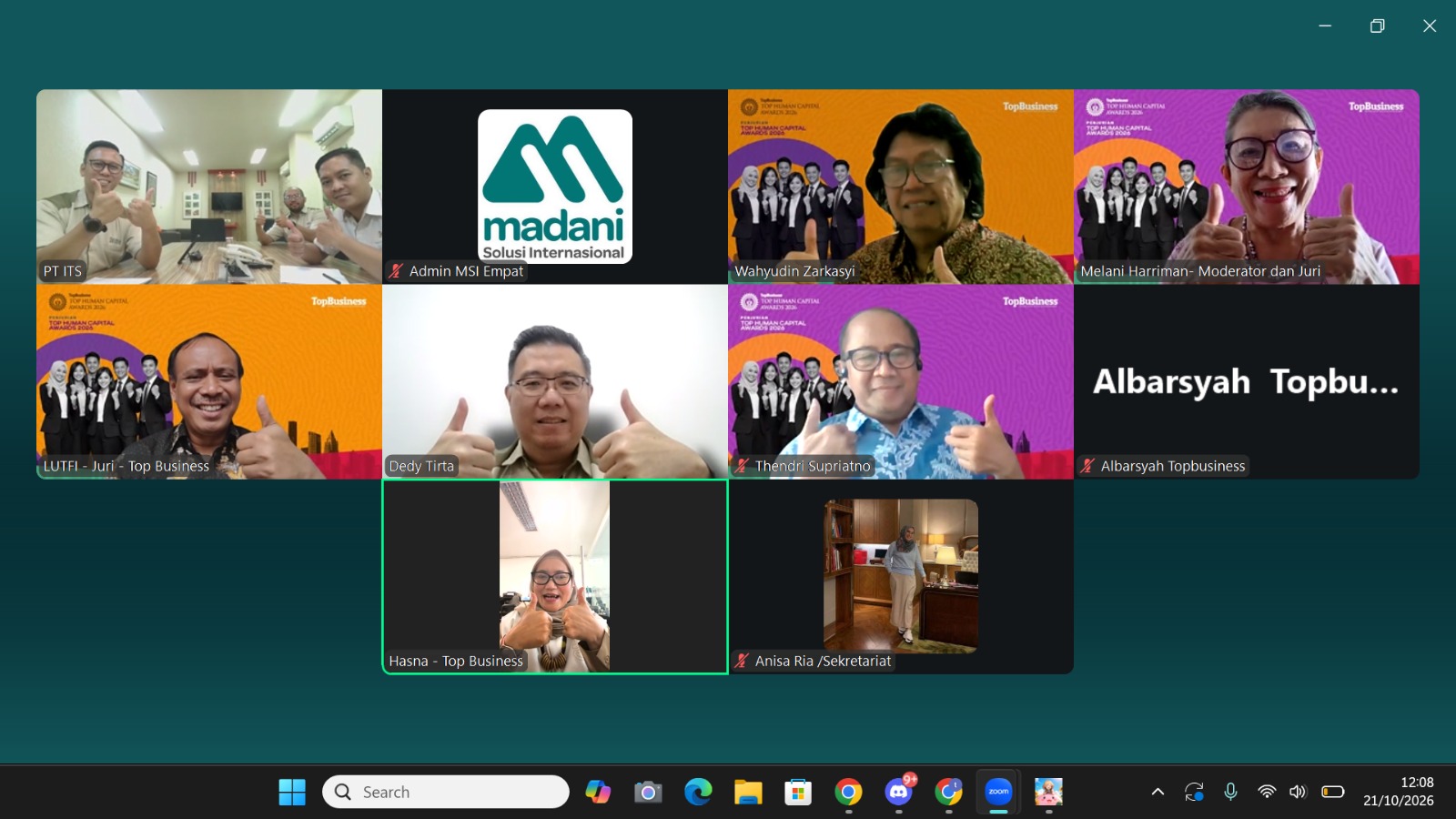
Jakarta, TopBusiness – PT Indonesia Tri Sembilan (ITS) is continuing to strengthen the quality of its human resources as a driver of sustainable business growth and to improve the competitiveness of Indonesia’s tobacco-processing industry in international markets.
Through a Human Capital Management System (HCMS) strategy integrated with business needs, the tobacco-processing company, which operates in Mojokerto, East Java, is building an adaptive, productive workforce management system focused on global quality standards.
The commitment was outlined by PT Indonesia Tri Sembilan President Director Dedy Tirta during judging for the TOP Human Capital (HC) Award 2026 on Wednesday, 21 October 2026.
Dedy said a company’s strength is determined not only by the sophistication of its production technology and the quality of its raw materials, but also by the competence, productivity, safety and welfare of its workforce.
“Human capital is a strategic company asset. Developing skills, job satisfaction, workload management and employee safety are important to supporting business growth while producing tobacco products of international quality,” Dedy said.
Human-capital strategy drives 35.7 per cent business growth
One of PT Indonesia Tri Sembilan’s notable achievements has been aligning its workforce-management strategy with the changing needs of the tobacco-processing industry, whose production is seasonal.
By adopting a flexible, data-based model for managing seasonal workers, the company has been able to balance production requirements, operational efficiency and employee productivity.
The strategy helped support revenue growth of 35.7 per cent in 2025 compared with 2024.
Dedy explained that workforce management involves assessing staffing requirements, production capacity and the distribution of workloads, particularly during the peak tobacco-processing season.
This approach enables the company to respond to changes in production volumes without neglecting workers’ welfare and safety.
Seasonal workforce management also takes account of compliance with Government Regulation No. 35 of 2021, which governs employment relations, including provisions on fixed-term employment agreements.
“Human-capital strategy must respond to real business needs. We are building a workforce system that is flexible and measurable, while continuing to comply with labour regulations,” he said.
President director directly prepares future leaders
PT Indonesia Tri Sembilan’s commitment to workforce development is also reflected in the direct involvement of its most senior executive in talent management.
Dedy Tirta actively leads Talent Review and Succession Planning to ensure leadership continuity and prepare the organisation for business challenges.
The company uses the 9-Box Talent Review approach alongside a Risk versus Impact matrix to map employee potential, identify high-performing talent and prioritise succession for critical positions.
This method enables it to develop prospective leaders more systematically, based on performance, potential and the importance of their roles to operational continuity.
The model is also among the HCMS practices considered suitable for recommendation to other companies, particularly in the agro-industry and manufacturing sectors.
Training investment rises tenfold
PT Indonesia Tri Sembilan’s commitment to building a learning organisation is also evident in its increased investment in employee skills development.
In 2025, the company’s training investment rose by around ten times compared with 2024.
The increase was directed towards strengthening technical skills, operational capabilities, leadership and employees’ readiness for technological developments in tobacco processing.
One initiative is the in-house DDT Level 2 programme, part of efforts to strengthen the organisation’s ability to develop skills independently.
Alongside internal development, the company is working with vocational training institutions, including the Mojokerto Vocational Training Centre (BLK), to help provide skilled workers in line with industry needs.
The collaboration is expected to narrow the skills gap between company requirements and the capabilities available in the workforce.
“Investing in human-resource development is a long-term investment. The stronger employees’ skills, the better the company can protect productivity and quality and maintain its business competitiveness,” Dedy said.
Record 17.7 million working hours without an accident
Alongside productivity, PT Indonesia Tri Sembilan treats occupational health and safety (OHS) as a fundamental part of its human-capital strategy.
The company recorded 17.7 million working hours without an accident, reflecting its commitment to building a safe and disciplined workplace culture.
This achievement is backed by a record of receiving the Zero Accident Award since 2006.
According to Dedy, workplace safety depends on the consistent application of operating procedures, monitoring of the working environment and the involvement of all employees in building a safety culture.
The company also conducts regular medical check-ups to support workers’ health and sustain productivity.
Job satisfaction and workloads are also monitored to ensure that higher production targets do not place excessive pressure on employees.
Analysis of the relationship between job satisfaction, workload and performance is one of the foundations for improving the effectiveness of workforce management.
“Sustainable productivity must be built on a safe, healthy and supportive working environment. Employee safety is a non-negotiable priority,” Dedy stressed.
Human capital key to globally competitive Indonesian tobacco products
Strengthening workforce capabilities is also important to PT Indonesia Tri Sembilan’s efforts to produce tobacco products that meet international buyers’ requirements.
The company applies an end-to-end business partnership model, spanning tobacco farmers, processing, quality control and the shipment of products to customers.
Employee skills are essential to ensuring consistent quality, efficient processes and product traceability throughout this chain.
The company’s traceability system is supported by ToPS, Q-Tracs and SAP technologies, enabling production and quality information to be managed in a more integrated way.
Its operations also follow international standards, including ISO 9001, ISO 14001 and CORESTA guidelines, supporting product quality, environmental management and compliance with global market requirements.
Human-capital strategy is therefore directed not only at improving individual skills, but also at strengthening the competitiveness of Indonesia’s tobacco-industry supply chain as a whole.
ESG integrated into human-capital policies
Another strength of PT Indonesia Tri Sembilan is the integration of its human-capital policies with Environmental, Social and Governance (ESG) principles.
The company’s sustainability approach covers workplace safety, social protection for employees, environmental management and resource efficiency.
This commitment is reinforced by its adoption of ISO 14001 in 2008 and its achievement of a Blue PROPER rating since 2021.
In practice, the human-capital function also supports the group’s sustainability agenda by encouraging responsible workplace behaviour, raising environmental awareness and promoting initiatives to prevent food waste.
Dedy said integrating ESG with workforce management is a relevant approach for companies seeking long-term business growth.
“Business sustainability is not just about financial growth, but also about how a company protects people and the environment and maintains good governance, so that all business processes create lasting value,” he said.
Three human-capital innovations as examples for other companies
During the TOP HC Award 2026 judging, PT Indonesia Tri Sembilan also highlighted three human-capital practices that it believes could be adopted by other organisations.
First, it uses a 9-Box Talent Review integrated with a Risk versus Impact matrix to inform talent development and succession planning for critical roles.
Second, its data-based seasonal workforce management system balances operational flexibility, productivity and compliance with labour regulations.
Third, it integrates human-capital policies with ESG principles, particularly in workplace safety, social security and the development of a sustainable workplace culture.
Together, the three approaches show that human-capital transformation can be measured and adapted to the characteristics of each industry.
Preparing to compete in global markets with a skilled workforce
For PT Indonesia Tri Sembilan, human-capital development is not merely an administrative function but a central strategy for sustaining the business and strengthening its position in international markets.
Revenue growth of 35.7 per cent, a roughly tenfold rise in training investment, 17.7 million working hours without an accident and stronger talent-management systems illustrate the link between workforce management and business performance.
Through its participation in the TOP HC Award 2026, the company has demonstrated its commitment to building an adaptive, competitive and sustainable organisation.
“Human-capital excellence is the foundation of business excellence. With skilled and productive people and a strong workplace culture, we are confident that Indonesia’s tobacco-processing industry can continue to improve product quality and strengthen its competitiveness in global markets,” Dedy concluded.
Source: jawawa.id (https://jawawa.id/newsitem/pt-indonesia-tri-sembilan-strengthens-human-capital-to-drive-business-growth-1792594292)
Originally published by topbusiness.id (https://www.topbusiness.id/138571/pt-indonesia-tri-sembilan-perkuat-human-capital-unggul-dongkrak-pertumbuhan-bisnis-357-persen-dan-tembus-pasar-global.html), translated from Indonesian