
PT IMIP's ESG Strategy Addresses Global Challenges and EU Regulations
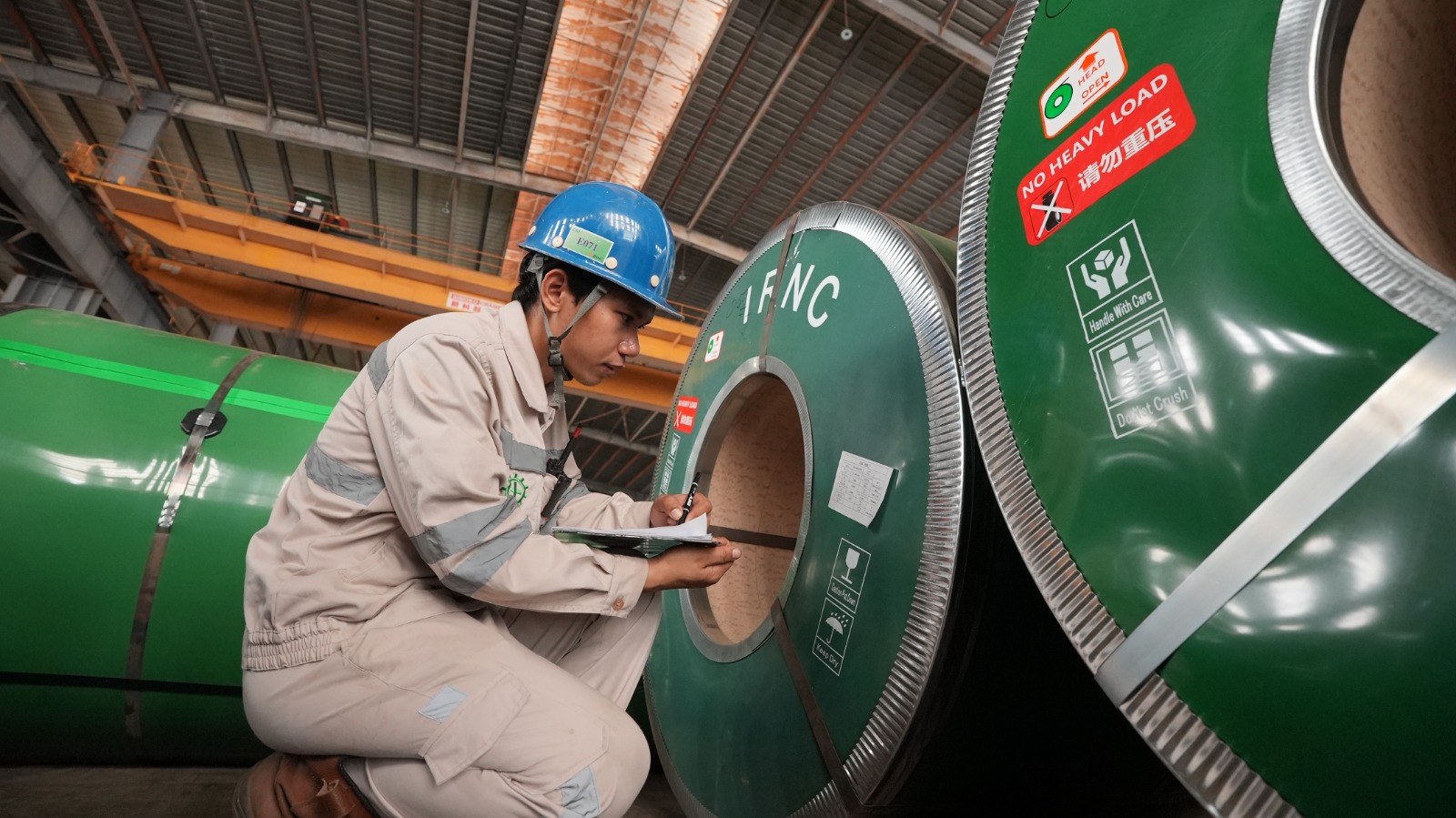
For PT Indonesia Morowali Industrial Park (IMIP), the manager of an integrated nickel-based industrial zone, Environmental, Social, and Governance (ESG) is not merely jargon but a core business strategy. Operating on approximately 4,000 hectares in Morowali, Central Sulawesi, IMIP runs integrated industrial clusters for stainless steel, carbon steel, and electric vehicle batteries. This model allows waste from one production line to be processed into raw materials for another, while ensuring energy efficiency and centralised environmental monitoring.
“Since 2024, IMIP has applied the ESG framework as a tangible commitment to implementing transparent, responsible, and safe governance standards,” said Deputy Operational Director of PT IMIP, Yulius Susanto, on Thursday (23/7). According to him, ESG is not just about compliance but a strategic direction for all departments and tenants to build and maintain public trust. This commitment is supported by a robust governance structure, including an ESG Committee, ESG Office, and ESG Teams within each tenant, with precise role distribution to ensure no gaps in responsibility. The entire implementation operates through an ESG Management System based on the Plan-Do-Check-Act (PDCA) cycle, consistently aligned with the company’s ESG roadmap until 2030.
In the energy sector, IMIP is driving a measured transition towards cleaner sources. By the end of 2025, the industrial zone had operated 502 electric vehicles, including dump trucks and other heavy equipment. In May 2026, IMIP strengthened this commitment by adding 207 electric buses as the primary mode of employee transport. Renewable energy projects are also being accelerated, including the construction of a 200 MWp solar power plant targeted for operation by 2027, as well as the optimisation of waste heat power generation, hydropower, and biomass. Decarbonisation efforts are strictly applied from the supply side. Head of the Environment Department at PT IMIP, Yundi Sobur, explained that IMIP sets qualification standards for procuring scrap steel to reduce carbon emissions. “These efforts include utilising battery energy storage systems, belt conveyors, slurry pipelines, and developing environmentally friendly energy sources,” he said, describing a holistic approach that combines technological innovation, energy efficiency, low-carbon transport, and a circular economy.
This circular economy principle is also applied to waste and water management. Wastewater Treatment Plants operate actively at both the industrial zone and tenant levels, supported by a Continuous Wastewater Monitoring System integrated with the Ministry of Environment’s platform. This allows for transparent, real-time water quality monitoring. From January to May 2026, IMIP recorded the utilisation of 30.8 tonnes of organic and inorganic waste, representing 5.6 percent of the total 549 tonnes of waste generated, which consisted of 74.68 percent organic, 10.26 percent inorganic, and 15.06 percent residue.
The social aspect is addressed through various community programmes with tangible impacts. These include providing free healthcare services, conducting routine blood donation drives up to four times a year both inside and outside the industrial zone, and offering education on fire prevention and household electrical safety that has reached dozens of villages and thousands of residents. “We provide free fire extinguishers to village offices and offer fire engine and ambulance services for rapid disaster response,” said Head of the OHS Department at PT IMIP, Johny Semuel.
This ESG commitment has become increasingly crucial following the implementation of the Carbon Border Adjustment Mechanism (CBAM) by the European Union in January 2026, which tightens environmental and human rights due diligence for industries supporting key export markets. To address these global challenges, IMIP has compiled a comprehensive ESG report based on international standards such as GRI, ISSB, the Responsible Minerals Initiative (RMI), OECD Due Diligence Guidance, ISO 14064, ISO 14067, and ISO 50001, as well as UN and ILO principles, while developing a Responsible Supply Chain Due Diligence System across its entire value chain. Management acknowledges that the transition to a low-carbon economy requires significant resource investment and substantial operational adjustments. Therefore, IMIP’s ESG roadmap focuses on strengthening CSR programme foundations, conducting in-depth social research and mapping, aligning with regional development plans, and enhancing local social capacity and ecosystems. “By 2030, we aim to create a resilient and competitive community within a sustainable social and environmental ecosystem,” Yulius stated optimistically. As a critical node in the global electric vehicle battery supply chain, IMIP continues to strengthen its ESG data management through a traceability system aligned with global standards, proving that large-scale Indonesian industry can address complex global challenges while remaining competitive and widely accepted in the world supply chain.