
PT DSI and the New Test for Indonesia's ECA
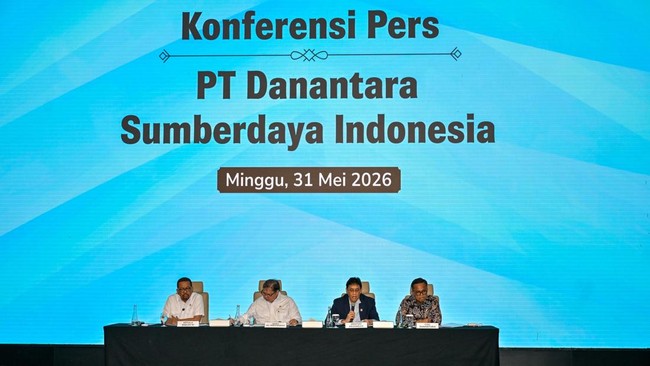
The government’s seriousness in strengthening control over the export of strategic natural resource commodities is increasingly apparent, following President Prabowo Subianto’s signing of Government Regulation (PP) Number 24 of 2026 on the Governance of Strategic Natural Resource Commodity Exports on 20 May 2026. This regulation serves as a crucial foundation for the presence of PT Danantara Sumberdaya Indonesia (Persero), the entity appointed by the government to manage exports through a single-door mechanism. The presence of Danantara Sumberdaya Indonesia (DSI) signals an important change in Indonesia’s trade governance. The government wants to ensure strategic commodities are not only more controlled but also provide greater economic benefits for the country. The transition period began in mid-2026 and will be fully enforced on 1 January 2027 for a number of strategic commodities, including crude palm oil (CPO), coal, and ferroalloy. However, grand policies always pose big questions. If the state assumes a more active role in managing strategic exports, does Indonesia already have a robust trade protection ecosystem to support it? In modern global trade practice, export competitiveness is no longer solely determined by the quality of the commodity or the volume of sales. Developed nations understand that exports also require an economic security architecture, an ecosystem of financing, guarantees, risk protection, payment assurance, and logistical security. It is here that the role of an Export Credit Agency (ECA) becomes increasingly relevant. According to the Organisation for Economic Co-operation and Development (OECD), an ECA is a strategic state instrument that supports international trade through financing, guarantees, and mitigation of commercial and political risks. Meanwhile, Trade Finance Global assesses that modern ECAs have now evolved into trade enablers, which underpin national exports through an integrated protection ecosystem. The keyword from this experience is ecosystem integration. The experience of various countries shows that export success never stands alone. South Korea through K-SURE and KEXIM, Canada with Export Development Canada (EDC), and the UK through UK Export Finance, have made their ECAs part of their national industrial strategy. They help exporters face destination country risks, price volatility, and buyer payment failures. China even utilises The Export-Import Bank of China and Sinosure as a geopolitical economic instrument to underpin its global trade expansion. Australia (Export Finance Australia) and the United Arab Emirates (Etihad Credit Insurance) also actively use ECAs to strengthen national export competitiveness and expand international markets. The experience of these countries provides an important lesson: an ECA is no longer merely a provider of export financing, but has become part of the strategy for safeguarding national trade resilience. The question then is, how does Indonesia position its ECA in welcoming the changes in export governance through the presence of DSI? Indonesia does not actually start from zero. We have an institution that provides protection or insurance for exporters, PT Asuransi Asei Indonesia (ASEI). We also have the Indonesian Export Financing Agency (LPEI), which performs financing, guarantee, and insurance functions. The presence of DSI can be momentum for both to organise a more strategic role as part of the national export ecosystem. The single-door export policy is believed to create great opportunities, yet simultaneously new risks. From an economic perspective, transaction consolidation has the potential to enlarge national foreign exchange retention. However, at the same time, export concentration also increases risk exposure, ranging from buyer payment failures, commodity price volatility, supply chain disruptions, to global geopolitical pressures. Moreover, the commodities currently under DSI’s focus—crude palm oil (CPO), coal, and ferroalloy—have different and highly complex risk characteristics. If they wish to capture the opportunity while reconfiguring their role as part of the Export Credit Agency, ASEI and LPEI need to take more anticipatory and proactive steps in welcoming the presence of DSI. The transition time towards full implementation on 1 January 2027 leaves approximately six months, a crucial period for adjusting roles and strengthening ECA functions in supporting national export trade. The response to DSI’s arrival must not be limited to administrative adjustments, without more mature, adaptive, and integrated financing, guarantee, and risk protection readiness to face the complexity of future strategic commodity trade. ASEI needs to strengthen its internal readiness to mitigate buyer default risks, whilst adjusting and developing export insurance schemes that are more specific for strategic commodities under DSI’s coordination. At the same time, LPEI can expand its supply chain financing function, provision of exporter working capital, and downstream financing support that is more integrated with increasingly measured risk mitigation. Export protection must not stop at the trade transaction, but needs to be expanded to cover the entire trade value chain. However, the discussion on export protection must not end solely on the aspects of financing, guarantees, and insurance. In strategic commodity trade, there is one vital link that has often been overlooked: the sea.