
Psychologist Reveals Boundaries for Parental Involvement When Children Seek Employment
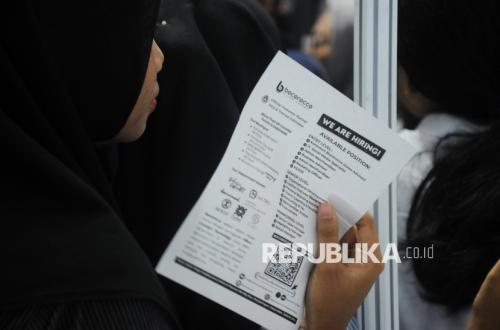
When children are searching for jobs, many parents find themselves becoming involved in every step of the process. According to a survey by Career Co-Piloting, 15 per cent of Generation Z in the United States are accompanied by their parents during face-to-face job interviews.
A similar phenomenon is observed in Indonesia. Child and family psychologist, Vera Itabiliana Hadiwidjojo, states that parents accompanying their children to job interviews can be understood, provided the involvement is limited to providing transport, offering emotional support, or helping the child feel calmer before the selection process begins.
However, according to Vera, parents should not enter the interview room, speak to the interviewer, or take over communication with the company. “If parents are too involved, it can create the impression that the child is not ready to be independent, lacks confidence, or is unable to face the demands of the professional world,” Vera said when contacted by Republika on Wednesday (1/7/2026).
She further explained the healthy boundaries regarding parental involvement in a child’s job search. According to Vera, these boundaries are established by shifting the parent’s role from a decision-maker to a behind-the-scenes supporter.
This means parents can assist children in preparing, such as discussing career choices, practising interviews, and providing feedback on CVs. However, the primary process must still be undertaken by the child themselves.
Vera also suggests that parents should ask more questions rather than immediately taking charge. This is essential for building a child’s independence and self-confidence.
“For example, parents could ask, ‘In which area do you need help?’ or ‘Would you like to practise an interview first?’. In this way, the child learns to recognise their own needs and remains confident,” Vera noted.
Furthermore, healthy boundaries mean that parents should not communicate with companies, negotiate salaries on behalf of their children, or dictate job choices or work locations. Vera also shared several tips for parents whose children are currently job hunting. Firstly, parents should help children prepare rather than rescuing them from every difficulty.
“Parents can help with interview role-plays, discussing potential questions, or providing input on professional attire and behaviour,” said Vera.
Secondly, parents need to allow space for children to experience failure. According to Vera, having a job application rejected is unpleasant, but it is a vital part of the life learning process. Through such experiences, children learn to handle disappointment, pivot, and try again.
“Parents should accompany their children through that disappointment and ensure they do not dwell on it, helping them to rise again,” Vera added.
Thirdly, parents are expected to remain a ‘safe haven’ for their children. Children searching for work still require emotional support, to be listened to without judgement, and to be reassured that failure in a single selection process does not mean they have failed as individuals.
Source: jawawa.id (https://jawawa.id/newsitem/psychologist-reveals-boundaries-for-parental-involvement-when-children-seek-employment-1782906768)
Originally published by Republika (https://ameera.republika.co.id/berita/thhts9425/psikolog-ungkap-batasan-keterlibatan-orang-tua-saat-anak-cari-kerja), translated from Indonesian