
Psychologist Explains Triggers of Post-Hajj Syndrome After Returning from the Holy Land
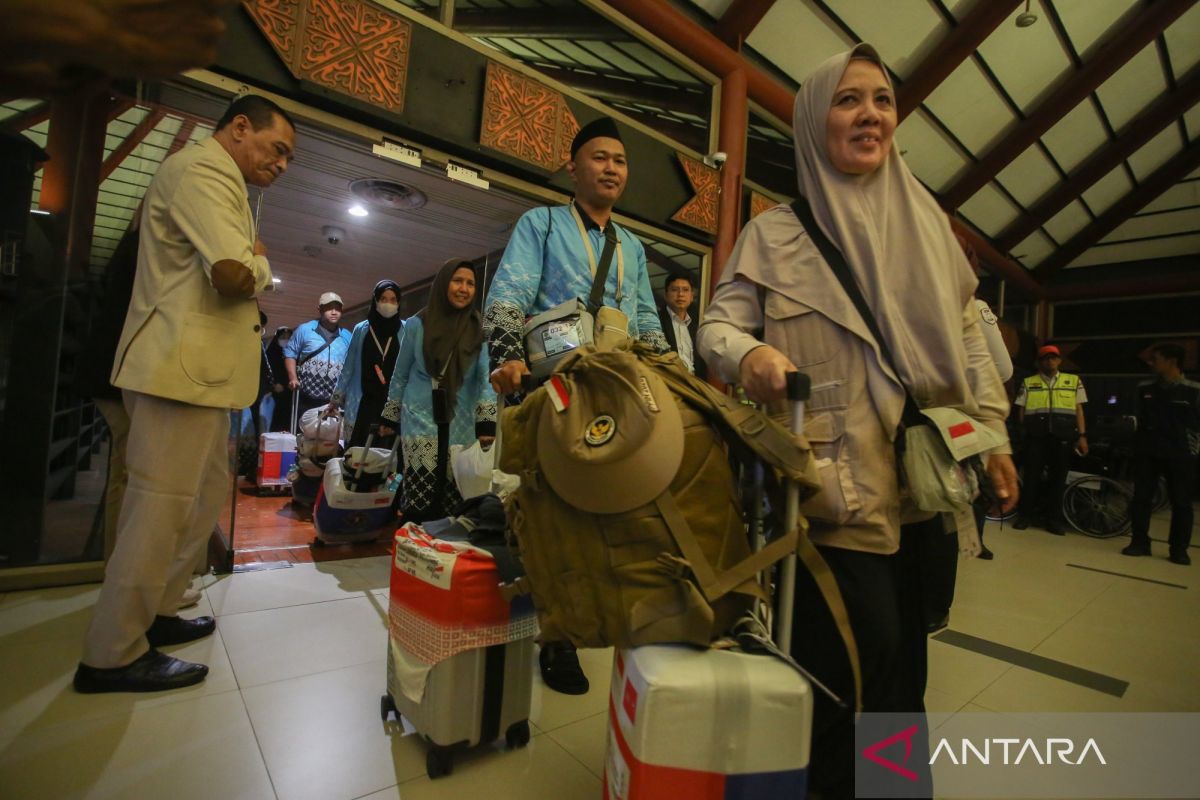
Jakarta (ANTARA) - Child, adolescent, and family psychologist Efnie Indrianie, S.Psi, M.Psi, Psikolog, has explained the factors that can trigger the emergence of post-Hajj syndrome among pilgrims after returning from the Holy Land of Makkah in Saudi Arabia.
“From a bio-neuropsychological perspective, Hajj and Umrah are experiences that involve almost all aspects of a human being: emotions, spirituality, social relationships, the meaning of life, and very powerful sensory experiences,” she told ANTARA in Jakarta on Tuesday.
A representative of the Indonesian Neuropsychology Association-Indonesian Psychological Association stated that those performing Hajj or Umrah experience spiritual closeness to God and peace because they can focus on worship in a conducive environment alongside millions of other Muslims in the Holy Land.
According to her, this experience can create very strong emotional memory traces in the brain, particularly in the limbic system (the emotional centre) and the hippocampus (the memory centre).
“When returning to daily life, which is full of work demands, traffic congestion, bills, family conflicts, or social pressures, the brain compares the current condition with the spiritual experience felt in the Holy Land,” she explained.
Such conditions can induce a longing for the atmosphere of worship at the Masjid al-Haram in Makkah and the Prophet’s Mosque in Madinah, prompting individuals to revisit photos and videos from their time in the Holy Land.
Efnie noted that people may also feel as though something is missing after returning from the pilgrimage, crying when remembering moments of worship, and finding it difficult to readjust to daily routines that feel busier and noisier.
“Psychologically, this phenomenon is similar to the process of re-entry adjustment, which is the readjustment after undergoing a very meaningful life experience,” said the lecturer from the Faculty of Psychology at Maranatha Christian University.
The deeper an individual’s spiritual experience during Hajj or Umrah, the stronger the emotional memory trace formed is likely to be.
Efnie stated that for some, the Holy Land serves as a place for “psychological rest” from various life burdens. Upon returning and facing those burdens again, the emotional contrast becomes more pronounced.
Efnie further suggested that individuals with reflective and emotional personalities are also more vulnerable to post-Hajj syndrome. People with such personalities tend to be contemplative, highly empathetic, and sensitive to spiritual experiences, which can lead to a deeper sense of longing after returning from the Holy Land.
According to Efnie, major life changes can also make people more susceptible to post-Hajj syndrome.
“This includes being in a phase of searching for the meaning of life. For example, after losing a loved one, facing illness, experiencing a mid-life crisis, or undergoing significant life changes,” she said.
Source: jawawa.id (https://jawawa.id/newsitem/psychologist-explains-triggers-of-post-hajj-syndrome-after-returning-from-the-holy-land-1780862440)
Originally published by Antara (Indonesian) (https://www.antaranews.com/berita/5591515/psikolog-jelaskan-pemicu-sindrom-pascahaji-sepulang-dari-tanah-suci), translated from Indonesian