
Psychologist Criticises Parents for Pranking Children with Ghost Filters
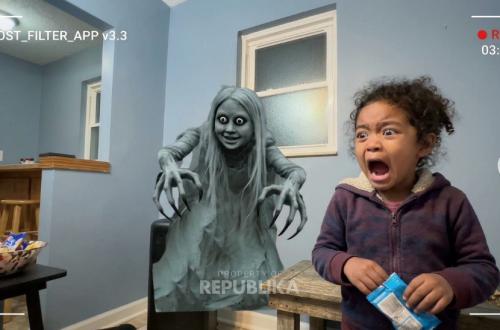
Social media has been filled with videos of parents frightening their children using ghost filters. In the clips, parents deliberately prank their children while they are using their smartphone’s front-facing camera.
A grey ghostly figure suddenly appears through an AI filter, startling the child. Many children are seen crying and screaming in fear.
Psychologist Rose Mini Agoes Salim of the University of Indonesia questioned why parents would make content that toys with their children’s feelings by frightening them. She stressed that pranks of this kind could erode children’s sense of security and trust in their parents.
She said parents should choose play activities better suited to a child’s age and stage of development, rather than deliberately making them uncomfortable for entertainment content. “I find myself wondering about the parents: don’t mothers or fathers have anything else to do besides playing with or pranking their children like this?” Professor Rose told Republika on Wednesday (28 October 2026.
She explained that children’s cognitive abilities are limited because they are still developing. At this stage, they are more likely to understand concrete or real information.
Children may also not understand the concept of a prank or the technology behind the filter used to create a frightening figure on a phone screen. As a result, they may perceive the ghost image as genuinely frightening, rather than as a visual effect intended as a joke.
“Young children don’t know what pretending is or what a filter is. Why should we make them feel emotionally uncomfortable? We can use other games that are more concrete and fun, which might be more suitable for children,” she said.
Source: jawawa.id (https://jawawa.id/newsitem/psychologist-criticises-parents-for-pranking-children-with-ghost-filters-1793235077)
Originally published by Republika (https://ameera.republika.co.id/berita/tnn7an425/psikolog-sentil-orang-tua-yang-ngeprank-anak-pakai-filter-hantu), translated from Indonesian