
PSIPP: Zakat can serve as emergency funds for violence victims
In addition to having to recover physically and psychologically, victims may also be burdened with the costs of medical examinations, hospital care, living expenses and legal aid.
The Centre for Islamic, Women and Development Studies (PSIPP) has stated that zakat can serve as an emergency funding source for women and children who are victims of violence and face limited access to healthcare, legal aid and the means to protect themselves.
“The idea is the result of a study on the use of zakat for victims of violence against women and children. The study then produced a standard operating procedure (SOP) for zakat for victims of violence against women and children for philanthropic institutions in Indonesia,” said Dr Yulianti Mutmainnah, Head of the Centre for Islamic, Women and Development Studies (PSIPP) at the Ahmad Dahlan Institute of Technology and Business (ITB-AD) Jakarta.
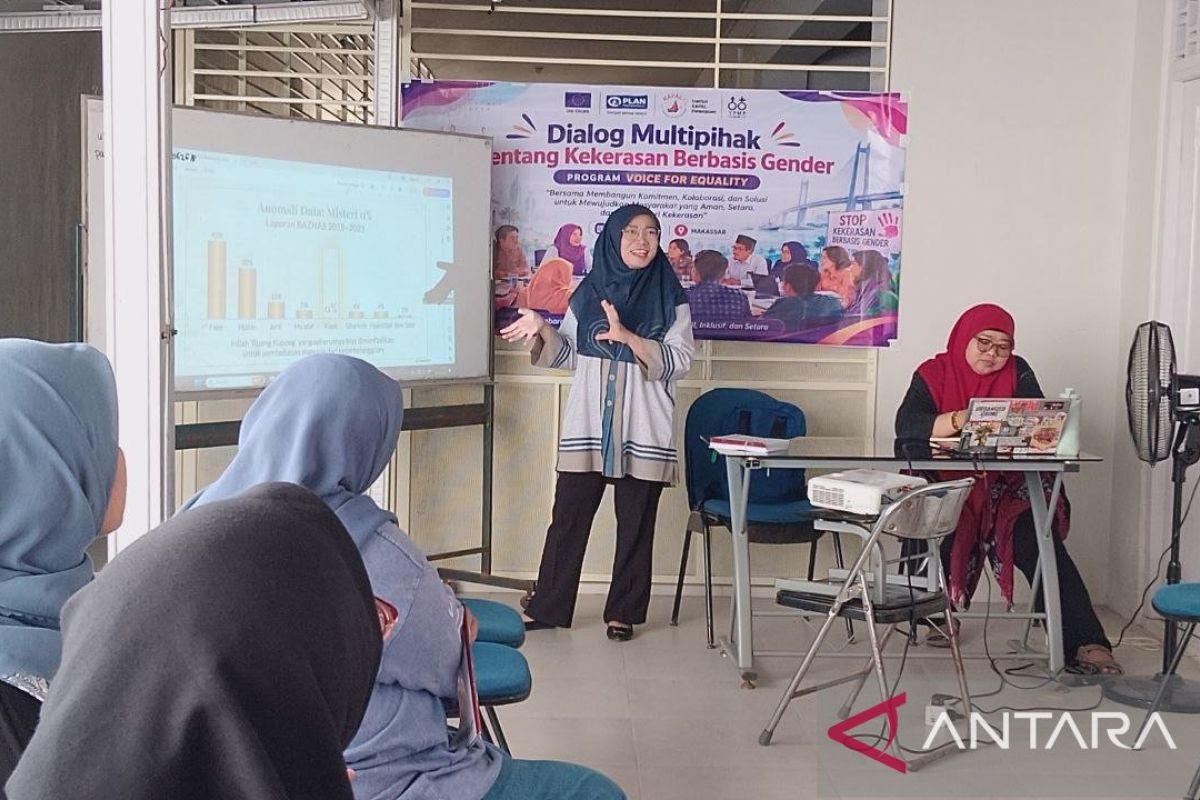
Speaking at a multi-stakeholder dialogue organised by the South Sulawesi Foundation of Women’s Issues Observers (YPMP) in Makassar on Saturday, she explained that the idea had received a positive response from the Minister of Women’s Empowerment and Child Protection of the Republic of Indonesia, I Gusti Ayu Bintang Darmawati, as well as a number of zakat management bodies such as LAZISMU and Baznas.
Yulianti explained that victims of violence often face layered burdens after experiencing violence. In addition to having to recover physically and psychologically, victims may also be burdened with the costs of medical examinations, hospital care, living expenses and legal aid.
She noted that the cost of medical examinations in a number of regions still has to be borne by victims. Meanwhile, health services through BPJS Kesehatan are not always able to meet all the needs of violence victims, and access to legal aid institutions is also uneven.
These conditions, she said, demonstrate the need for alternative sources of financing that can be used quickly when victims require assistance. Zakat is considered to have the potential to fill this need because it has designated recipient groups, or mustahik.
“When we researched it, it turned out that the group of zakat recipients for victims of violence against women and children was still zero. Therefore, it is important to provide room for zakat to become emergency funds for victims,” she said.
In addition, victims who are forced to leave their homes and move to another area for safety reasons also have the potential to fall into the category of ibnu sabil. As such, a number of zakat recipient categories can be considered relevant to the condition of violence victims, with the exception of the amil category.
She stressed that the use of zakat is not intended to replace state financing mechanisms or existing services. Zakat is positioned as emergency support so that victims can immediately obtain assistance. A number of regions, such as Tangerang and Mamuju in West Sulawesi, are said to have begun showing commitment to developing similar policies.
Yulianti expressed hope that the practice could be applied in other regions, including South Sulawesi, where the majority of the population is Muslim. According to her, an Islamic approach to the protection of women and children needs to be developed so that zakat can become part of the support system for victims of violence.