
PSI NTT Urges Public to Separate Political Choices from Jokowi's Development Legacy
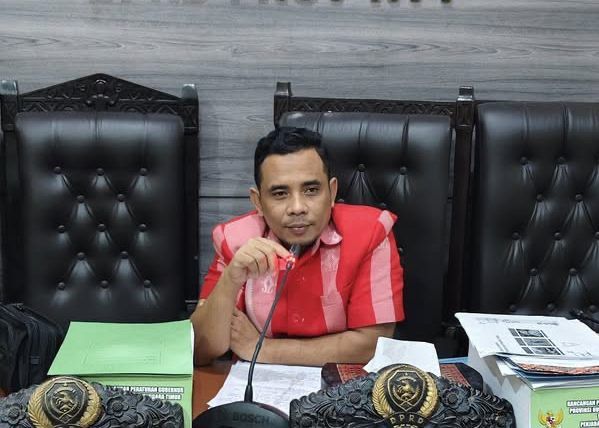
The regional leadership council (DPW) of the Indonesian Solidarity Party (PSI) in East Nusa Tenggara (NTT) has urged the public to separate differences in political views from assessments of the region’s development track record. This was affirmed by the DPW PSI NTT Secretary, Junaidin Mahasan, ahead of the visit of Indonesia’s 7th President, Joko Widodo, to NTT from 31 July to 2 August 2026.
Junaidin believes that political dynamics must not obscure the reality that various development programmes of the Jokowi era shifted the development paradigm from Java-centric to Indonesia-centric.
“By all means differ in political choices, but do not erase the facts of history. During Pak Jokowi’s era, the development paradigm shifted from Java-centric to Indonesia-centric,” Junaidin said in his statement on Thursday (30/7).
Junaidin explained that this change in development orientation has been felt by the people of NTT through the construction of roads, ports and tourism areas, as well as the Maritime Toll Road programme. These programmes are considered to have successfully reduced the isolation of the archipelagic and border regions of NTT.
“The sea, once a separator, has gradually been turned into a road. Distances that were once obstacles have begun to be transformed into connectivity. And islands that once felt remote are now being linked to the pulse of national development,” he said.
Furthermore, Junaidin emphasised that the warm welcome from NTT residents for Jokowi’s visit is not a form of individual cult worship, but rather a response to the emotional bond and policy attention built over a long period. According to Junaidin, Jokowi’s arrival in Kupang and its surroundings marks a moment of collective memory for residents of a development legacy whose benefits are still enjoyed today.
“The emotional relationship between Pak Jokowi and the people of NTT was not born yesterday afternoon. That bond was built over a fairly long process, through attention, and through policies that the people have felt,” he concluded.