
PSI Claims Jokowi Unaware He Would Step on Buffalo Head in Lampung
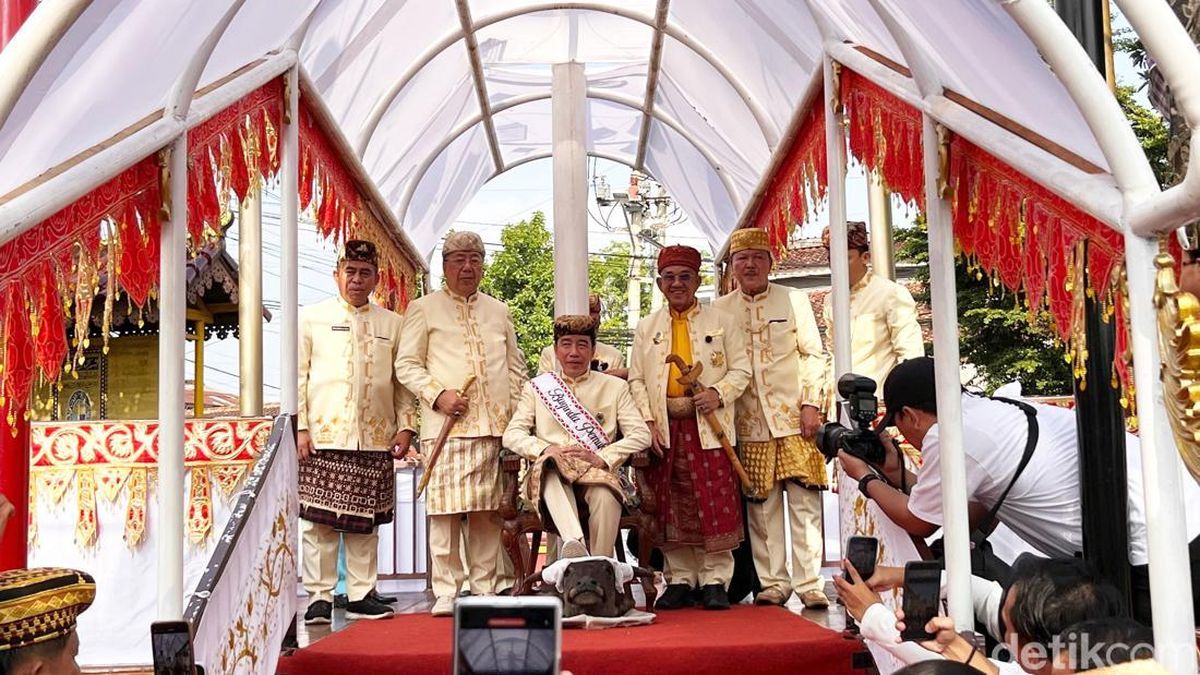
The 7th President of the Republic of Indonesia, Joko Widodo (Jokowi), has admitted he predicted that the traditional procession of stepping on a buffalo head during his visit to Lampung would become a major talking point. DPP PSI Chairman Bestari Barus stated that Jokowi was also unaware the procession would take place, saying the former president merely followed the customary agenda as a mark of respect. “So, when he went up on stage, he had already realised it. Last night he told us the story while we were in Solo. He said, ‘I didn’t know there would be that head, a buffalo.’ As soon as he went up, he saw the buffalo head,” Bestari said. “And when he was told to sit in front of the buffalo head, he muttered, ‘This is going to cause a stir,’” he added. Bestari reiterated that the procession was carried out to honour the local customs. He left the interpretation of the ritual to the public, while emphasising that Jokowi was not playing a role like a film star. “Let the public judge for themselves. What is clear is that Pak Jokowi was not acting in a soap opera; he was simply following the directions of the local traditional elders,” he said. Jokowi stepped on a buffalo head during his visit to Lampung last week, when he received the title ‘Baginda Pemuka Bangsa’. He sat on a chair dressed in full traditional attire, stepping on a buffalo head placed on a red carpet. Lampung cultural expert and Expert Council member of the Lampung Traditional Leaders Assembly (MPAL), Admi Syarif, explained that the ritual of stepping on a buffalo head is part of a sacred cultural tradition of the Lampung people that is hundreds of years old. The procession is held during the Begawi Cakak Pepadun ceremony, which marks the elevation of a person to the highest customary position or enthronement as a traditional leader. The ritual symbolises the cleansing of negative traits such as arrogance, envy, and greed, and serves as a form of respect for the figure being bestowed with the customary title.