
PSHK: Asset Forfeiture Bill Rushed but Lacking Transparency
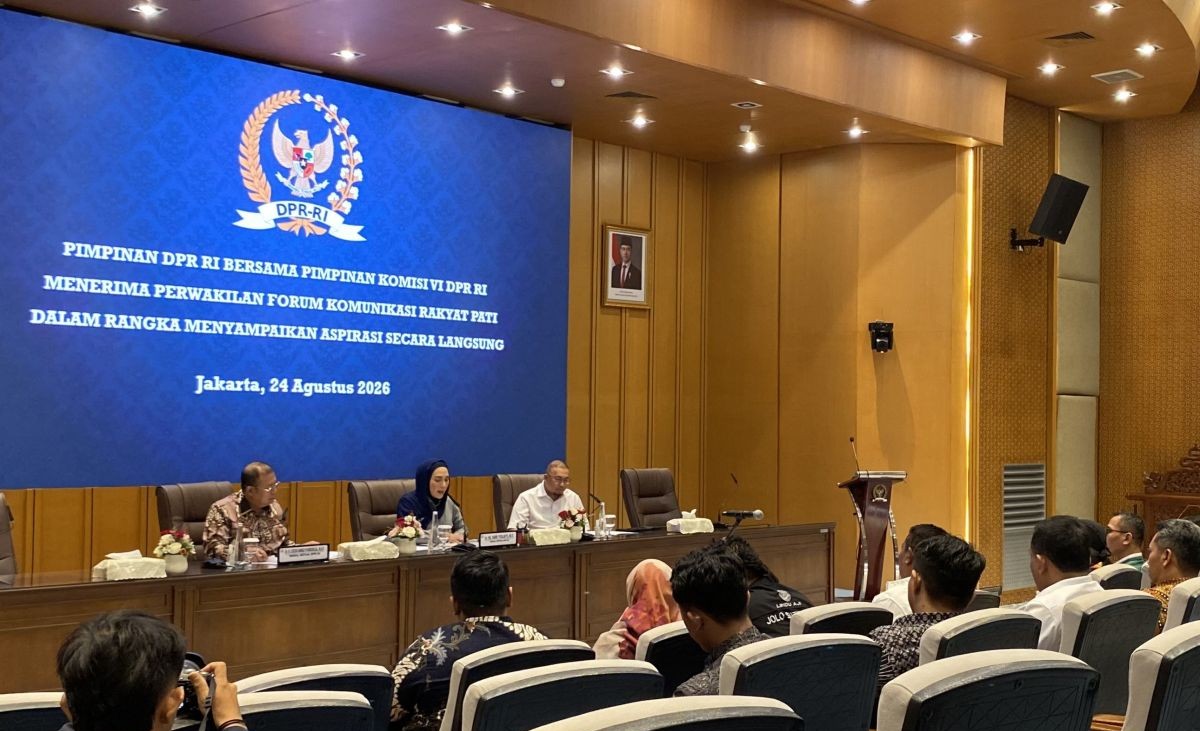
The deliberation of the Asset Forfeiture Bill (RUU Perampasan Aset) has been deemed not to meet the principles of transparency and meaningful public participation. The Centre for Law and Policy Studies (PSHK) considers that openness cannot be sufficiently demonstrated merely by the number of public hearings (RDPU) held by the DPR.
PSHK researcher M Nur Ramadhan said the DPR had previously cited the holding of 35 RDPUs as evidence of openness in the deliberation of the Asset Forfeiture Bill. However, according to him, the number of forums does not automatically indicate meaningful public participation.
“The DPR stated that it has conducted 35 RDPUs as proof of openness. That figure in fact proves nothing,” said M Nur Ramadhan in an official statement on Friday (29/8).
According to Ramadhan, public participation must be measured by the public’s ability to access and scrutinise the substance of the bill. The public, he said, must be able to read the draft, compare it article by article, and provide criticism of the substance under discussion.
“Meaningful participation is measured by whether the public can read the text, compare it article by article, and critique its substance. Not by how many RDPUs are held,” he said.
Ramadhan also reminded that the Constitutional Court has affirmed three conditions for meaningful participation in lawmaking, namely the right to be heard, the right to be considered, and the right to receive an explanation.
“These three conditions are nullified when the draft is not opened to the public,” he stressed.
He assessed that the situation is increasingly problematic because the deliberation of the Asset Forfeiture Bill is being rushed for completion by December. In his view, the acceleration of the deliberation must not sacrifice openness and space for public participation.
“Closing the draft of the Asset Forfeiture Bill while chasing the December deadline is a closed deliberation wrapped in rhetoric of openness,” said Ramadhan.
For this reason, PSHK is urging Commission III of the DPR to immediately release the academic paper, the official draft, and the Problem Inventory List (DIM) of the Asset Forfeiture Bill to the public before the first-level deliberation takes place.
Despite criticising the deliberation process, PSHK considers the Asset Forfeiture Bill to be an important instrument that needs to be completed promptly. Provisions on asset forfeiture are actually already available in the Corruption Crime Law and the Money Laundering Crime Law.
However, the existing instruments are considered to still have weaknesses and legal gaps. The current asset forfeiture mechanism is highly dependent on the criminal process and evidentiary requirements, so it has not been optimal in reaching assets that cannot be processed through criminal mechanisms, assets whose owners are unknown, or assets whose lawful origins cannot be explained.
“Law enforcement often stops at the conviction of perpetrators without being able to optimally pursue, freeze, and recover the proceeds of crime,” he said.
Furthermore, PSHK considers that the Asset Forfeiture Bill should ideally strengthen the asset recovery regime, including through a non-conviction based asset forfeiture (NCB) mechanism, so that the eradication of corruption and economic crime does not stop at the conviction of perpetrators.
“The Asset Forfeiture Bill must ensure that the proceeds of crime can be returned to the state and the public,” he concluded.
Source: jawawa.id (https://jawawa.id/newsitem/pshk-asset-forfeiture-bill-rushed-but-lacking-transparency-1787889022)
Originally published by Media Indonesia (https://mediaindonesia.com/politik-dan-hukum/926962/pshk-ruu-perampasan-aset-dikebut-tapi-minim-transparansi), translated from Indonesian