
PSGS Reveals Complexity of Magnitude 7.4 Earthquake in Maluku
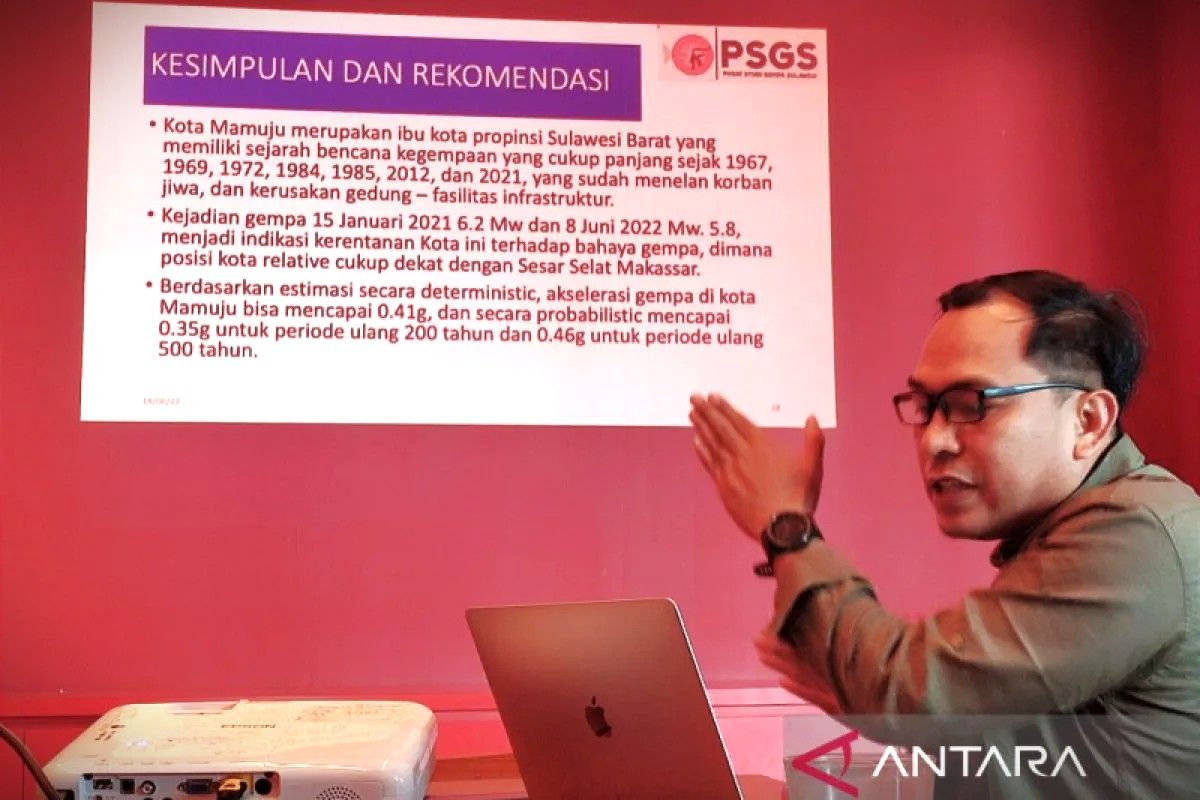
Makassar (ANTARA) - The Sulawesi Earthquake Study Centre (PSGS) has revealed that the magnitude 7.4 earthquake occurring on Thursday at 06:48 WITA in the Maluku Sea reflects the complexity of the Double Subduction Zone. “Based on the analysis of the earthquake’s source mechanism (moment tensor) from USGS and BMKG, this quake is interpreted as an oblique-reverse fault (a combination of thrust and strike-slip) occurring within the slab (intraslab), not on the main inter-plate contact plane,” said PSGS Director Ardy Arsyad in a press release on Thursday. According to him, what makes this event scientifically significant is its location in the Double Subduction Zone of the Maluku Sea, where two oceanic plates thrust towards each other from opposite directions (Sangihe and Halmahera). This condition, he said, creates a complex stress system, so earthquakes do not always follow the classic subduction or megathrust patterns. “This phenomenon indicates stress partitioning and complex deformation dynamics in eastern Indonesia,” he explained. Although this is not a megathrust earthquake, said this geotechnical expert and lecturer in Civil Engineering at Hasanuddin University, the event still triggered small-scale local tsunamis in some coastal areas. This confirms that tsunami potential remains, albeit with more limited danger levels compared to shallow thrust fault quakes. Additionally, areas with water-saturated sediments still pose liquefaction risks that need to be anticipated. Therefore, PSGS emphasises that the public should not panic but remain vigilant against aftershocks and follow official information from BMKG and related agencies. “We also urge local governments to conduct rapid evaluations of critical infrastructure in affected areas, enhance coastal community preparedness for potential local tsunamis, and strengthen mitigation based on risk maps and local geological conditions,” he said. He assured that PSGS will continue further analysis of this event, including its relation to regional tectonic dynamics and implications for disaster risks in Sulawesi and surrounding areas.