
PSEL Construction Raises Hopes of Reducing Waste Piles in Bantargebang
The waste piles at the Bantargebang Integrated Waste Treatment Site (TPST) in Bekasi will now be handled differently. The government has begun constructing a Waste-to-Energy Processing Facility (PSEL) that will convert waste into electricity.
Coordinating Minister for Food Zulkifli Hasan (Zulhas) said that processing waste into electricity is one of the government’s efforts to address waste problems in several regions. Bantargebang is among the areas receiving attention because of the condition of its waste piles. Zulhas noted that several regions are now classified as being in a waste emergency.
“This is waste management into electricity. But all of this is for the emergency ones. Like Bantargebang, Bekasi City is in an emergency. Tangerang is also in an emergency, Bali too. The piles have reached 60 metres high,” Zulhas said recently.
The construction of the Bekasi City PSEL in Bantargebang has an investment value of around Rp 3 trillion. The facility is targeted to be able to process more than 500,000 tonnes of waste per year, or around 70 percent of the waste piles processed in Bekasi City. The project is targeted for completion by the end of 2027 or early 2028, before beginning operations in mid-2028.
The project also involves the Daya Anagata Nusantara Investment Management Agency (Danantara). In terms of energy, the Bekasi PSEL is targeted to produce green energy that can supply the needs of around 55,000 homes in Bekasi City.
However, processing technology alone is considered insufficient. Environmental activist and observer Sony Teguh Trilaksono said the success of the PSEL also requires public habits of sorting waste from home.
“What can be processed into energy is waste related to inorganic materials. That is high-calorie waste. Now, what the PSEL is doing is trying to implement a solution used by other countries for processing inorganic waste,” Sony said.
He assessed that the construction of the PSEL is a good programme. Even so, the habit of sorting waste remains a challenge because not all members of the public are accustomed to doing so.
“I think this is a good programme, but the key is that it must be controlled. Because however, the public is not yet accustomed to a culture of sorting waste. So our challenge is how we all sort waste through education as regularly as possible. The key is waste sorting,” he continued.
Residents of Bantargebang Welcome PSEL
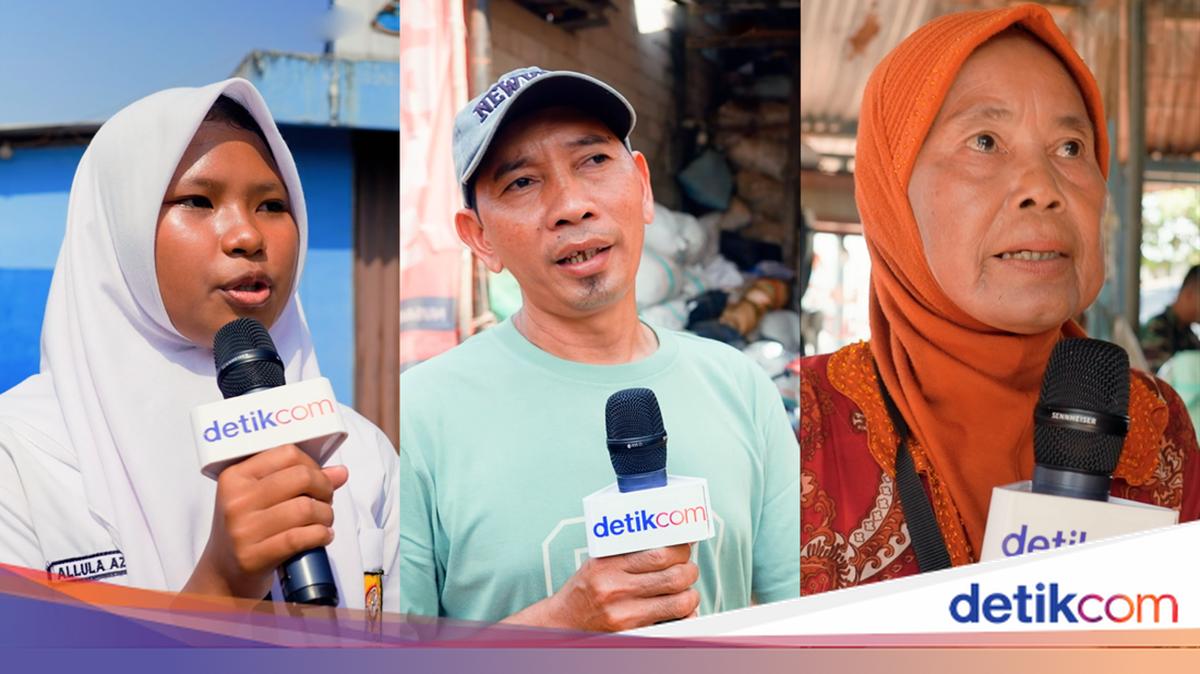
For residents living around Bantargebang, the presence of the PSEL brings new hope for reducing the waste pile problems they have faced so far.
Several residents of Ciketing Udik welcomed the construction of the facility. Even so, their knowledge about the use of waste for electricity remains varied.
Abdul Bashitt, a Ciketing Udik resident, for example, admitted that he had only just learned that kitchen waste can be used to generate electricity.
“Not before, only now have I heard about it,” Abdul said.
Meanwhile Aninian, a trader, already knew information about processing waste into electricity.
“I already know, I already got the news,” she said.
Menta Abdul Hakim expressed a similar view. The Ciketing Udik resident said he already knew a fair amount about the use of waste for energy.
“Oh actually I more or less already understand, already know,” he said.
For Abdul, the presence of the PSEL can help resolve the problem of waste piles in Bantargebang that has so far remained unresolved.
“For now it really helps. Because having construction like this helps to solve the existing waste problem, it has become a mountain and until now there has been no end to it. Maybe with something like this it might be resolved,” he said.
Menta also sees the PSEL as one of the efforts to reduce waste piles in Bantargebang.
“In my personal opinion, it really helps to reduce the waste piles, the waste accumulation currently in Bantargebang,” he said.
Not only about reducing waste piles, the presence of the PSEL is also seen as an effort to protect the environment. Allula Azraq, a student at SMP 31 Bekasi City, welcomed the programme.
“In my opinion this programme is good, because it can keep the environment green and beautiful,” she said.
Residents Ready to Sort Waste from Home
Support for the PSEL is also accompanied by awareness that the waste problem cannot be solved solely through processing facilities. Residents also need to play a part by getting used to sorting waste from home.
This is in line with Sony’s view that waste sorting is one of the challenges in waste management. Regular education is considered important so that the habit can be formed in society.
Allula said she is ready to commit to supporting the programme.
“Oh I am committed to this programme,” she said.
Aninian also expressed the same readiness.
“Well, I am ready to commit,” she said.
According to Menta, the public needs to get used to sorting waste by type.
“There should be a commitment to sort and separate organic and non-organic waste,” he said.
Abdul also considers public commitment an important part of ensuring waste management efforts can work.
“We must be committed. Now if for example we are not committed, then what can we do,” Abdul said.
The PSEL in Bantargebang is expected not only to help reduce waste piles, but also to encourage changes in public habits. For local residents, sorting waste from home is a simple step that can be taken to support these efforts.
Source: jawawa.id (https://jawawa.id/newsitem/psel-construction-raises-hopes-of-reducing-waste-piles-in-bantargebang-1787993482)
Originally published by detikcom (https://news.detik.com/berita/d-8639508/psel-dibangun-warga-bantargebang-berharap-tumpukan-sampah-berkurang), translated from Indonesian