
PSEL Becomes New Mainstay for Waste Management: Solution or Threat?
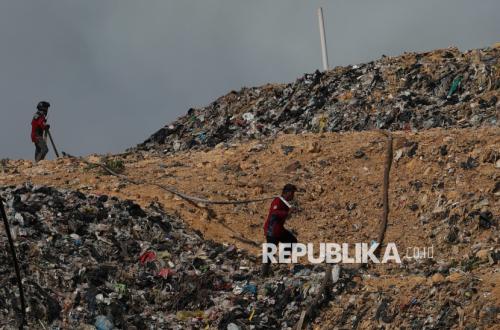
At the end of July 2026, Deputy Minister of Energy and Mineral Resources (ESDM) Yuliot Tanjung laid the first stone for the Legok Nangka Waste-to-Energy Plant (PSEL) project. The project is expected to transform thousands of tonnes of waste piled up in West Java into electricity with a capacity of tens of megawatts.
“As instructed by President Prabowo Subianto on many occasions to comprehensively resolve urban waste problems before 2029 through an upstream-downstream scheme and to turn waste into an energy source (Waste to Energy),” said Yuliot during the groundbreaking of the Legok Nangka Waste-to-Energy Plant in Legok Nangka, Cempakamekar, Padalarang District, West Bandung Regency, West Java.
The Legok Nangka PSEL is expected to become a model for developing waste-to-energy projects that can be applied in various regions. With significant generation capacity and investment support, Yuliot is optimistic that the project will provide tangible benefits through reducing waste volume, providing clean energy, creating jobs, increasing regional economic activity, reducing emissions, and improving environmental quality and public health.
Yuliot explained that the Legok Nangka PSEL is designed with a generation capacity of 40.79 megawatts and an investment value of USD 400 million, or approximately IDR 7.2 trillion. “The construction period will last approximately 41 months, with a Commercial Operation Date in 2029,” said Yuliot.
West Java Governor Dedi Mulyadi said the Legok Nangka PSEL is a long-term solution to waste problems in the Greater Bandung area while also delivering economic and environmental benefits through the use of waste as an energy source. According to him, this project and other PSELs in the region will become an important milestone in realising more sustainable waste management in West Java.
“This will become one of the trigger tools for building a modern waste management system. It will also educate the public to be orderly and live cleanly, which in turn improves air quality and environmental quality,” said Dedi.
In addition to being a waste management solution, Dedi said the project will also strengthen the clean energy supply needed to support industrial growth and investment in West Java. “The second blessing is that we will obtain electrical energy that certainly contributes to PLN’s strength in having substantial energy for industrial life,” he said.
Meanwhile, PLN Director of Project Management and New Renewable Energy Suroso Isnandar said the company is ready to carry out the government’s directives in supporting PSEL, including the Legok Nangka PSEL as a concrete solution to the waste emergency as well as a step towards energy self-sufficiency.
The 20-year Power Purchase Agreement (PJBL) period that has been agreed upon is a form of PLN’s commitment to supporting the sustainability of the Legok Nangka PSEL. Through the agreement, PLN provides certainty of purchasing the electricity generated, thereby supporting the sustainable development of waste-to-energy projects.
“PLN is ready to execute the PJBL in accordance with government directives. We will absorb the electricity produced from this waste processing and distribute it to the public. Through the 20-year PJBL, we provide certainty so that this project can run sustainably,” said Suroso.
Suroso added that besides strengthening the clean energy mix, the development of the Legok Nangka PSEL also demonstrates that the electricity sector can contribute to solving environmental problems through the use of waste as energy.
“Through PSEL, we are not only preserving the environment for the future, but also generating electricity that benefits the public. This is renewable energy that will continuously cycle as long as there is waste, electricity will be generated that can be utilised,” he said.