
PRR Task Force Synchronises Data to Ensure Targeted Permanent Housing Construction
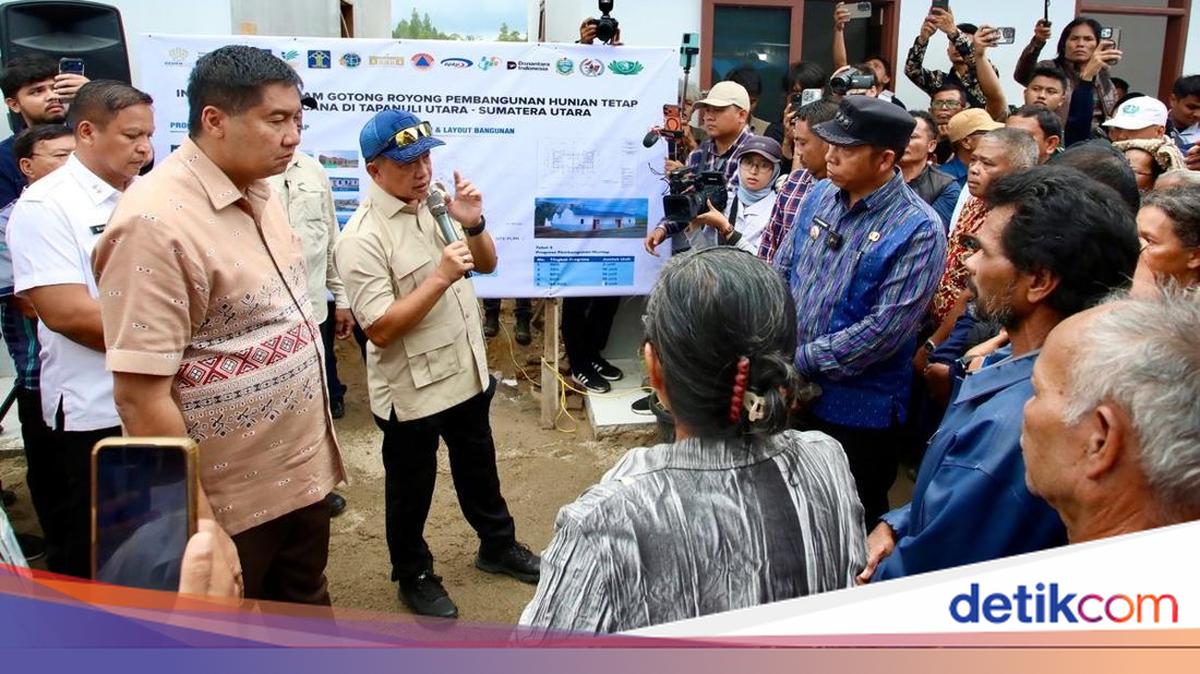
The Post-Disaster Rehabilitation and Reconstruction Acceleration Task Force (Satgas PRR) for Sumatra is strengthening coordination across ministries and agencies to expedite the construction of permanent housing (huntap) in Aceh, North Sumatra, and West Sumatra. Through this coordination, the construction of homes for survivors is intended not only to meet targets but also to be safe, habitable, and adequate.
Task Force Chairman Muhammad Tito Karnavian stressed that the acceleration of permanent housing construction must be meticulously overseen, from land readiness and the development of supporting infrastructure to on-the-ground execution. He noted that the substantial budget support allocated by the government must be realised into homes that affected communities can actually occupy.
‘The Ministry of Housing and Settlement Areas has had its budget disbursed, totalling more than Rp2 trillion. It must not go unspent, and all communal housing must be built according to target, as only five months remain before the end of the year. Building a housing complex is far more difficult because it requires land, water channels, electricity, and access roads. These details must be discussed thoroughly and checked directly in the field,’ Tito stated on Saturday.
The Task Force also held synchronisation meetings with the National Disaster Management Agency (BNPB), the Ministry of Housing and Settlement Areas (PKP), and Statistics Indonesia (BPS). The Head of the National Command Post Data Team, Colonel Inf Tamimi Hendra Kesuma, explained that synchronisation covers construction data, beneficiary lists, and the division of implementation responsibilities. This is to prevent overlapping budget use between central government, local government, and other funding sources.
Meanwhile, the Head of Planning and Control for the National Command Post, Brigadier General TNI Andre Julian, stated that data consolidation is the primary foundation to ensure the construction of permanent housing is precisely targeted. ‘The data we are synchronising is the permanent housing construction data. This needs to be done because we will build the housing using government budgets. There are also budgets from local governments and CSR,’ Andre said.
Based on a review by BNPB’s Government Internal Supervisory Apparatus, there is a target to build 14,897 units of in-situ and independent relocation permanent housing across the three provinces, with 413 units currently under construction and 93 units completed. Additionally, there are still 12,138 proposed units of housing stimulant assistance for damaged homes being processed in various regions, bringing the estimated total requirement for permanent housing construction to approximately 27,035 units. This data forms the basis for dividing roles between BNPB and the Ministry of PKP so that all housing needs can be addressed in stages.
The Ministry of PKP has prepared an action plan for the construction of 25,606 centralised relocation permanent housing units by 2027. For 2026, the target is 7,952 units, supported by a budget exceeding Rp2.33 trillion. The construction includes not only type-36 houses but also infrastructure, facilities, and public utilities such as local roads, drainage, clean water networks, sanitation, street lighting, community halls, places of worship, and green open spaces, so that the residential areas can function optimally from the outset.
Beyond funding and design readiness, the Task Force is also ensuring that all permanent housing locations meet safety standards. Particular attention is being given to several sites in Gayo Lues Regency, Aceh, which require further geological verification. This step is taken to ensure that the houses are built in safe areas and can be inhabited in the long term, preventing the rehabilitation process from creating new risks for the community.
Meanwhile, the process of verifying and validating beneficiary data is ongoing. As of the end of June 2026, BPS has completed the tenth stage of verification and validation, which serves as the basis for determining beneficiaries under the by-name by-address scheme.