
PRR Task Force Strengthens Mitigation of Recurring Disasters in Sumatra
Rapid response measures have been implemented following strong winds that damaged several temporary shelters (huntara) in the Langkahan District, North Aceh Regency, on Tuesday (2/6). In response to the incident, the Ministry of Public Works is immediately conducting damage assessments and preparing repair steps to ensure survivors retain safe and decent housing.
“I have instructed the Ministry of Public Works ranks to immediately carry out repairs on the temporary shelters affected by extreme weather in the Langkahan District,” stated Minister of Public Works Dody Hanggodo in a written statement on Friday (5/6/2026).
This swift response aligns with the directives of the PRR Task Force, which has prioritised the mitigation of recurring disaster risks as a vital component of the rehabilitation and permanent reconstruction phases. In addition to ensuring recovery progresses, the government continues to monitor various vulnerable points that have the potential to disrupt community mobility and logistics distribution.
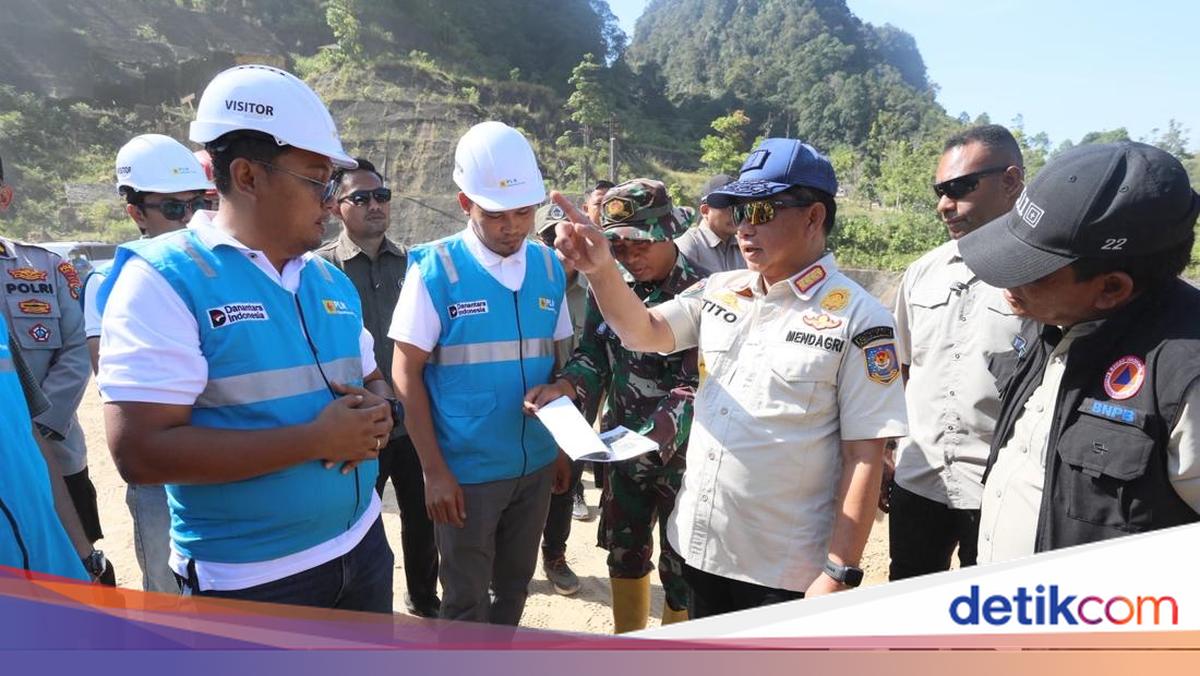
The Chairman of the Sumatra Post-Disaster PRR Task Force, Muhammad Tito Karnavian, previously emphasised that the government is not only focused on rebuilding affected areas but also on ensuring the entire recovery process possesses greater resilience against future disaster threats.
During monitoring and evaluation conducted by the PRR Task Force in East Aceh and Central Aceh in late May, the team identified several landslide points obstructing transport access on the Peureulaks-Lokop stretch, a strategic route connecting East Aceh, Gayo Lues, and Central Aceh. The landslides, which recurred ahead of Eid al-Adha, prevented vehicles from passing, forcing road users to seek alternative routes with significantly longer travel times.
These findings were immediately addressed through coordination with the Aceh National Road Implementation Agency (BPJN) and the Aceh Public Works Department. Consequently, both agencies have committed to accelerating field surveys and addressing landslide points that disrupt community connectivity.
In addition to the repairs in Lokop, the BPJN has also committed to deploying monitoring teams to the Inang-Inang-Bireuen stretch and several other affected roads to expedite the repair of landslides and road erosion.
These steps are part of the government’s strategy to ensure that the recovery achievements made over recent months are not undermined by subsequent disasters. Functional road infrastructure remains key to the distribution of aid, access to basic services, community economic activities, and the ongoing construction of permanent housing in various affected regions.