
PRR Task Force Opens Opportunities for Cooperation to Accelerate Flood-Prone River Normalisation
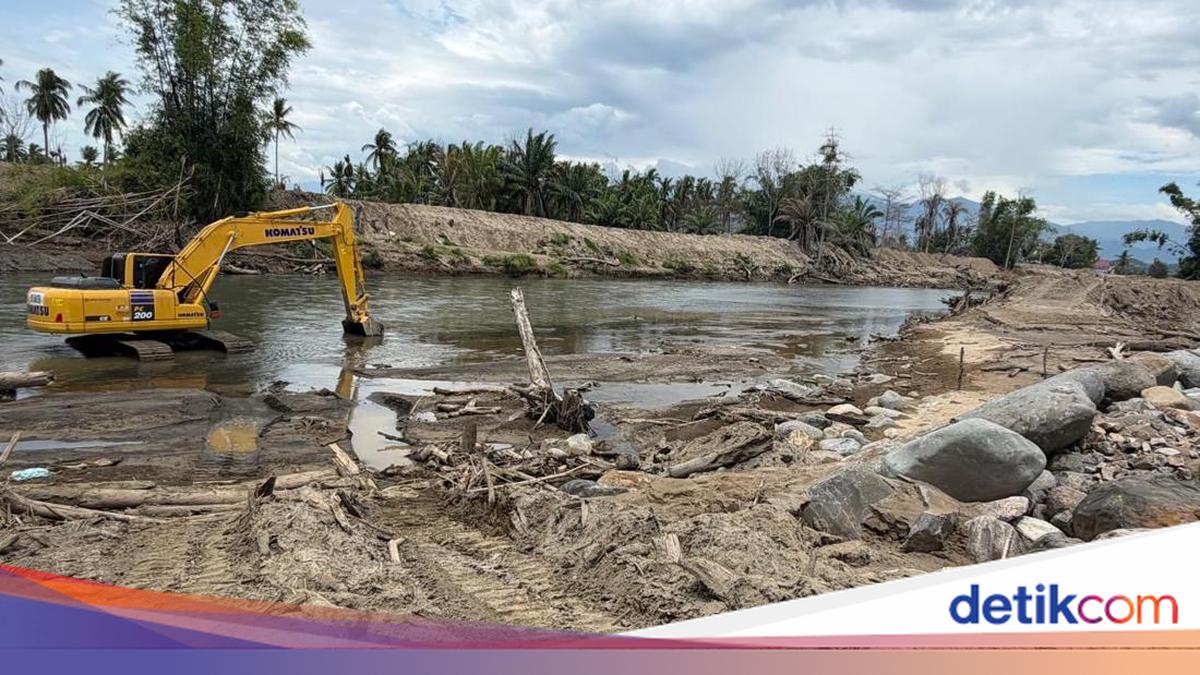
The Head of the Sumatra Post-Disaster Rehabilitation and Reconstruction Task Force (Satgas PRR), Muhammad Tito Karnavian, is encouraging regional governments to accelerate recovery measures, including opening opportunities for cooperation with third parties in handling sedimentation and river normalisation. According to Tito, the involvement of third parties can be one solution to speed up river normalisation, especially on river courses deemed not to have a high risk of flooding. This means regional governments do not have to wait for all works to be handled by the central government. “Rivers that are not prone to flooding again may be better handed over to the regional government, and then the regional administration can cooperate with a third party. Otherwise, it will not be completed if the central government has to do it all,” Tito said in a written statement on Wednesday (10/6/2026). Tito made the remarks during a Coordination and Evaluation Meeting on Handling Achievement and Post-Hydrometeorological Disaster Recovery Acceleration in Aceh, held with Aceh Governor Muzakir Manaf and 18 district/city heads of disaster-affected regions at the Serbaguna Meeting Room of the Aceh Regional Secretariat, Banda Aceh, on Tuesday (9/6). Tito noted that the river normalisation process still requires a long time and is estimated to continue until 2028. Therefore, acceleration at the regional level is an important step to support regional recovery while reviving the economic activities of affected communities. “There is still much to be done. Regarding this river normalisation, it could take until 2028. If there is a third party, just let the third party handle it,” he said. Satgas PRR data records that the river normalisation programme covers 115 handling locations across three provinces, encompassing Aceh, North Sumatra, and West Sumatra. To date, a total of 34 rivers have been reported as fully handled, while 91 others are still in progress. As for estuary normalisation, out of 38 target locations, nine have been completed and 31 are still under execution. Meanwhile, Aceh Governor Muzakir Manaf stressed that accelerating the recovery of community economic land must be the top priority in handling the post-hydrometeorological disaster. According to him, the repair of rice fields, fish ponds, irrigation, and river normalisation are critical to restoring the livelihoods of thousands of affected residents. “Everything needs handling. The most urgent are rice fields that cannot yet be used, irrigation, bridges, roads, and fish ponds. These are directly linked to the livelihoods of the people of Aceh,” he explained. He also highlighted the importance of river normalisation to reduce the risk of flooding, which has frequently disrupted residents’ activities. “The rivers also need to be cleaned up so that flooding does not occur again when it rains. Communities living near rivers are always impacted. Newly purchased household goods get damaged again because they are submerged by floods,” he concluded.