
PRR task force demands inter-regional grants not be hampered by bureaucracy
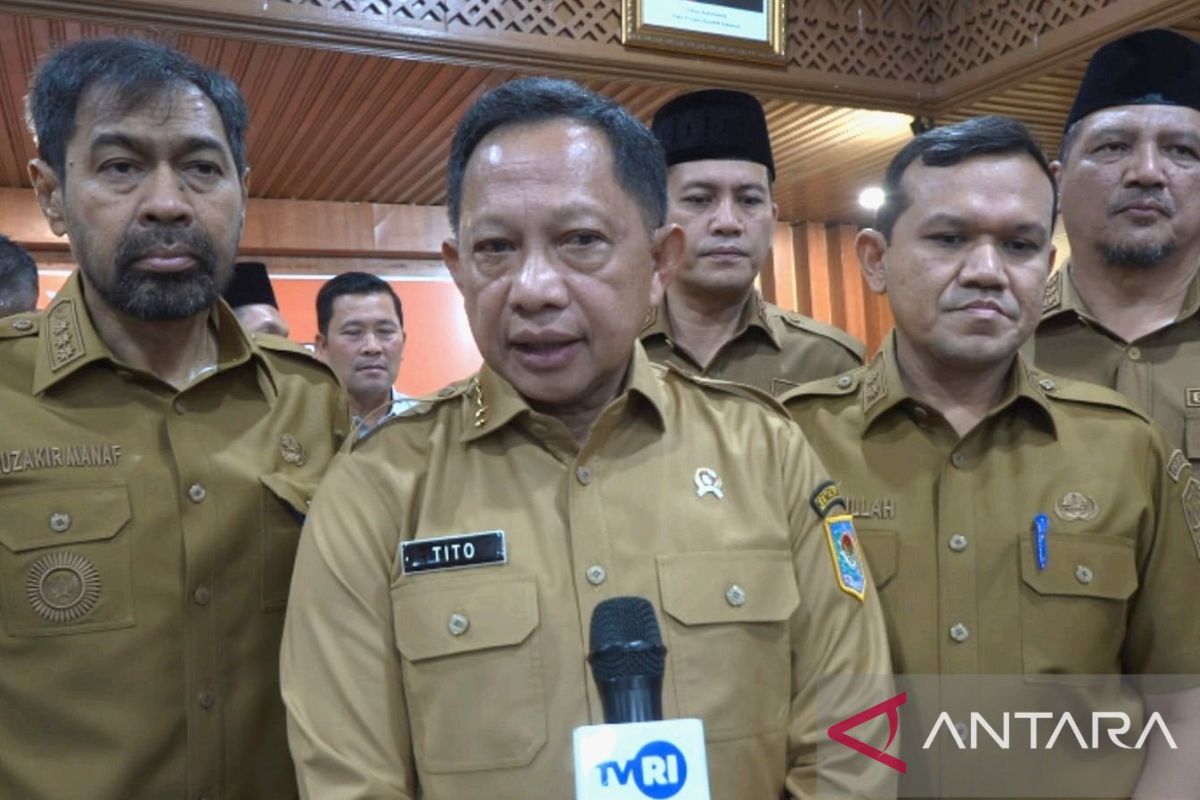
The Chief of the Task Force for the Acceleration of Rehabilitation and Reconstruction (Satgas PRR) following the Sumatra disaster, Muhammad Tito Karnavian, has requested that inter-regional grants not be hampered by bureaucracy in order to accelerate the recovery of areas affected by hydrometeorological disasters in Aceh, North Sumatra, and West Sumatra.
Tito observed that the distribution of inter-regional grants remains hindered by bureaucracy. In donor regions, a frequent obstacle is the slow issuance of a Regional Head Regulation (Perkada) on Financial Assistance. Meanwhile, in recipient regions, the process of drafting grant proposals as the basis for fund allocation has not been fully completed.
“I am rather disappointed. Why is it so slow? Because the agreement was reached quite a long time ago. This problem can be overcome. Firstly, recipient regencies have not submitted grant proposals. So, donors cannot give without a grant proposal,” Tito said in a statement in Jakarta on Wednesday.
He made the remarks during a Coordination and Evaluation Meeting on Development Achievements and the Acceleration of Post-Hydrometeorological Disaster Recovery at the Aceh Governor’s Office on Tuesday (9/6). During the meeting, Tito also stressed the importance of optimising Transfers to Regions (TKD).
According to him, TKD is one of the key instruments that regional governments can immediately utilise to run recovery programmes while waiting for the disbursement of permanent rehabilitation and reconstruction budgets under the Sumatra Post-Disaster Master Plan or Renduk. The government has previously prepared an additional TKD allocation of Rp10.6 trillion for the three affected provinces.
This support is provided to strengthen the regional fiscal capacity to accelerate the recovery of basic services, infrastructure, and the community’s economic activities following the disaster. In its implementation, part of the TKD is also directed through the inter-regional grant mechanism. This scheme serves as a form of fiscal solidarity, particularly to assist Aceh as the region experiencing the greatest impact from the hydrometeorological disaster.
Through this mechanism, regions receiving large TKD allocations can grant part of their support to other regions that are more severely affected but received relatively smaller budget allocations. For this reason, Tito asked both donor and recipient regions to immediately complete all ongoing administrative processes.
According to Tito, there is no reason for regional governments to delay completing grant administration, especially in a disaster recovery situation that requires swift action. To speed up the process, Tito has coordinated with Minister of Law Supratman Andi Agtas so that Heads of the Ministry of Law Regional Offices in the affected areas help accelerate the harmonisation of the Perkada.
Tito also reminded regions receiving large TKD allocations not to withhold the distribution of grants to severely affected areas. He believes such support is urgently needed to accelerate the community’s recovery, especially in areas with more severe damage. As a firm measure, Tito stated that the government can propose an evaluation of donor regions that deliberately stall for time. One option that can be pursued is to propose a reduction in the TKD allocation for regions deemed to be in default in the following fiscal year, and then redirecting it to the recipient regions.