
PRR Task Force Accelerates Permanent and Temporary Housing to Ensure Decent Living for Survivors
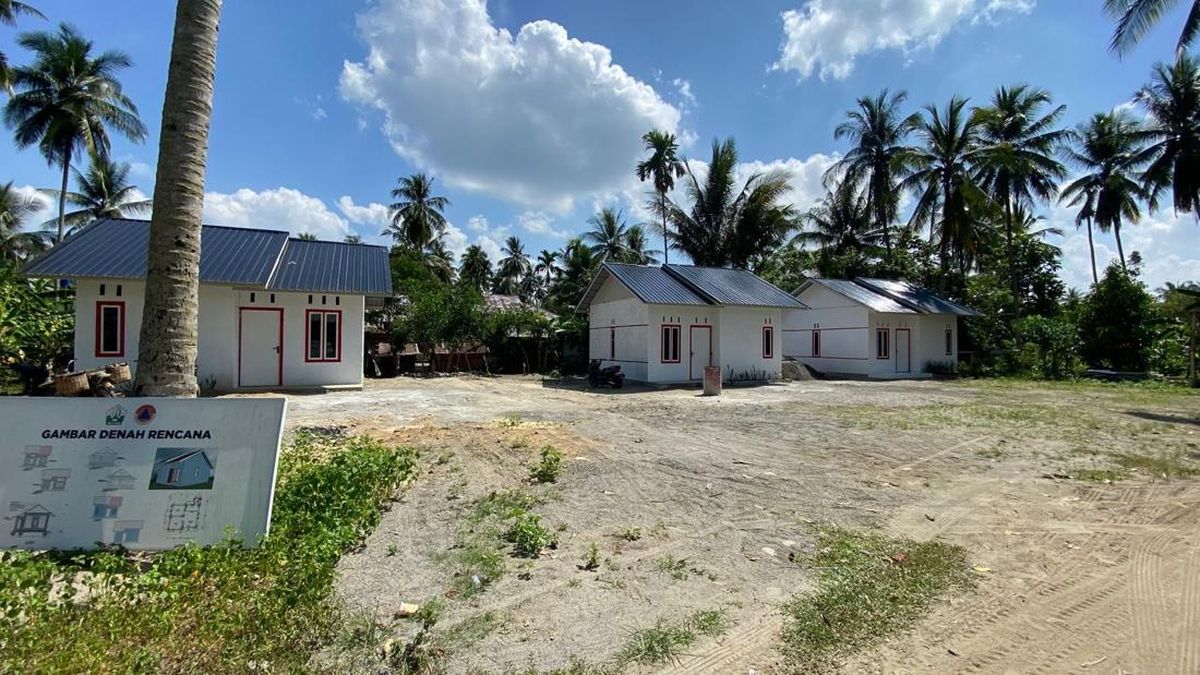
The PRR Task Force is accelerating the construction of permanent housing (huntap) and temporary housing (huntara) for survivors of hydrometeorological disasters in Aceh, North Sumatra, and West Sumatra. This effort is a priority to ensure that survivors no longer rely on emergency tents and promptly receive decent accommodation.
Based on PRR Task Force data as of 3 April 2026, 230 huntap units have been completed out of a total planned 35,368 units across the three provinces, with another 1,240 units under construction. This figure continues to grow with the acceleration underway on the ground.
In Aceh, 104 huntap units have been completed out of a target of 26,418 units, with 395 more in progress. North Sumatra has recorded 120 completed units out of 5,690 planned, with 404 under construction.
West Sumatra has contributed 6 completed huntap units out of a total of 3,260 planned, while 441 units are still in the construction process.
The construction of huntap is proceeding in parallel with the completion of huntara, intended for displaced persons to avoid living in tents. Data as of 3 April 2026 shows that 17,084 huntara units have been completed, equivalent to 89 percent of the target of 19,135 units.
Aceh is the province with the highest huntara realisation, with 15,259 units completed out of 17,281 planned, or 88 percent progress. North Sumatra has completed 995 units out of a target of 1,024, or 97 percent, while West Sumatra has fully completed its entire target of 830 units.
Beyond huntara, the PRR Task Force is also distributing Waiting Housing Funds (DTH) to survivors who choose not to live in huntara. Each family head receives Rp600,000 per month for three months, totalling Rp1.8 million.
As of 3 April 2026, DTH distribution has reached 100 percent to 14,021 recipients across the three provinces. The breakdown is 8,099 recipients in Aceh, 4,162 in North Sumatra, and 1,760 in West Sumatra.
Previously, the Head of the PRR Task Force, Muhammad Tito Karnavian, emphasised that this acceleration strategy is a concrete step to ensure the livability of affected communities. However, he stressed that the speed of huntap construction heavily depends on the accuracy of data collection by local governments.
The Task Force needs to validate housing model choices, whether survivors prefer an in-situ scheme (building on the old location) or relocation to communal areas. Active cooperation from regional heads is essential to ensure that every assistance is on target and aligns with residents’ wishes.
“The key to huntap is data. I respectfully request fellow regents/mayors to form a small team for data on houses that are severely damaged and lost. Ask them one by one: do they want in-situ self-building with a Rp60 million stimulus given in two stages, or in-situ handled by BNPB. The second option is building in a communal complex,” he stated firmly in a written statement on Friday (3/6).