
PRR Post-Disaster Acceleration Task Force Outlines Stages of Repair for Thousands of Schools in Sumatra
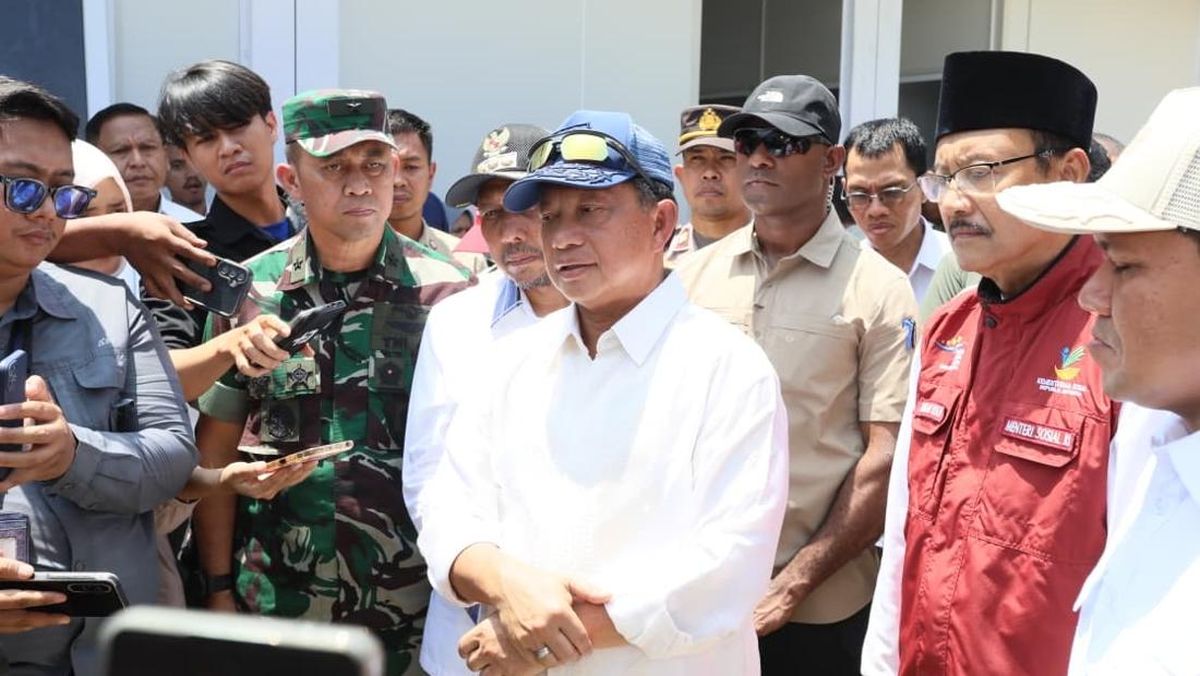
The Post-Disaster Acceleration of Rehabilitation and Reconstruction Task Force (PRR) for Sumatra has stated that it will soon repair thousands of educational facilities damaged by hydrometeorological disasters in Aceh, North Sumatra (Sumut), and West Sumatra (Sumbar) in phases.
This was conveyed by the Chair of the PRR Task Force, Tito Karnavian, during the handover of Social and Economic Assistance in Pidie Jaya, Aceh, on Friday (6 March). The government has classified the damage levels in schools from slight to moderate, heavy, and completely destroyed.
According to Tito, repairs will be carried out step by step with a prioritized scale.
“There are quite a lot of facilities affected, including PAUD, TK, SD, SMP, and SMA. This is being coordinated and we are collecting data from local governments,” he said.
“The damaged categories—slight, moderate, and heavy—are classified. Later, repairs will be carried out in phases with a priority scale,” he added.
The government ensures that teaching and learning continues. Schools with slight and moderate damage will remain in use while repairs are carried out.
“But the primary objective is that education must proceed. Therefore, those with slight and moderate damage will be repaired while school activities continue,” said Tito.
For schools heavily damaged, temporary emergency facilities such as learning tents provided by the government in collaboration with various ministries are being used.
“In the heavily damaged schools, there are pupils still learning in tents. BNPB and the Ministry of Education and Culture (Kemendikdasmen) have tents equipped with other facilities as well,” Tito explained.
He noted that overall, teaching and learning in disaster-affected areas has almost returned to normal, though not yet ideally. Preliminary data indicate that around 3,700 educational units require further handling.
“There are roughly 3,700 in the three provinces that must be addressed, and that will take time,” Tito said.
He explained that general schools such as PAUD, TK, SD, SMP, and SMA are coordinated by the Ministry of Education and Culture (Kemendikdasmen), while madrasah and pesantren data collection falls under the responsibility of the Ministry of Religious Affairs (Kemenag).
“For TK, SD, SMP, coordination is by Kemendikdasmen. Meanwhile madrasah and pondok pesantren are the responsibility of Kemenag for data collection,” concluded Tito.