
Provincial Government Ensures Sade Traditional Village Architecture Will Not Be Modernised After Fire
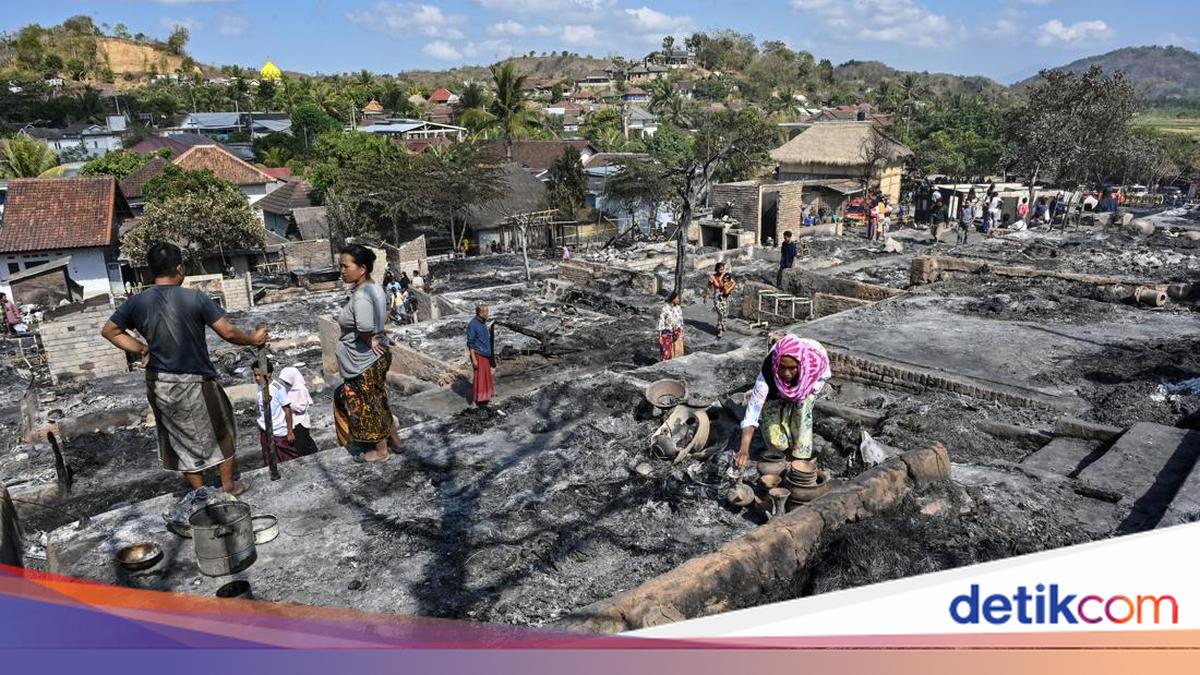
The Provincial Government of West Nusa Tenggara (NTB) will revitalise the settlement area of Sade Traditional Village in Rembitan, Central Lombok. The provincial government has assured that it will not alter the architecture of buildings in the traditional village to a modern style.
Head of the NTB Provincial Culture Office, Muhammad Ihwan, said the reconstruction effort will involve the Central Lombok Regency Government, the Ministry of Culture, the Cultural Preservation Centre, traditional leaders, and local residents. According to him, NTB Governor Lalu Muhamad Iqbal has instructed that the restoration of the Sade Traditional Village area must not disregard the Sasak cultural values that have been preserved for hundreds of years.
“We will create a design for how to rebuild. This is certainly not like an ordinary disaster because this cultural site must consider authenticity and data from the community,” Ihwan said during a visit to Sade Traditional Village on Monday (24/8/2026).
The revitalisation is part of efforts to handle the aftermath of a massive fire in Sade Traditional Village, Central Lombok, on Saturday night (22/8). The fire left traditional houses with thatched roofs in the oldest traditional village in Lombok razed to the ground.
In the initial phase, Ihwan said, the government’s focus is on comprehensive data collection regarding land ownership, affected buildings, and the needs of each family. He assured that all residents’ homes destroyed by the fire will not be replaced with modern buildings or rigidly standardised structures.
According to Ihwan, the spatial layout design in Sade Traditional Village will refer to architectural research results while taking into account guidance from local traditional leaders. The NTB Provincial Government, he continued, guarantees that the reconstruction process will be fair, transparent, and in accordance with historical data on community ownership.
“What we are rebuilding is not only the houses, but the identity and cultural ecosystem of Sade. Therefore, the community must be part of the process from data collection, design preparation to reconstruction implementation,” Ihwan said.
“This is not just a place for residents to live; there is a tourism and cultural business that the community manages itself,” he added.
Ihwan expressed hope that the financing scheme for the reconstruction of the Sade Traditional Village cultural area could be borne by the central government. The technical work will be carried out together with the Public Works and Spatial Planning Office so that the Sade area is better organised without damaging its authenticity.
“There is also a lot of assistance from donor agencies, the community and others. So there is no fixed funding scheme yet. We are still waiting. The Ministry of Culture and the Ministry of Tourism are key to this reconstruction,” Ihwan said.
Meanwhile, the NTB Provincial Government will re-register the exact number of houses and residents affected by the Sade Traditional Village fire. The provincial government considers that, as of the second day after the fire, it has not yet received definitive figures.
“We will conduct a re-registration by name and by address,” said Assistant I of the NTB Provincial Secretariat, Lalu Muh Faozal, during a visit to Sade Traditional Village on Monday.
Faozal explained that the data collection is being carried out by the Village Government and the Central Lombok Regency Government. According to him, the data collection process will also include details on house sizes and cultural heritage before the fire.
“But what is clear is that we will help complete the houses,” he added.
Previously, the Central Lombok Regency Government recorded that the fire in Sade Traditional Village destroyed 75 houses (previously reported as 129 houses) and 69 art shops owned by residents. In addition, a number of traditional and public facilities were also affected, including a mosque, a berugak, and one thatched-roof granary.