
Protests Over Voter Rolls Continue as India’s Opposition Turns to the Courts
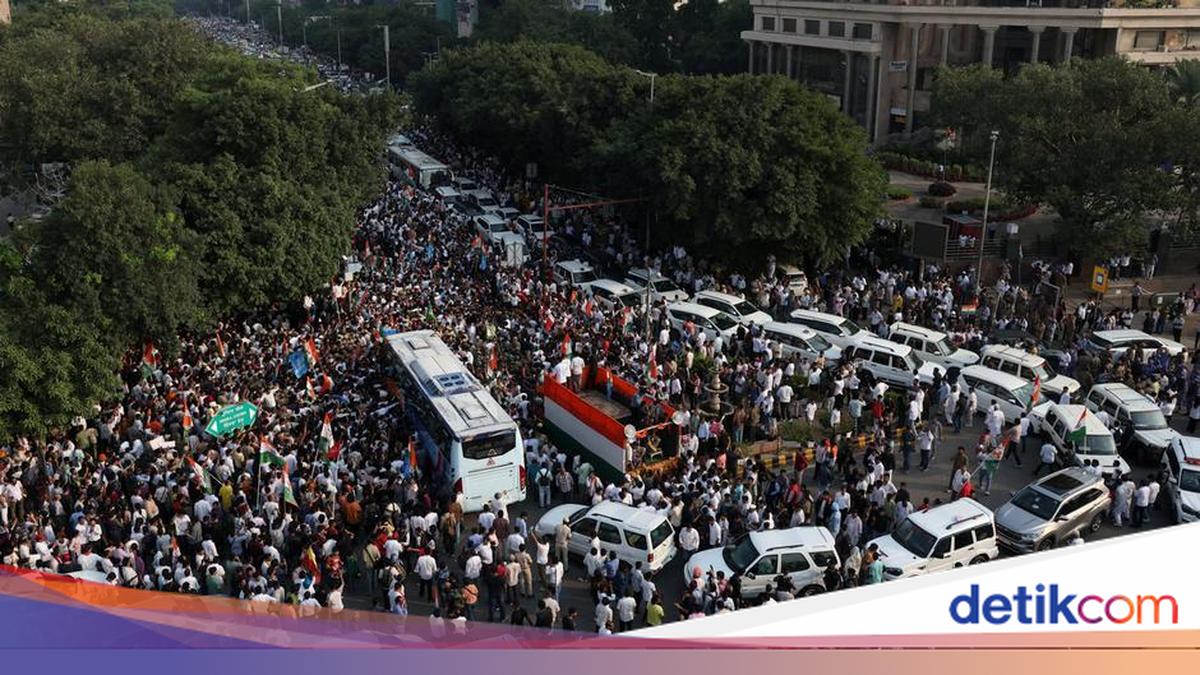
Leaders of India’s opposition parties joined a protest outside the Supreme Court on Monday (12 October), challenging revisions to the voter rolls that they say favour Prime Minister Narendra Modi’s Bharatiya Janata Party (BJP). The demonstration came after police detained thousands of activists during a major security operation in New Delhi over the weekend.
Thousands of supporters and several opposition MPs submitted a petition to the Chief Justice of India. They alleged irregularities in the nationwide voter-roll revision process.
The wave of protests in India was initially led by the youth movement Cockroach Janta Party (CJP), or Cockroach Party. Demonstrations have spread since electoral authorities began revising the voter rolls last year. More than 130 million names have been removed from the rolls, drawing criticism from opposition parties and civil society groups. Demonstrators are demanding the resignation of Chief Election Commissioner Gyanesh Kumar.
The revision has been described as politically motivated and as risking the loss of voting rights for eligible citizens. The BJP and the Election Commission of India reject the allegations, saying the exercise is needed to remove duplicate entries and voters who are no longer eligible.
Rahul Gandhi, a leader of the opposition Congress Party, said the growing protests were a struggle to defend India’s Constitution. “We will not back down,” Gandhi told reporters in New Delhi.
Gandhi, who comes from one of India’s most influential political families, is seeking to turn the protests into a broader movement challenging Modi.
During the demonstration, Gandhi climbed onto an open-top bus and held up a copy of the Indian Constitution. Thousands of Congress supporters, student activists and other demonstrators followed behind.
The large turnout contrasted with events over the previous weekend, when authorities detained thousands of people, including Cockroach Party leaders and activists as well as several journalists. At the time, much of the capital was also shut down to prevent large-scale protests.
Modi has not publicly commented on the demonstrations. Several BJP leaders have played them down, with some describing the activists as anarchists.
As tensions mounted, New Delhi Police announced on Monday (12 October) that Jantar Mantar, a site that had served for decades as a principal venue for demonstrations in the capital, would no longer be designated an official protest site. Police have instead set aside three other locations for demonstrations.
India detains Cockroach Party activists
The Cockroach Party said on Tuesday (13 October) that several of its senior leaders had been detained after entering Jantar Mantar.
A video posted by CJP leader Abhijeet Dipke showed protesters climbing over barricades, running into the empty Jantar Mantar grounds and waving the Indian flag. Police soon chased and detained them.
“CJP has succeeded in entering Jantar Mantar to reclaim it,” the group wrote on social media.
CJP named several of those detained, including Saurav Das, Ashutosh Ranka and Ajinkya Shinde. “They have all been detained by Delhi Police,” it added.
Amid rising tensions, Prime Minister Narendra Modi spoke at a business conference in New Delhi on Tuesday (13 October). Although he did not directly refer to the demonstrations, he described India as the “mother of democracy”.
“In our country, people openly debate various issues and discuss different points of view,” Modi said.
Young Indians change their protest tactics
Young demonstrators in India are finding creative ways to evade surveillance and keep protests going amid a heavy police presence in New Delhi.
One initiative was organised by Meghnad S., a 36-year-old content creator. Working with about 170 volunteers, he has helped track demonstrators detained by police. Using mobile phones, volunteers monitor the movements of police vehicles. Once they find out where detainees have been taken, they match the location with available volunteer drivers.
“Once we know where the detainees are, we use WhatsApp groups to find volunteer drivers nearby. We also make sure their vehicles have enough food, drinking water and fuel,” Meghnad told AFP.
In some cases, volunteer doctors have also helped. “Once everything is ready, we try to get doctors from our network to accompany the drivers, in case the detainees need medical assistance,” he said.
Evading surveillance cameras
Student leader Neha Bora became a talking point on social media after police mistakenly arrested someone who looked like her. Bora, 29, managed to get past security barricades and run towards central New Delhi before she was eventually detained.
She later posted a photo with the woman who resembled her, joking that the likeness was “pure coincidence, not a strategy”.
In another incident, demonstrators were seen holding on to one another as they were dragged towards police buses. Some later escaped through the driver’s seat or a rear window. AFP reported that some protesters wore Batman masks to make it harder for authorities to identify them.
Bollywood actress Richa Chadha also shared advice on avoiding facial-recognition technology. In a video posted on social media, she suggested protesters use make-up to reduce the likelihood of being identified by surveillance cameras.
“Protesters, since you are being filmed without your consent, try using make-up to avoid surveillance cameras or facial-recognition technology,” she wrote.
Source: jawawa.id (https://jawawa.id/newsitem/protests-over-voter-rolls-continue-as-indias-opposition-turns-to-the-courts-1791967875)
Originally published by detikcom (https://news.detik.com/dw/d-8706562/protes-daftar-pemilih-berlanjut-oposisi-india-tempuh-jalur-hukum), translated from Indonesian