
Protests Erupt as Dozens Force Entry into NU Congress Arena
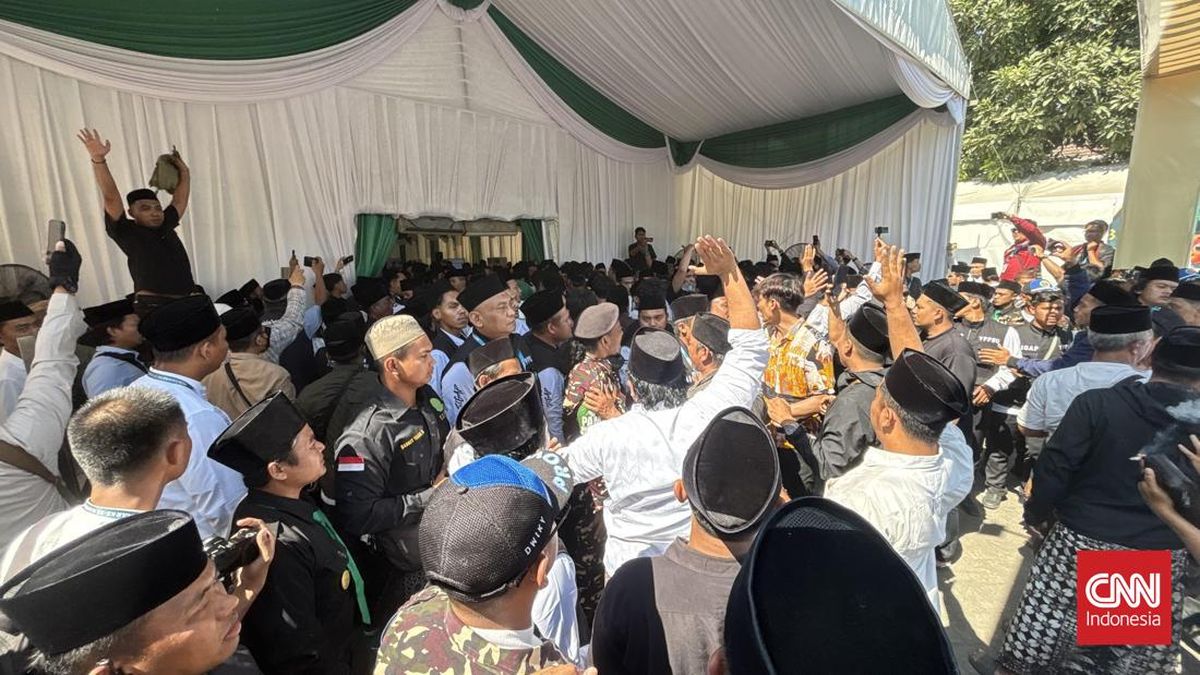
The situation around the arena of the 35th Nahdlatul Ulama (NU) Congress at the Bahrul Ulum Islamic Boarding School Multipurpose Hall (GSG) in Tambakberas, Jombang, East Java, turned chaotic on Sunday (30/8).
Dozens of people forced their way into the main arena of the congress plenary session, demanding to be met by the congress committee. Observations at the scene showed that the group, identifying themselves as Nahdlyin Muda Indonesia, moved from the western side of the GSG, arriving in clusters and pushing through the entrance while delivering orations.
“Do not prevent us from meeting the committee chairman; we have the right to convey our aspirations,” one individual stated through a loudspeaker.
Security personnel from the Barisan Ansor Serbaguna (Banser), the Satuan Inspeksi Tanggap Pengamanan (SIGAP), and Pagar Nusa were unable to prevent the crowd from breaching the perimeter. The ensuing scuffle and pushing led to damage to a themed photobooth backdrop and forced the evacuation of digital attendance computers from the entrance.
In their demands, the protesters urged the committee to cease the use of the Association Regulation (Perkum), which they believe has the potential to disqualify several candidates for the Chairperson of the PBNU (Executive Board of Nahdlatul Ulama). The protest coordinator, Fathoni, argued that Perkum Number 3 of 2025, regarding the requirements for NU officials, could be used discriminatorily during the nomination process.
Specifically, Article 13, paragraph (2), point c of the regulation states that a candidate for PBNU Chairperson must ‘not have held office in a political party or an organisation affiliated with a political party within the last 1 (one) year.’ Fathoni asserted that this ‘political waiting period’ and the associated organisational sanctions could eliminate some of the best cadres from the running.
The protesters argued that the regulation should serve as an instrument for organisational management rather than a political tool to hinder specific candidates. They also questioned the process of discussing and implementing these rules during the 35th NU Congress.
The Nahdliyin Muda Indonesia group presented seven demands to the committee and the PBNU leadership. First, they reject the use of the regulation as a unilateral and discriminatory tool to block nominations. Second, they demand the regulation return to its original function of organisational management. Third, they urge the committee to apply all rules fairly, transparently, and consistently, without retroactive application or biased interpretation.
Fourth, the group demands an official explanation and equal clarification space for certain figures regarding their eligibility. Fifth, they emphasise that the highest sovereignty of the organisation lies with the congress participants (muktamirin), and therefore, the rights of regional and branch NU branches to determine the best candidates must not be limited by administrative engineering. Sixth, they call upon scholars and all congress participants to maintain the dignity of the organisation by ensuring the contest is honest and follows the statutes. Seventh, they call upon all NU members, particularly the youth, to monitor the congress critically, peacefully, and constitutionally.
As of now, dozens of protesters remain in the hall’s courtyard, and the plenary session for the election and appointment of the Ahlul Halli wal Aqdi (AHWA) has yet to commence.