
Protecting Water, Protecting Production: Solutions for Building Indonesia and Strengthening Efficiency Amidst Drought
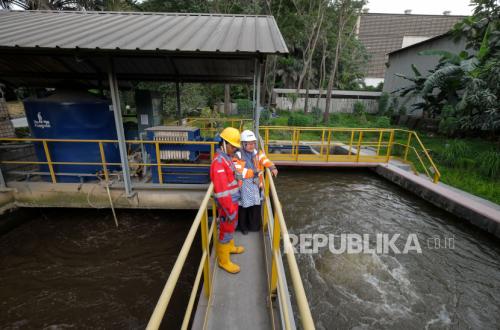
Based on analysis and forecasts from the BMKG, dry atmospheric conditions are likely to persist in several regions of Indonesia as the 2026 dry season is predicted to be drier and longer than normal. This situation is reinforced by the El Niño phenomenon, which is expected to last until early 2027. This condition underscores the importance of efficient and responsible water management across various sectors.
In response to these conditions, PT Solusi Bangutig Indonesia Tbk (“Solusi Bangun Indonesia” or “the Company”) continues to strengthen water management through usage efficiency, water reuse, the development of alternative water sources, and the implementation of technology to optimise water use and distribution in operational activities.
As part of its 2030 Sustainability Target, Solusi Bangun Indonesia aims to reduce raw water withdrawal by 10% compared to the 2019 baseline. By 2025, the Company has successfully reduced raw water withdrawal by 45%, far exceeding the target set for 2030.
The Operations Director of Solusi Bangun Indonesia, Edi Sarwono, stated that changing climate patterns are driving industries to become more adaptive in managing water resources. “Water is a vital resource for life, including economic and industrial activities. Therefore, we continue our efforts to reduce the use of surface water by utilising alternative water sources such as rainwater harvesting, the use of recycled water, and the use of technology that helps optimise water distribution to production facilities to ensure greater efficiency,” said Edi Sarwono.
These efforts are reflected in the changes in the water usage composition across all the Company’s operational areas. According to the 2025 Sustainability Report, total raw water withdrawal decreased from 2,252 megalitres in 2024 to 2,132 megalitres in 2025. The composition of surface water withdrawal decreased by approximately 18%, from 841 megalitres in 2024 to 688 megalitres in 2025. Groundwater usage fell by about 11%, from 487 megalitres to 432 megalitres, while the volume of harvested rainwater increased by approximately 9%, from 676 megalitres to 734 megalitres.
The use of recycled water is also being continuously increased. In 2025, cement production activities across the four Solusi Bangun Indonesia plants utilised 563 megalitres of recycled water from the production process, a figure equivalent to 31.7% of total water withdrawal and an increase of 24% from the previous year.
Solusi Bangun Indonesia applies various approaches tailored to the characteristics of each production facility. At the Cilacap Plant in Central Java, rainwater collected in settling ponds is reused for production needs. Through this initiative, the Cilacap Plant recorded a 37% reduction in raw water usage in 2025 compared to the 2019 baseline.
Meanwhile, the Narogong Plant in West Java implements Programmable Logic Control (PLC) and Internet of Things (IoT) technology in River Pump Management to regulate water distribution more precisely. The application of this technology helped reduce freshwater consumption from rivers by 82 megalitres throughout 2025.
The Lhoknga Plant in Aceh utilises rainwater through collection facilities, which is also part of the effort to reduce river water usage for operational needs. In 2025, the Lhoknga Plant successfully reduced raw water usage from rivers by 100%.
According to Edi Sarwono, these various initiatives are part of the Company’s efforts to optimise water use through efficiency, reuse, and the utilisation of alternative sources. “Resilience in the face of climate change is built from the decisions we make today. Every effort to reuse water, utilise alternative sources, and reduce water loss helps maintain its availability for operations, the environment, and the community,” concluded Edi Sarwono.