
Protecting Turtles, Preserving a Vital Global Ecosystem
East Kalimantan is a province in Indonesia endowed with extraordinary marine wealth. For years, the local government and various stakeholders have remained committed to its preservation. One of the most significant areas, attracting both national and international attention, is Berau Regency. This region has long been recognised as a vital habitat for green turtles (Chelonia mydas) and is considered one of the largest and most essential sites for the species in Southeast Asia.
Furthermore, Berau is an integral part of the Sulu-Sulawesi marine seascape, which falls within the Coral Triangle—a region globally recognised as the richest centre of marine biodiversity on Earth. This area serves as a gathering point for various rare marine species, making it an invaluable natural asset. To ensure the continued health of the natural environment and turtle populations, a series of in-depth and structured monitoring and survey activities are being conducted.
These activities involve cross-institutional cooperation, including the Nusantara Conservation Foundation (YKAN), the East Kalimantan Provincial Marine and Fisheries Service, and the Pontianak Coastal and Marine Resource Management Office under the Indonesian Ministry of Marine Affairs and Fisheries, supported by the Solutions for Marine and Coastal Resilience in the Coral Triangle programme. Multi-sectoral survey teams are working directly in the field to collect accurate and comprehensive data involving local communities.
The results of this survey are highly encouraging for the future sustainability of the marine ecosystem. Out of 27 monitoring locations—ranging from Sangalaki Island, a well-known nesting site, to the Sulaiman Bay and areas around Balikukup Village—26 locations were classified as ‘green’. This category indicates that these sites are very healthy and highly suitable for turtle nesting. Researchers found that these beaches possess ideal characteristics, including appropriate sand texture for egg coverage, suitable beach gradients, natural vegetation providing shade, and, most importantly, minimal human disturbance.
In conducting this monitoring, the team also utilised modern technology, specifically unmanned aerial vehicles (drones), to maximise results. Drones allow for the coverage of vast areas and access to locations difficult to reach by boat or on foot. The high-resolution imagery (between 1.5 to 5 centimetres) enables researchers to accurately distinguish turtle bodies from rocks, coral, or other objects on the sea surface. Through this technology, the team successfully mapped turtle habitats across 12 different locations and identified at least 913 turtles breeding within the Derawan Islands and Surrounding Coastal and Small Islands Conservation Area (KKP3K-KDPS). This data serves as a robust foundation for the government to make informed decisions regarding sustainable conservation management.
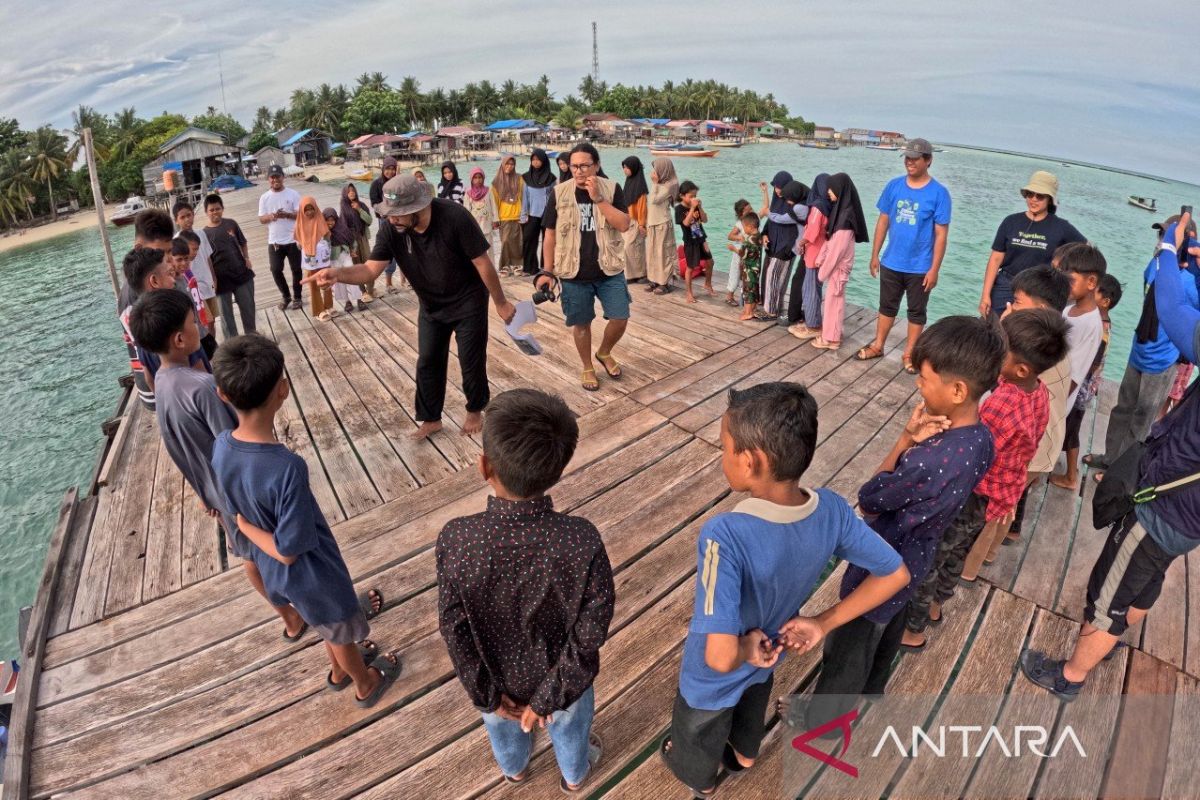
While territorial protection and technology are effective, experts agree that these measures alone are insufficient for long-term turtle preservation. Irhan Hukmaidy, Head of the East Kalimantan Provincial Marine and Fisheries Service, emphasised that true conservation is a long-term investment involving education and character building. “Protecting turtles is not just about creating regulations or placing officers in the field. Far more important is instilling an understanding in the younger generation about the value of these animals and their vital role in maintaining marine balance,” he stated.
This perspective is strongly supported by local communities. Arifin, the Secretary of Balikukup Village, expressed high appreciation for the ongoing conservation efforts. He noted that instilling environmental awareness from an early age is crucial, as the children of the village are the future guardians of their natural heritage. Through ongoing education by YKAN and the government, the community hopes to foster a generation capable of ensuring their natural wealth remains preserved for the future.