
Protecting the Sea Brings Prosperity to Fishers on Lanjukang and Langkai Islands
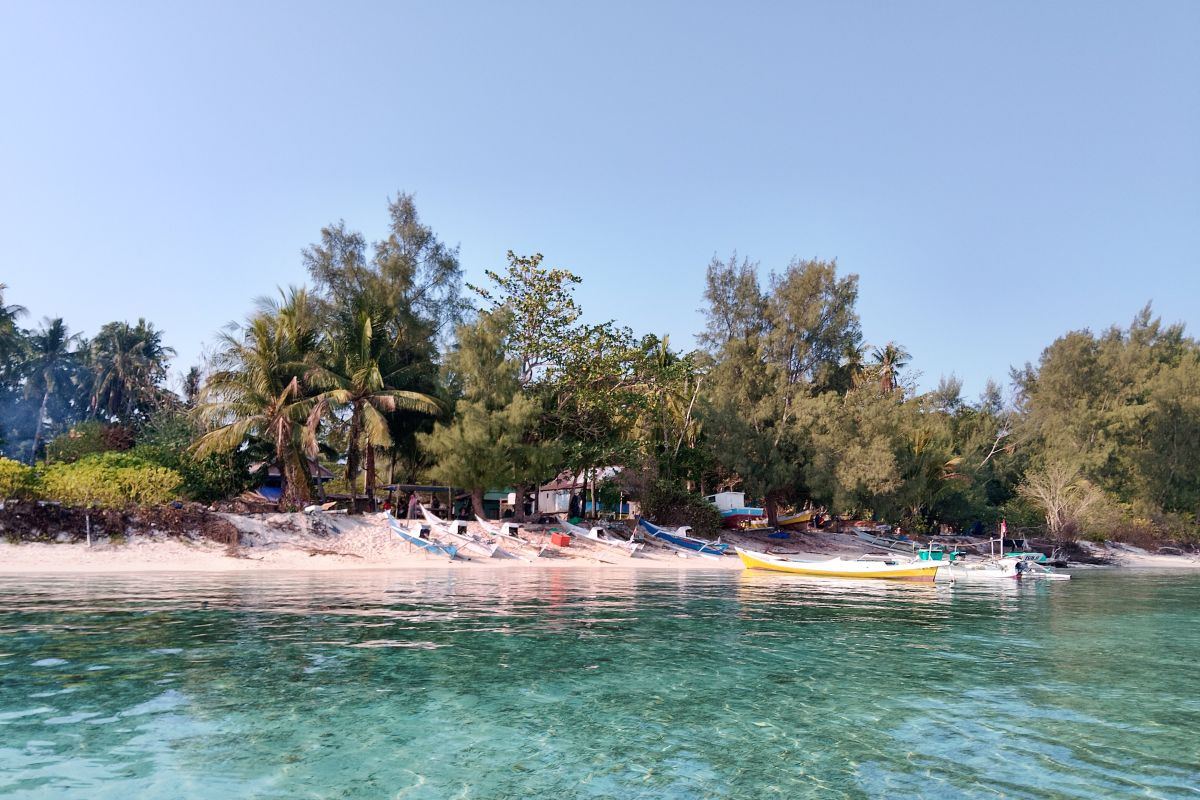
The roar of the waves and the breeze before dawn welcomed octopus fishers returning from the waters of the Spermonde Islands in South Sulawesi. One by one, boats were moored along the shores of two of Makassar’s outermost islands, Lanjukang and Langkai.
Among the fishers was 48-year-old Erwin. He has been familiar with the sea since the mid-1980s. Following in the footsteps of his grandfather and father, he went fishing for fish and octopus from a young age.
But it was only about a decade ago that he began focusing on octopus as his main catch. Octopus fishing is not a sideline: it requires skill in reading sea conditions and identifying where octopuses hide.
He can catch 15 octopuses in a day. Those he sells to collectors fetch a higher price than fish.
Some of his catch weighs less than one kilogram and is classified as Grade C or D. Occasionally, however, he catches Grade A octopus weighing more than two kilograms, or Grade B octopus weighing between one and 1.9 kilograms. These sizes are sought after by export markets, including Europe and the United States.
For Erwin and other fishers, octopus is a source of income for their families.
But securing catches like those available today has not always been easy. Erwin and other fishers in the area have experienced how difficult it can be to find octopus.
Data from the Ministry of Marine Affairs and Fisheries show that South Sulawesi exported 2.1 million octopuses in 2020, worth about US$10.7 million.
The lucrative economic value encouraged overexploitation. In the past, the principle was simple for fishers: the more they caught, the more they earned.
Fishing without regard to the number or size of octopuses gradually affected stocks at sea. Catches became smaller and the octopuses themselves shrank in size.
Erwin still remembers how difficult it was to find octopus in 2020. Although social restrictions were in place and fewer fishers went to sea, dwindling stocks made it increasingly hard to bring home a good catch.
“It became harder and harder to find octopus. At most, I would get three to five a day, and they were small. Going to sea was only enough to put food on the table,” Erwin said.
This situation led local fishers to realise that the sea could not be made to produce indefinitely without being given time to recover.
A wind of change
Source: jawawa.id (https://jawawa.id/newsitem/protecting-the-sea-brings-prosperity-to-fishers-on-lanjukang-and-langkai-islands-1791856412)
Originally published by Antara (Indonesian) (https://www.antaranews.com/berita/5782925/menjaga-laut-jadi-berkah-nelayan-pulau-lanjukang-dan-langkai), translated from Indonesian