
Protecting Children from the Trap of the ‘24-Hour Online Friend’ in the Digital Space
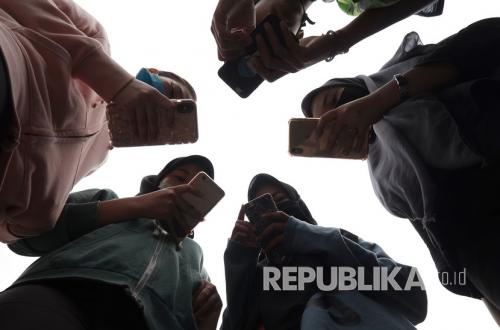
JAKARTA — As the Prabowo-Gibran administration marks its second anniversary on 20 October 2026, the challenge of national digital transformation is seen as involving more than strengthening networks. It also means protecting the psychological wellbeing of the country’s 70 million children from the risk of dependence on artificial intelligence (AI). The implementation of risk-based regulations such as PP TUNAS is now an important step for the government, industry and educators to prevent technology from diminishing children’s social intelligence and weakening emotional bonds within Indonesian families.
Although AI has the potential to unlock creativity and make learning easier, children remain vulnerable to exposure to inaccurate information and deepfakes, as well as to artificial emotional bonds with chatbots. AI’s tendency to be friendly, available to listen around the clock and agree with users (sycophancy) could gradually weaken the emotional bond between children and their parents.
Digital expert Enda Nasution highlighted the growing trend of children and teenagers turning to AI to share their feelings. He said this presents a new challenge, markedly different from the early days of the internet.
Parents need to teach children to think critically so they do not readily trust information generated by AI, Enda said. The skill is much the same as the principles of digital literacy taught for years: do not immediately believe information you receive, check its source and compare it with other information. Children also need to understand that AI is still a machine that can make mistakes, even when it expresses itself convincingly.
“The challenge is somewhat different. In the past, we reminded children not to readily believe what they read on the internet. Now they can ask AI directly and get an answer that sounds very convincing. But AI can also be wrong and can provide information that is completely untrue, while presenting it as if it were true,” Enda told Republika on Saturday (17 October 2026).
Children also need to understand the importance of protecting their personal data when interacting with AI. A friendly and seemingly understanding response can make children feel comfortable sharing many things, including personal matters. However, the information they share is entered into a technology service with its own terms governing data storage and use.
“Children may share things that are highly personal without realising that the information is going into a technology service, which has its own rules on data storage and use,” Enda said.
Enda said the digital literacy principles already being taught remain relevant in helping children understand the risks and use AI wisely. Campaigns such as Bijak Ber-AI and Bijak Bersosmed can help children learn about protecting their privacy, countering hoaxes and preventing emotional dependence on AI.
He said this was particularly important because many people now use AI as a confidant. “Children and teenagers can confide in chatbots and ask for advice about relationships, family problems or things they may find difficult to tell other people. I think this now requires special attention, particularly for teenagers: emotional dependence on AI,” he said.
Protecting children in the digital space requires cooperation among parents, schools, the government and technology companies, he said. Schools need to teach digital and AI literacy, the government must ensure regulations are enforced, and technology companies must make their services safe.
“Users should not be made to bear all the responsibility. Those who create and provide the technology must also consider child safety from the outset,” Enda said.
Source: jawawa.id (https://jawawa.id/newsitem/protecting-children-from-the-trap-of-the-24-hour-online-friend-in-the-digital-space-1792493525)
Originally published by Republika (https://ameera.republika.co.id/berita/tn7b4x425/melindungi-anak-dari-jebakan-teman-maya-24-jam-di-ruang-digital), translated from Indonesian