
Protecting Berau’s Ancient Coastal Heritage
“We now realise that these turtles belong to no one, but to all of us, and must be protected together.”
Samarinda (ANTARA) – In the currents of the Sulu-Sulawesi seas, carrying abundant nutrients from distant oceans, lies a tranquil haven in Berau Regency, East Kalimantan. At the heart of the world’s Coral Triangle, the area is Indonesia’s largest home for green turtles.
Each season, these ancient creatures, which have existed on Earth for hundreds of millions of years, cross the waves and travel thousands of kilometres, returning to the warm sands of the beaches where they first saw the light.
Their journey home is no longer solitary. Along Berau’s shores, in Balikukup Village, Teluk Sulaiman and Teluk Sumbang Village, local people have opened their hearts. A new partnership has emerged between coastal communities who love their sea and the turtles returning to their ancestral home.
Through the Turtle Conservation Unit, residents’ hands are now occupied not with taking, but with protecting. They understand that the turtles coming ashore to lay eggs belong to no one: they are a natural inheritance entrusted to all of us to safeguard for children and grandchildren yet to be born.
The journey begins in a place the turtle has never seen. A green turtle hatches from the warm sand on a Berau beach, crawls slowly towards the waves, then disappears into the vast blue ocean.
Decades pass. It swims past distant islands, crosses national borders and faces storms and waves, until an ancient instinct calls it home. It returns to the same beach where its life began.
This cycle has been repeated since dinosaurs walked the Earth. Berau is the largest home in Indonesia for this extraordinary journey.
Berau is more than a temporary stopping point: it is at the heart of the Sulu-Sulawesi seascape, one of the most biodiverse regions on Earth.
Coral reefs flourish in these waters like an underwater garden that never sleeps. Mangrove forests stretch along the coast, shielding the land from pounding waves and providing shelter for thousands of small fish species.
Green seagrass meadows on the sea floor provide natural feeding grounds for green turtles, which quietly eat seagrass leaves as their flippers move slowly. These habitats form a fragile yet extraordinarily beautiful ecosystem, in which turtles play an important part.
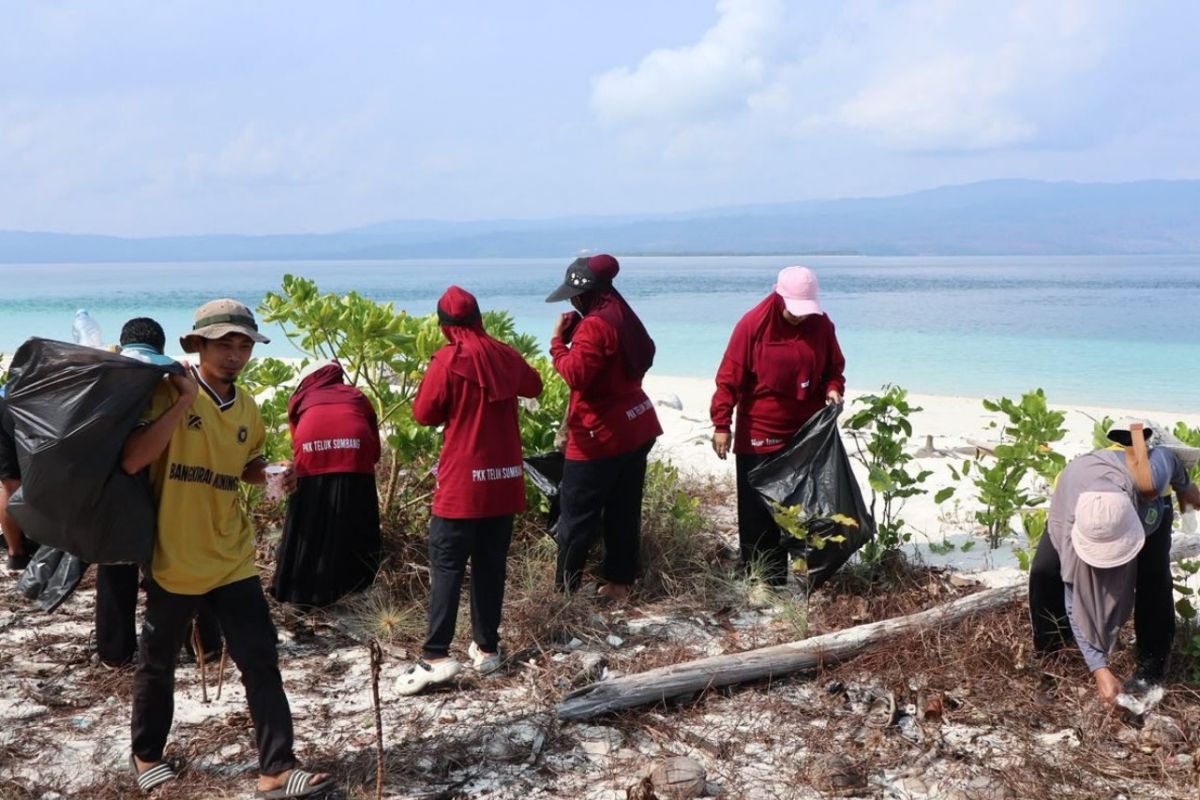
But this story now faces challenges unknown in ancient times. Nesting beaches are often covered in plastic waste carried by currents from distant waters. Lights from coastal buildings disorient turtles approaching the shore, causing them to turn back without laying their eggs.
Eggs that should hatch in the sand are often taken before they can develop, because not everyone understands that every egg lost means a hope for new life extinguished forever.
The rules are in place. Law No. 5 of 1990 on the Conservation of Biological Natural Resources and Their Ecosystems, amended by Law No. 32 of 2024 and reinforced by Law No. 6 of 2023 on Job Creation, stipulates that all turtle species and their eggs are legally protected.
But written rules are not enough to protect every stretch of a coastline hundreds of kilometres long. What is truly needed is awareness among the people who live closest to the sea.
The partnership was born of concern.
Source: jawawa.id (https://jawawa.id/newsitem/protecting-beraus-ancient-coastal-heritage-1794318718)
Originally published by Antara (Indonesian) (https://www.antaranews.com/berita/5844931/menjaga-jejak-purba-di-pesisir-berau), translated from Indonesian