
Prosecutors: Nadiem Planned Official Reshuffle and Digitalisation Programme Before Ministerial Appointment
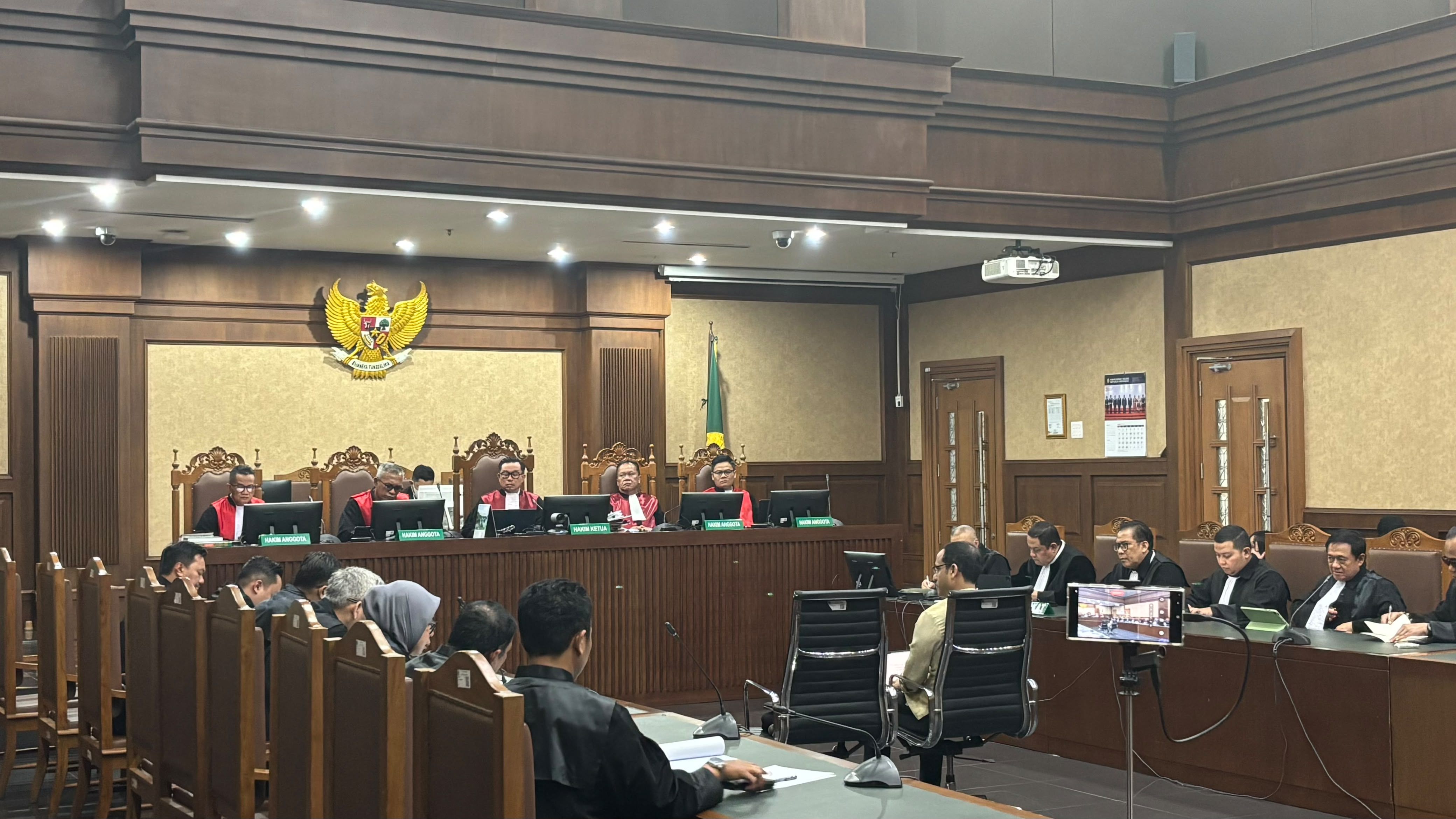
Public prosecutors have revealed allegations that Nadiem Makarim planned a reshuffle of strategic officials within the Ministry of Education and Culture, alongside a shift in the direction of education digitalisation programmes, even before he was officially inaugurated as minister. The statement was made by prosecutors in response to arguments from the defendant’s legal counsel, who claimed that the replacement of officials within the ministry was carried out through a job auction mechanism by a selection committee and therefore did not constitute an act by the defendant. According to prosecutors, this argument contradicts trial facts. The selection committee was only tasked with screening and proposing the three best candidates for each position, whilst the final decision rested with the minister as the personnel supervisory official. “Therefore, the appointment of Sri Wahyuningsih to replace Hamid Muhammad as Director of Primary Education and Mulyatsah to replace Dewi Puspitawati as Director of Junior Secondary Education was the defendant’s own decision, not the selection committee’s,” said the prosecutor.
The prosecutor also deemed it illogical for a minister to claim ignorance of the replacement of echelon II officials who directly oversee the ministry’s priority programmes. During the trial, the prosecutor presented electronic evidence in the form of WhatsApp conversations in groups called “Mas Menteri Core Team” and “Education Council”, which were created before the defendant was inaugurated as Minister of Education and Culture in 2019. Based on these conversations, the prosecutor assessed that the defendant had planned to replace the roles of several strategic officials with people from outside the ministry, including Jurist Tan and Fiona Handayani. According to the prosecutor, on 19 September 2019 the defendant conveyed this plan within a WhatsApp group consisting of several close associates. Then, on 6 November 2019, the defendant, along with Jurist Tan and Fiona Handayani, also allegedly discussed changes to the education digitalisation programme budget and technology platform changes at the Ministry of Education and Culture. At that time, neither had been appointed as special staff to the minister.
The prosecutor stated that this plan was subsequently realised after the defendant appointed Jurist Tan and Fiona Handayani as special staff on 2 January 2020. Both are said to have obtained authority exceeding the duties of special staff as stipulated in laws and regulations. Referring to the testimony of state administrative law expert Ahmad Redi, the prosecutor stressed that special staff are only tasked with providing advice and considerations to the minister, not making decisions or carrying out governmental functions. In practice, however, the prosecutor assessed that Jurist Tan and Fiona Handayani acted as extensions of the defendant in governmental, regulatory, financial, and personnel affairs. The prosecutor even noted that a number of officials at the Ministry of Education and Culture considered the pair to be the “real ministers” because the defendant frequently conveyed that what Jurist Tan and Fiona Handayani said was a representation of himself.
In their response, prosecutors also linked the roles of Jurist Tan, Fiona Handayani, and technology consultant Ibrahim Arief to the Chromebook procurement decision. According to the prosecutor, they acted as liaisons with Google and intervened with the technical team to ensure the use of Chromebooks proceeded despite various inputs and warnings from within the ministry. The prosecutor assessed that this decision was forced through even though Chromebooks were considered to have various limitations, particularly for underdeveloped, frontier, and outermost regions that have limited internet access. Consequently, the public prosecutor argued that the policy not only contravened the principles of good governance but was also driven by a conflict of interest benefiting certain parties. Previously, prosecutors demanded Nadiem be sentenced to 18 years in prison and a fine of IDR 1 billion, subsidiary to 190 days of confinement, in the alleged corruption case concerning the education digitalisation programme related to the procurement of Chromebooks and CDM from 2020 to 2022. In addition to the prison sentence, prosecutors also demanded Nadiem pay restitution of IDR 809.5 billion and IDR 4.8 trillion, totalling IDR 5.6 trillion. If unpaid, this demand is to be replaced with a prison sentence of 9 years.