
Prosecutors: Nadiem Had Malicious Intent, Followed by Unlawful Acts in Chromebook Case
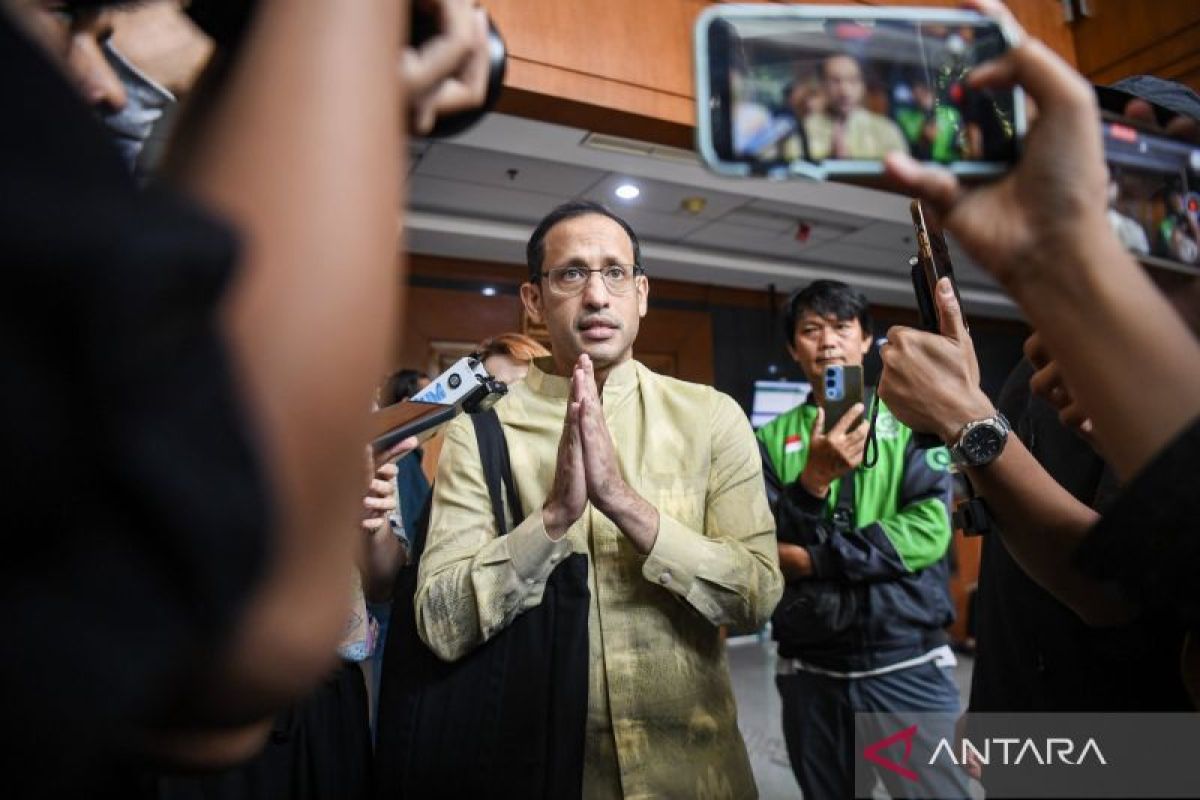
Public Prosecutor Roy Riady from the Attorney General’s Office stated that the defendant, Nadiem Anwar Makarim, not only possessed malicious intent in the alleged Chromebook corruption case but also followed through with a series of unlawful acts.
“This is as the prosecutor has detailed completely and systematically in the indictment,” the prosecutor stated during the hearing for the reading of the replication, or response to the plea, at the Corruption Court of the Central Jakarta District Court on Tuesday.
The prosecutor explained that this applied particularly to Nadiantum’s actions, which clearly violated Presidential Regulation Number 16 of 2018 concerning Goods and Services Procurement.
These actions, according to the prosecutor, involved instructing Hamid Muhammad with the command “Go ahead with Chromebook” and instructing defendants Mulyatsyah and Sri Wahyuningsih through Jurist Tan, stating that the Chromebook procurement should no longer be debated as it was final per Nadiem’s order as minister.
Furthermore, Nadiem is alleged to have directly informed Sri Wahyuningsih and Mulyatsyah after they were inaugurated as officials, ordering that the digital education programme sessions must use the Chrome operating system and that the devices must utilise Chrome Device Management.
Based on the trial facts, the prosecutor stated that Nadiem did not deny these points during his examination in court, demonstrating a strong causal link between the malicious intent and the subsequent unlawful acts.
It was noted that this embodies the principle of actus non facit reum nisi mens sit rea—that an act does not make a person guilty unless their intention is also malicious—aimed at enriching oneself, others, or a corporation.
“Therefore, these acts constitute pure criminal matters, specifically in the form of corruption,” the prosecutor said.
Nadiem is implicated as one of the defendants in the alleged corruption case involving the education digitalisation programme, specifically the procurement of Chromebook laptops and Chrome Device Management (CDM) within the Ministry of Education, Culture, Research, and Technology (Kemendikbudristek) for the 2019–2022 period.
Previously, Nadiem faced a prison sentence demand of 18 years, a fine of Rp1 billion (subsidised by 190 days in prison), and restitution of Rp5.67 trillion (subsidised by 9 years in prison).
In this case, Nadiem is accused of corruption that caused state financial losses amounting to Rp2.18 trillion.
The corruption allegedly involved executing the procurement of information and communication technology-based learning tools, namely Chromebook laptops and CDM for the 2020, 2021, and 2022 fiscal years, in a manner inconsistent with procurement planning and principles.
Specifically, the state losses include Rp1.56 trillion related to the education digitalisation programme at Kemendikbudristek, as well as 44.05 million US dollars (equivalent to approximately Rp621.39 billion) due to the procurement of CDM that was deemed unnecessary and non-beneficial to the programme.
Through these actions, Nadiem is alleged to have received funds amounting to Rp809.59 billion from PT Aplikasi Karya Anak Bangsa (PT AKAB) via PT Gojek Indonesia.
It was noted that a large portion of PT AKAB’s funding originated from a US$786.99 million investment from Google.
This was reflected in Nadiem’s wealth as recorded in the State Officials’ Wealth Report (LHKPN) for 2022, which showed securities valued at Rp5.59 trillion.
For his actions, the former Minister of Education faces criminal charges under Article 2 paragraph (1) or Article 3 in conjunction with Article 18 of Law Number 31 of 1999 on the Eradication of Corruption Crimes, as amended by Law Number 20 of 2001, in conjunction with Article 55 paragraph (1) of the 1st KUHP (Criminal Code).