
Prosecutors: Nadiem Admits to Allegations in Chromebook Corruption Case
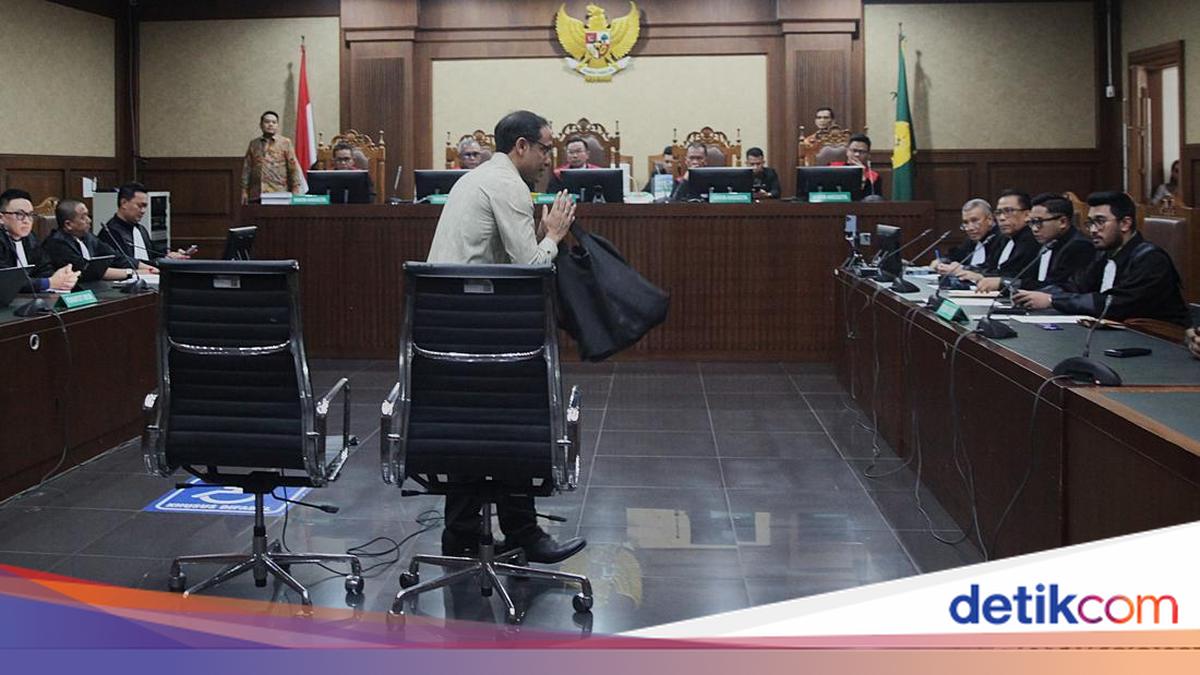
Prosecutors have stated that the former Minister of Education, Culture, Research, and Technology, Nadi겠습니다 Anwar Makarim, admitted to the indictments regarding the alleged corruption in the procurement of Chromebooks and Chrome Device Management (CDM). Prosecutors noted that Nadiem acknowledged the decision to select Chromebooks during a meeting on 6 May 2020.
“What the defendant presented in the rebuttal note we just heard is quite interesting. Interestingly for us, the defendant himself admitted what we have indicted. What was admitted? The decision on the 6th to use Chromebook as a brand, which is prohibited under Presidential Regulation, was admitted by him. Furthermore, he loudly admitted that he approved the draft involving the use of the Chromebook brand,” said prosecutor Corneles Geeb Paulus H following the trial at the Central Jakarta Corruption Court on Tuesday (23/6/2026).
The prosecution stated that the decision contravened Presidential Regulation Number 16 of 2018. Prosecutors refuted Nadiem’s argument that the choice of Chromebook was based on cost-saving measures and policy.
“Regarding cost-savings, did he truly achieve savings? The Chromebook procurement at that time consisted of 15 units. He compared the procurement of 15 Chromebook units costing Rp 100 million per school with the procurement of PCs or computer labs costing Rp 140 million for 22 units. Remember, there is a difference: 15 Chromebook units versus 22 PCs in a lab,” said the prosecutor.
“From the price of Rp 6 million, multiplied by 15, it reaches almost Rp 100 million. Meanwhile, from the price of a PC lab with 22 units multiplied by Rp 6 million, it is almost Rp 140 million,” he added.
The prosecution argued that the procurement involved inflated prices and was actually a waste of resources. They noted that the Chromebook procurement was wasteful because, in addition to the 22 lab units, there were servers. While the PC lab cost Rp 140 million, the 15 Chromebook units cost Rp 100 million. Furthermore, the prosecution claimed that the Chromebooks required Google Cloud services, necessitating annual ministerial budgets of hundreds of billions of rupiah for integration.
The prosecution stated that allegations of corruption regarding Google Cloud procurement are still being handled by the Corruption Eradication Commission (KPK). They asserted that the National Public Procurement Agency (LKPP) never made any claims regarding cost savings.
“We can calculate and prove that there is a contract regarding the procurement of computer lab equipment. We have proven that the procurement of the 15 Chromebooks has a contract. We can compare the prices; if the price is equalised at Rp 6 million, which one is more expensive? Between high specifications at Rp 6 million and low specifications at Rp 6 million, which is more expensive? You can analyse this,” said the prosecutor.
The prosecution also noted that the involvement of the Financial and Development Supervisory Agency (BPKP) in this procurement was never presented in court. They argued there was no legal vacuum during the decision-making process, and that mentioning specific brands is prohibited under existing regulations.
“We analysed it one by one. Was there a legal vacuum in the Chromebook procurement? Was there a legal vacuum when he forced the mention of a brand? After our review and the facts presented in court, there are laws regulating brands. Mentioning specific brands in government goods and services procurement is not permitted,” said the prosecutor.
“The LKPP is the most prudent institution in issuing regulations to ensure government procurement is fair. The norms exist; there was no legal vacuum. Yet, he claimed there was a legal vacuum and that it was a policy. This was not a policy,” he added.
The prosecution believes there was criminal intent and premeditation in this procurement. They highlighted the failure to involve the Commitment Making Officer (KPA) and the Audit Board of Indonesia (BPK) in the meeting on 6 May 2020.
“We believe that the facts presented in court show that state financial losses have occurred. Our facts show the presence of mens rea (criminal intent), malicious intent, and actus reus. Therefore, we believe this was not merely an abuse of authority, but quite the opposite,” he stated.
The prosecution also criticised Nadiem’s narrative. They noted that the Attorney General’s Office investigators are still pursuing Jurist Tan, a former special staffer to Nadiem, who is currently a fugitive.
“Once again, do not be trapped by his narratives, which are quite influential and may even influence the judges. The computer lab procurement was not Windows. PC is not Windows. The choice of operating system is the authority of the Commitment Making Officer (PPK). What was procured was a PC, or the nomenclature was computer laboratory or ICT procurement,” said the prosecutor.
The prosecutor also responded to Nadiem’s praise of Jurist Tan as one of the nation’s best individuals, pointing out her dominant role in every meeting.
“In his narrative, he claimed that Jurist Tan is one of the nation’s best children. You have seen the videos yourselves. Jurist Tan controlled every meeting, often stating that for this procurement, she would coordinate with people from Google. She would say, ‘I will coordinate with Google, we will receive something like 30% CSR from Google.’ All of this has been proven by the facts in court,” the prosecutor added.
Finally, the prosecutor claimed Nadiem provided false information regarding special assistance from the Directorate General of Legal Services (Jamdatun). The prosecution stated that Jamdatun had identified eight findings that needed to be rectified, but these were never addressed.