
Prosecutors in Karo Respond to Amsal Sitepu's Acquittal in Corruption Case
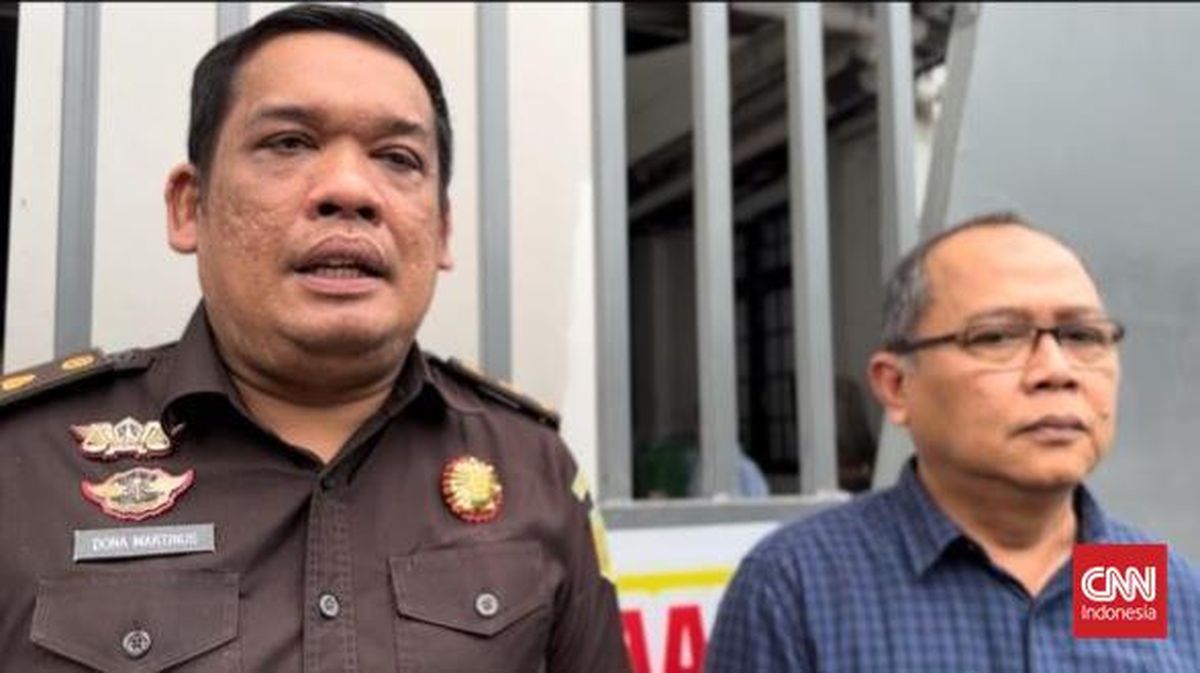
The Karo District Prosecutor’s Office in North Sumatra has stated that it respects the Medan District Court’s panel of judges’ decision to acquit videographer Amsal Christy Sitepu on Wednesday (1/4). Amsal Sitepu was found not guilty of marking up the production of village profile videos in Karo Regency for the 2020-2022 fiscal years by Rp202 million (Rp202,161,980). Consequently, the panel of judges ordered the defendant to be freed from the public prosecutor’s charges and the restoration of his rights, position, honour, and dignity. Regarding the verdict, the public prosecutor has not yet determined any legal steps in response to the acquittal handed down by the panel of judges. The Head of Intelligence at the Karo District Prosecutor’s Office, Dona Martinus, said that they are still considering whether to file a cassation appeal or accept the decision. Additionally, she said she would report to the prosecutorial leadership first before determining further legal steps. “We have followed the entire trial process up to the reading of the verdict by the panel of judges. In principle, we respect that decision. Next, we will think carefully about determining the next steps,” Dona said after the trial at the Medan District Court. On the other hand, Dona also touched on the suspension of detention for Amsal, which was carried out a day before the verdict was read. She stated that the suspension was done from Tanjung Gusta Detention Centre without the accompaniment of the executing prosecutor. However, regarding this matter, they have not provided detailed explanations and will conduct further investigation. “The information from the public prosecutor is indeed like that. Whether this complies with the law’s provisions, we will investigate further,” she said. According to her, investigation is necessary given the updates in the Criminal Procedure Code (KUHAP), so the Karo District Prosecutor’s Office wants to ensure that the steps taken remain in accordance with legal procedures. “Certainly, we will study it thoroughly first before determining our stance,” she said. In the verdict reading session, the panel of judges ordered the defendant to be freed from the public prosecutor’s charges and the restoration of his rights, position, honour, and dignity. According to the panel of judges, there was no material in the defendant’s actions classified as unlawful conduct. “Having adjudicated, stating that the defendant Amsal has not been legally and convincingly proven guilty of the acts as per the primary and subsidiary charges of the public prosecutor,” said the panel of judges chaired by Mohammad Yusafrihardi Girsang in the session at the Medan District Court today. In the previous session, public prosecutor Wira Arizona read out the demand prosecuting the defendant Amsal to two years in prison, a fine of Rp50 million subsidiary to three months’ imprisonment. In addition, Amsal was burdened with repaying state losses of Rp202,161,980. If not paid, it would be replaced with one year in prison. In the previous session, the prosecutor charged Amsal with marking up the project to produce profile videos for 20 villages in Karo Regency, with costs per village reaching Rp30 million. The source of funding for the video production came from each village’s village funds. Meanwhile, during the trial, Amsal denied the charges and emphasised that he was merely a creative worker. The case attracted national attention because during the trial, the public prosecutor stated that several work items in Amsal’s proposal should have a value of zero rupiah or no economic value. House of Representatives Commission III then held a Public Opinion Hearing (RDPU) earlier this week, attended by several parties, including Amsal. There were five conclusion points from the RDPU in Commission III of the House of Representatives, some of which included offering themselves as guarantors for Amsal’s detention suspension. Then, requesting that law enforcement not take counterproductive actions against the creative industry climate in Indonesia due to criminal threats or over-criminalisation, and reminding law enforcement to prioritise substantive justice over merely formalistic legal certainty as regulated in Article 53 paragraph 2 of the New Criminal Code. “Substantively, the creative work of videographers does not have a fixed standard price, so it cannot be said that there was inflation or markup from a standard price. This includes generating ideas or initial creative concepts, editing work, video cutting, and voice filling or dubbing, which are creative works that cannot be unilaterally valued at zero rupiah,” thus an excerpt from Commission III of the House of Representatives’ conclusion points at that time.