
Prosecutors Allege Nadiem Makarim Used 'Fraud' Strategy in White Collar Crime Scheme
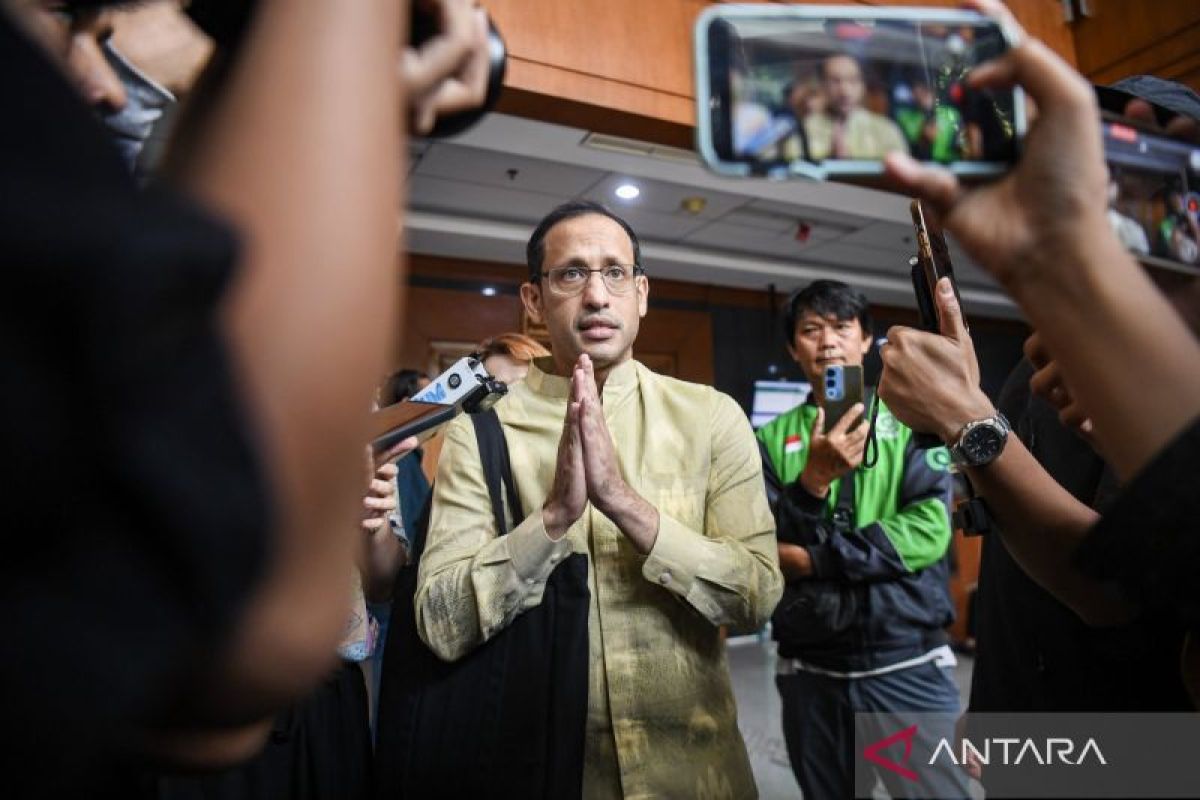
Jakarta (ANTARA) - Public Prosecutor from the Attorney General’s Office, Roy Riady, stated that the white-collar crime scheme was allegedly carried out by defendant Nadiem Anwar Makarim through fraud strategies.
According to the prosecutor, this strategy was implemented after PT Aplikasi Karya Anak Bangsa (PT AKAB) received funds transferred from Google, after which Nadiem allegedly agreed to manipulate records to ensure they did not reflect the actual transactions.
“This is a form of deviation in the shape of fraud in corporate actions, which was one of the defendant’s methods to avoid taxes and disguise the true value of financial transactions,” the prosecutor stated during the rebuttal session at the Corruption Court of the Central Jakarta District Court on Tuesday.
The prosecutor explained that the white-collar crime committed by Nadiem in the alleged Chromebook corruption case involves crimes committed by individuals with high professional competence and social status.
It was noted that white-collar crime is perpetrated by individuals holding high and honourable social positions within their occupations. These crimes are not limited to corruption but also include other types of offences, such as official misconduct, economic crimes, and corporate crimes.
The prosecutor revealed three strategies employed by white-collar criminals. First, fraud, which involves manipulating regulations, falsifying financial reports, misleading tax obligations, engineering regulations, and smuggling laws to make illegal actions appear legal.
“Obfuscation is carried out through various methods, such as creating shell companies and cross-border loci delicti, establishing or splitting subsidiaries, creating fictitious businesses, and using charitable foundations as money laundering vehicles,” the prosecutor said.
The third strategy is ‘image building’. This step is taken so that perpetrators no longer appear criminal, but instead project an image of being virtuous.
It was explained that the instruments used include influencing mass media and, if necessary, purchasing or owning media outlets. As times progress, social media is also used effectively as it directly reaches individuals via their devices.
Furthermore, in the image-building strategy, white-collar criminals are assessed to be actively involved in community or political organisations to enhance their image as moral individuals. “In some cases, they may even buy votes to become public officials. Beyond that, awards and accolades are collected solely to create a positive public image,” the prosecutor added.
The prosecutor argued that if fraud, layering, and image-building are executed effectively, the perpetrator may still be viewed as a ‘framed’ hero even when arrested and prosecuted. Therefore, the prosecutor emphasised that enforcement strategies must target these three specific white-collar crime strategies.
It was stressed that all necessary regulations are currently in place, and what remains is a collective commitment to eradicating corruption, such as the white-collar crimes described.
Nadiem is implicated as a defendant in the alleged corruption case regarding the education digitalisation programme, specifically the procurement of Chromebook laptops and Chrome Device Management (CDM) within the Ministry of Education, Culture, Research, and Technology (Kemendikbudristek) for the 2019–2022 period.
Previously, the Minister of Education, Culture, Research, and Technology for the 2019–2024 period was sentenced to 18 years in prison, a fine of Rp1 billion (subsidised by 190 days in prison), and restitution of Rp5.67 trillion (subsidised by 9 years in prison).
In this case, he was charged with corruption that caused state losses amounting to Rp2.18 trillion.
The corruption allegedly involved the procurement of ICT-based learning tools, namely Chromebook laptops and CDM for the 2020, 2021, and 2022 fiscal years, which did not comply with procurement planning and principles.
The founder of one of the technology companies is alleged to have acted in concert with three other defendants in separate trials, namely Ibrahim Arief (alias Ibam), Mulyatsyah, and Sri Wahyuningsih, as well as Jurist Tan, who is currently a fugitive.
In detail, the state losses include Rp1.56 trillion related to the education digitalisation programme at Kemendikbudristek, as well as 44.05 million US dollars (equivalent to Rp621.39 billion) due to the procurement of unnecessary and non-beneficial CDM for the programme.
Through these actions, Nadiem allegedly received funds amounting to Rp809.59 billion from PT Aplikasi Karya Anak Bangsa (PT AKAB) via PT Gojek Indonesia.
It was noted that a large portion of PT AKAB’s funds originated from a Google investment worth 786.99 million US dollars.
This is reflected in Nadiem’s wealth as recorded in the State Official Wealth Report (LHKPN) for 2022, which shows securities valued at Rp5.59 trillion.
For his actions, the former Minister faces penalties regulated under Article 2 paragraph (1) or Article 3 juncto Article 18 of Law Number 31 of 1999 on the Eradication of Corruption Crimes, as amended by Law Number 20 of 2001, in conjunction with Article 55 paragraph (1) of the 1st KUHP.