
Pros and Cons of the 5 Per Cent Parliamentary Threshold
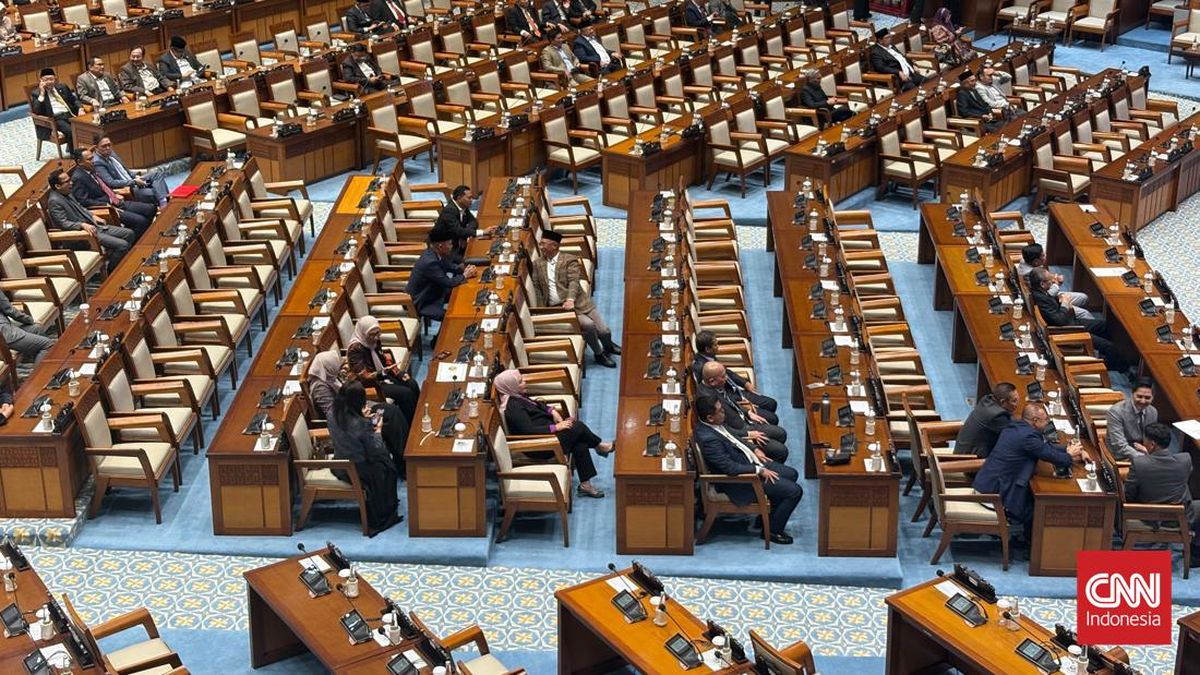
Several government coalition parties are said to have agreed on a parliamentary threshold of 5 per cent. This figure represents an increase from the previous election’s threshold of 4 per cent.
The change to the parliamentary threshold follows a Constitutional Court (MK) ruling in case Number 116/PUU-XXI/2023, delivered on 29 February 2024. The case was brought forward by the Association for Elections and Democracy (Perludem).
In its ruling, the Constitutional Court assessed that the 4 per cent parliamentary threshold, as regulated in Law Number 7 of 2017 concerning Elections, was inconsistent with the principles of popular sovereignty and electoral fairness, and violated the legal certainty guaranteed by the constitution. The Court stated that the existing threshold remains constitutional for the 2024 House of Representatives (DPR) Election, but is conditionally constitutional for the 2029 election and subsequent polls.
On Wednesday (16/9), Gerindra Secretary-General Sugiono stated that the chairpersons of coalition political parties had met and agreed on the 5 per cent figure. “One thing that everyone seems to agree on—though I cannot speak on behalf of other parties—is that Gerindra also agrees with the 5 per cent PT. As mentioned yesterday, Golkar and PKS have also expressed agreement, and I believe that is what we have settled on,” said Sugiono.
PDI-P, which is outside the coalition, also supports the increase. A member of Commission II of the DPR from the PDI-P faction, Komarudin Watubun, assessed that a 5 per cent threshold is ideal to ensure parliamentary work is more effective and efficient. “If we are talking about ideal, it is roughly around that. The 5 per cent figure is quite ideal,” said Komarudin.
However, Perludem researcher Iqbal Cholidin expressed concern that the primary risk of raising the threshold to 5 per cent is the increase in wasted votes. He noted that every time the threshold is raised, more parties fail to qualify.
“Consequently, the votes cast for those parties cannot be counted towards seats, meaning the election results no longer truly reflect the voters’ actual choices,” Iqbal said when contacted on Thursday (17/9).
He explained that in the 2024 Election, with a 4 per cent threshold, approximately 17.3 million votes were wasted from about ten parties that failed to enter the DPR. In the 2019 Election, the figure was around 13.6 million. He argued that if 4 per cent already results in tens of millions of wasted votes, a 5 per cent threshold in 2029 could significantly increase this number.
“This also relates to representation, because if the threshold is too high, the composition of DPR seats will no longer align with the actual support present in society,” he added.
Furthermore, Iqbal argued that the argument claiming a higher threshold reduces the number of parties and makes parliamentary decision-making more effective needs to be tested using more precise metrics. He noted that Perludem typically uses the Effective Number of Parliamentary Parties (ENPP) to measure fragmentation.
ENPP calculates the number of parties by weighing the size of each party’s seats, providing a better picture of parliamentary fragmentation than a simple party count. Iqbal explained that an ENPP value between 3 and 5 indicates moderate fragmentation, while a figure above 5 indicates extreme fragmentation.
Looking at data from the last six elections, Iqbal stated that increasing the threshold has not shown a decrease in ENPP. In 2009, with a 2.5 per cent threshold, the DPR ENPP was 6.1. In 2014, with 3.5 per cent, it rose to 8.2, and in 2019, with 4 per cent, it stood at 7.5. “All three remained in the extreme category despite the continuous increase in the threshold,” he said.
Interestingly, Iqbal noted that in the 1999 Election, which had no threshold at all, the ENPP was at its lowest at 4.7, because seat concentration was driven by other systemic designs. “This shows that the most decisive factor in parliamentary fragmentation is the size of the electoral districts, while the influence of the threshold is actually small,” he said.
Therefore, he believes raising the threshold to 5 per cent is unlikely to significantly change the number of effective parties determining parliamentary dynamics. Meanwhile, the cost is millions of wasted votes. “So, if the goal is to make legislation more streamlined through fewer factions, the threshold is the wrong tool,” he concluded.
A Political Compromise Figure
Iqbal reminded that when challenging the threshold in the Constitutional Court, Perludem questioned the 4 per cent figure because it lacked a clear basis. The Court agreed and ordered that the figure be recalculated before 2029 using measurable calculations that maintain proportionality, aiming to reduce rather than increase wasted votes.
He stated that the process must involve the public and parties currently without seats in the DPR. According to Iqbal, determining the threshold should be based on measurable calculations, not merely political compromise. “If that is the metric, raising the figure to 5 per cent through an agreement between coalition chairpersons clearly moves in the opposite direction. That figure appears to be a political compromise, not the result of proportionality calculations,” he said.
“If 4 per cent already leaves 17 million votes wasted, does it make sense that 5 per cent would reduce it? If the number actually increases, it contradicts the principle of proportionality and certainly poses a problem for representation,” he added.
Meanwhile, the Executive Director of Trias Politika Strategis, Agung Baskoro, assessed that raising the threshold to 5 per cent would benefit medium and large parties as votes could become more consolidated. Conversely, new and non-parliamentary parties will face greater difficulties in securing seats in the DPR. According to Agung, non-parliamentary parties may face the choice of merging or forming fusions.