
Proposed Rp984 Trillion Boost Could Push Ministry Budgets Past Rp2,000 Trillion in 2027
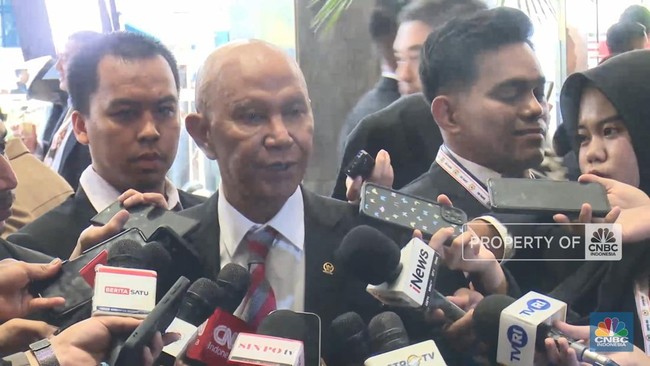
The Budget Committee (Banggar) of the Indonesian House of Representatives (DPR RI) has received a compilation of additional budget requirements for ministries and agencies (K/L) for 2027, submitted through their respective commission partners, ranging from Commission I to XIII.
Chairman of the Budget Committee, Said Abdullah, stated that the total proposed additional expenditure for ministries and agencies for the 2027 fiscal year reaches Rp984 trillion, from a designed ceiling of Rp1,389.94 trillion. With this note, the total budget for ministries and agencies, if agreed upon by the government, will reach Rp2,373.94 trillion next year, much higher than the 2026 target of Rp1,510.5 trillion.
“We are submitting the proposals from various discussions that have been agreed upon between the commissions and their respective partners,” said Said during a working meeting with Finance Minister Purbaya Yudhi Sadewa regarding the preliminary discussions of the 2027 State Budget Draft (RAPBN), at the Parliament Building, Jakarta, on Monday (29/6/2026).
According to Said, the final decision regarding this additional expenditure for ministries and agencies rests entirely with the government, represented by Finance Minister Purbaya Yudhi Sadewa as the State Treasurer.
Said noted that the proposed value for ministry and agency spending for the 202<0xC2>7 fiscal year will be presented directly by the government during the reading of the Financial Note alongside the 2027 State Budget Draft on 16 August 2026.
“We will wait until the 16th after the plenary session. 16 August is when the Financial Note will be presented by the government,” said Said.
During the meeting, Said also revealed the direction of Ministry/Agency Spending Policy for 2027, which has been agreed upon between the DPR and the government, with the following details:
Gradually supporting food sovereignty, starting with rice sovereignty, followed by maize, soybeans, meat, garlic, and sugar, which can be completed in the medium term.
Energy independence to increase oil and gas production capacity, while simultaneously reducing oil and gas consumption through energy transition to electricity and renewable energy.
Education must be inclusive. The teaching and learning process must not be hindered by economic limitations or the provision of facilities and infrastructure.
Reviewing the increase of compulsory education, through a programme to change compulsory education from 9 years to 13 years. This step aims to improve the quality of the national workforce, which is currently 52% dominated by primary and junior high school education levels.
Increasing investment in national research and innovation, which serves as an important bridge to revitalise national industry.
Orchestrating the budget for national research and innovation investment, which involves a pentahelix collaboration between government investment, business actors, academics, and the community, thereby fostering research and innovation investment.
Source: jawawa.id (https://jawawa.id/newsitem/proposed-rp984-trillion-boost-could-push-ministry-budgets-past-rp2-000-trillion-in-2027-1782719454)
Originally published by CNBC Indonesia (https://www.cnbcindonesia.com/news/20260629131637-4-746514/usul-tambah-rp984-t-ke-purbaya-anggaran-k-l-tembus-rp2000-t-di-2027), translated from Indonesian