
Proposed Incentives: The Advantages of Hybrid Cars over Electric Vehicles
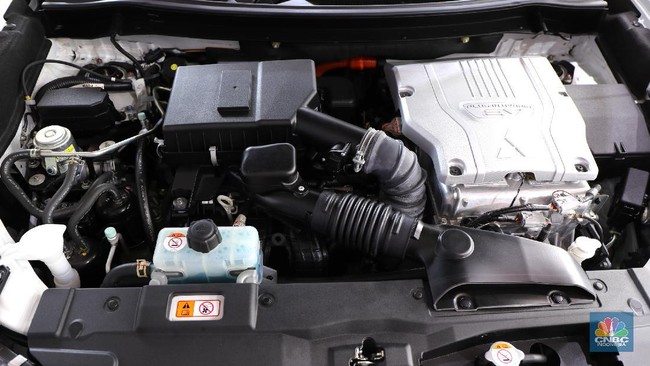
The shift from petrol-powered cars to electric vehicles does not always have to happen directly. With charging infrastructure still limited and consumers having different purchasing power, hybrid cars could serve as a transitional option for Indonesian consumers.
Jongkie Sugiarto, deputy chairman of the Indonesian Automotive Industry Association (Gaikindo), views vehicle electrification as a gradual process. Each technology has its own characteristics, ranging from conventional internal-combustion engine (ICE) vehicles and hybrids to plug-in hybrids, range-extended electric vehicles (REEVs) and battery electric vehicles (BEVs).
“Typically, the next step from an ICE car is a hybrid, followed by a plug-in hybrid, then an REEV, and finally a BEV. That is how it usually goes in every country,” Jongkie told CNBC Indonesia on Monday (26 September 2026).
Infrastructure readiness is one factor shaping consumers’ choices. Pure electric cars are more practical for some people who drive within cities and have adequate access to charging, but longer-distance journeys present different challenges.
Driving range and the availability of charging points are considerations when consumers choose a vehicle. Queues at public electric vehicle charging stations (SPKLUs), particularly on inter-city journeys, can add to travel time and reduce convenience.
“If someone uses their vehicle only in the city, they will usually buy a fully electric car. It is easy to find a charging station, they can charge it and be on their way. But if they sometimes travel out of town, they will buy a hybrid,” Jongkie said.
Advances in battery technology are also changing competition among electrified vehicles. The use of lithium-based batteries, which cost less to produce than some earlier technologies, has helped manufacturers offer electric cars at more affordable prices.
Electric vehicles, once associated with high prices, are now available in lower price brackets. But price is not the only consideration: mobility needs, charging access and travel patterns continue to influence purchasing decisions.
“With today’s technological advances, electric cars have become affordable. You can now buy a fully electric car for Rp200 million or Rp300 million. This is also due to the switch from nickel-based batteries to lithium, which is cheaper to produce,” Jongkie said.
Hybrid vehicles, meanwhile, offer an alternative for consumers who want to save fuel without relying entirely on public charging stations. The technology also gives the automotive industry scope to develop a range of products suited to the domestic market.
These technological differences provide a basis for the government to formulate electrification policies. Incentives for fully electric, hybrid and other vehicles could take account of market readiness, infrastructure and consumers’ purchasing power.
Jongkie said the development of electrified vehicles did not need to depend on a single technology. A wider range of choices could help expand the market while giving consumers the flexibility to select vehicles suited to their needs.
“Hybrids, plug-in hybrids and REEVs can be grouped together under the term hybrid. BEVs are another group, and FCEVs [fuel-cell electric vehicles] are another. So there are really just three groups or segments,” Jongkie said.
Source: jawawa.id (https://jawawa.id/newsitem/proposed-incentives-the-advantages-of-hybrid-cars-over-electric-vehicles-1792997444)
Originally published by CNBC Indonesia (https://www.cnbcindonesia.com/news/20261026112749-4-779421/diusulkan-dapat-insentif-ini-kelebihan-mobil-hybrid-ketimbang-listrik), translated from Indonesian