
Proposal to Relocate Javan Rhinos Draws Criticism
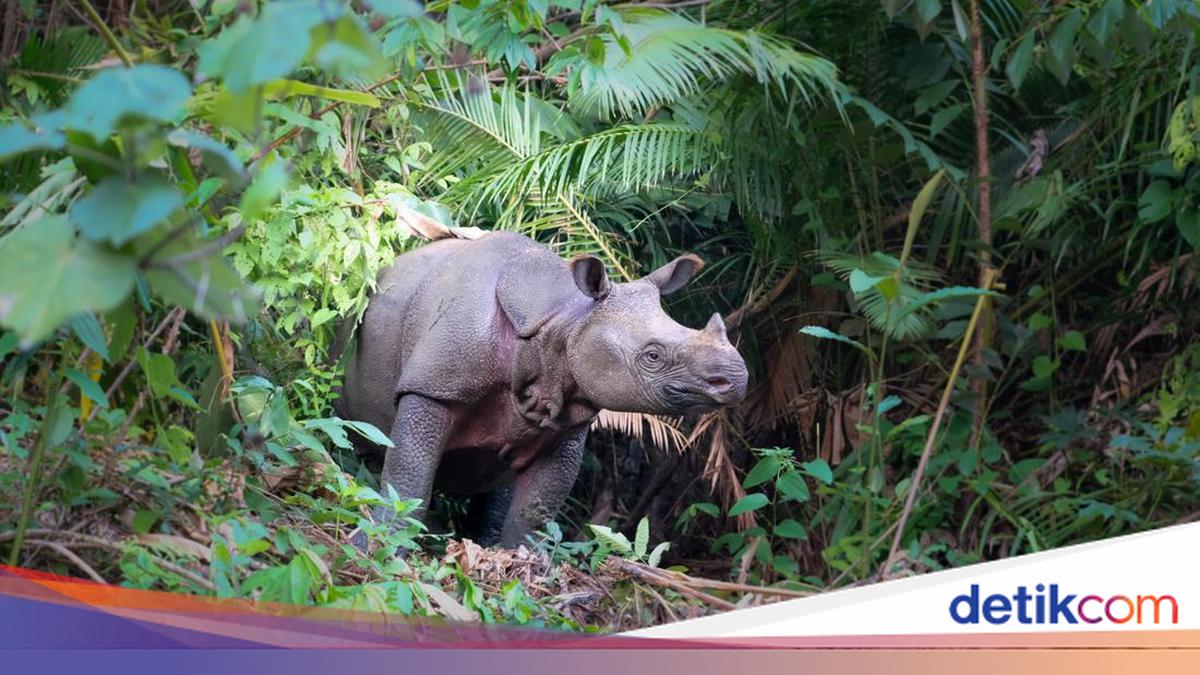
A proposal has emerged to relocate Javan rhinos from Ujung Kulon National Park in Banten to Alas Purwo National Park in East Java, drawing responses from various parties.
As reported by detikcom on Tuesday (17 November 2026), the proposal was raised by Presidential Special Envoy for Climate and Energy Hashim Djojohadikusumo. He said the move was being considered because of the risk of natural disasters such as earthquakes and tsunamis. He also referred to the effects of the Anak Krakatau eruption, which occurred in September.
“There is a Javan rhino sanctuary in Ujung Kulon. There is a new problem with Anak Krakatau. If an earthquake or volcanic eruption causes a tsunami, our Javan rhinos could become extinct,” Hashim said at a COP31 media briefing in Antalya, Turkey, on Thursday (12 November).
“So there is an idea to move a number of Javan rhinos to Alas Purwo. Alas Purwo is at the far eastern end of Java, facing Bali,” he added.
Hashim said the relocation plan would be financed through a conservation funding scheme. He was optimistic that donor organisations and investors would be interested in supporting the project.
Indonesia has 57 national parks that could potentially be developed through funding partnerships, he said, citing the existing cooperation with Norway as a possible model.
Suitability of Alas Purwo yet to be assessed
The Forestry Ministry said it was not yet possible to confirm whether Alas Purwo National Park was suitable as a second habitat for Javan rhinos.
“The proposal still requires scientific study and a comprehensive assessment to establish whether the area is suitable as a habitat capable of supporting the safety and survival of the Javan rhino,” the ministry said in a statement posted on the official Ujung Kulon National Park Instagram account on Sunday (15 November).
Ristianto Pribadi, head of the Forestry Ministry’s Bureau of Public Relations and International Cooperation, said the idea of developing a second habitat for Javan rhinos was not new.
Since the 1980s, several locations—including Mount Honje, an area now forming part of Mount Halimun Salak National Park, and Cikepuh—have been considered as alternative habitats for the species.
The ministry reiterated that protection of the Javan rhino in its natural habitat at Ujung Kulon would continue and be strengthened.
“Strengthening protection of the primary habitat and developing a second habitat are two efforts that need to proceed in tandem,” Ristianto said.
“One thing we must not forget: saving the Javan rhino requires careful planning, a strong scientific basis and a shared commitment. This is not simply about moving animals, but about ensuring the future of this rare species, a source of pride for Indonesia,” he said.
MP says Ujung Kulon is the rhino’s only habitat
Alex Indra Lukman, deputy chairman of House of Representatives Commission IV, responded to the proposal to move Javan rhinos from Ujung Kulon National Park in Banten to Alas Purwo National Park in East Java. He said Ujung Kulon was the species’ only habitat.
“More in-depth research is needed into how this ancient rhino survived the devastating effects of the Krakatau eruption and today’s global warming,” Alex told reporters on Monday (16 November 2026).
“Ujung Kulon National Park is the only home and the last habitat in the world for the survival of the species known by its Latin name, Rhinoceros sondaicus. Floating a proposal to move the habitat of a rare animal without in-depth research will provoke worldwide anger,” he added.
The PDI-P legislator called on the government to suspend discussions of relocating Javan rhinos until scientific studies had been carried out. He said the species’ future habitat must not be left uncertain.
“We are asking the government to suspend the decision-making process on relocation until all scientific studies, ecological risks and funding aspects have been made public,” Alex said.
“Protection of the Javan rhino must not become a reason for creating uncertainty about the future of its habitat,” he added.
Legislators oppose relocation proposal
Daniel Johan, a member of House Commission IV, opposed moving Javan rhinos from their natural habitat in Ujung Kulon to Alas Purwo. He said the plan could threaten the survival of the endangered species.
“From a conservation and habitat-sustainability perspective, many people strongly oppose moving Javan rhinos from their natural habitat in Ujung Kulon to Alas Purwo. The idea is too risky, given that Ujung Kulon is the original home of the one-horned rhino and its population is estimated at only 87–100, while the IUCN classifies it as critically endangered,” Daniel told reporters on Monday (16 November 2026).
He said decisions about conserving the species must be based on thorough research and the precautionary principle. Daniel also pointed to differences between the environments of Ujung Kulon and Alas Purwo.
“To date, the public has not seen an ecological suitability study of Alas Purwo that has been made available scientifically and transparently. No one has ever found traces of one-horned rhinos in Alas Purwo, and threats from animals already there to incoming wildlife such as Javan rhinos could be very dangerous,” he said.
He cited the case of a rhino moved from its natural habitat to the Javan Rhino Study and Conservation Area (JRSCA), which subsequently died.
“It is important to remember that the Javan rhino is very unique, unlike rhinos in Africa. It needs water and wet mud in which to wallow; its skin is not designed to be exposed to sunlight like that of its African relatives,” he said.
Concerns over Alas Purwo’s climate
The PKB central board chairman said conditions in Alas Purwo were relatively dry, hot and open, unlike Ujung Kulon, which is humid, shaded and wet.
“Alas Purwo is very different: it is dry, hot and open. Ujung Kulon is humid, shaded and wet,” he said.
He said the government should listen to public views and suggestions. Pandeglang Deputy Regent Iing Andri Supriadi had also rejected the proposal, he said.
Student organisations, the Alliance of Ujung Kulon Activists and Concerned Citizens, several village heads and local residents had also voiced opposition. Daniel said those rejecting the plan were best placed to understand the risks of moving the rhinos.
“Based on these considerations, we and the community oppose moving Javan rhinos from their natural habitat in Ujung Kulon. Rhinos cannot speak up for their rights, but we can all speak out before it is too late,” he said.
Banten deputy governor objects
Banten Deputy Governor Achmad Dimyati Natakusumah said he objected to the proposal to relocate Javan rhinos from Ujung Kulon National Park. He said he would summon the park’s officials.
“I object. I’ll call the Ujung Kulon National Park authorities,” Dimyati said in Serang, Banten, on Monday (16 November 2026).
He described the Javan rhino as both an asset and an emblem of Banten, and said he did not yet know the details of the situation in Ujung Kulon.
“I object because the rhino is an asset of Banten. Without the rhino, this wouldn’t be Banten, you know. I want to understand what is going on: why is it being moved? Are they unable to manage it, or what?” he said.
He hoped visitors would be able to see rhinos clearly at Ujung Kulon National Park. The animals should not be counted solely through camera footage, he said.
“From the outset, I wanted Ujung Kulon National Park to be a wildlife park where animals can be seen. It shouldn’t just be wilderness where the only way to count rhinos is through cameras. I want everyone to be able to see what is in the national park,” he added.
Source: jawawa.id (https://jawawa.id/newsitem/proposal-to-relocate-javan-rhinos-draws-criticism-1794876747)
Originally published by detikcom (https://news.detik.com/berita/d-8756070/wacana-badak-jawa-dipindah-tuai-sorotan), translated from Indonesian