
Proposal for US Troop Withdrawal from Asia Could Strengthen China's Position
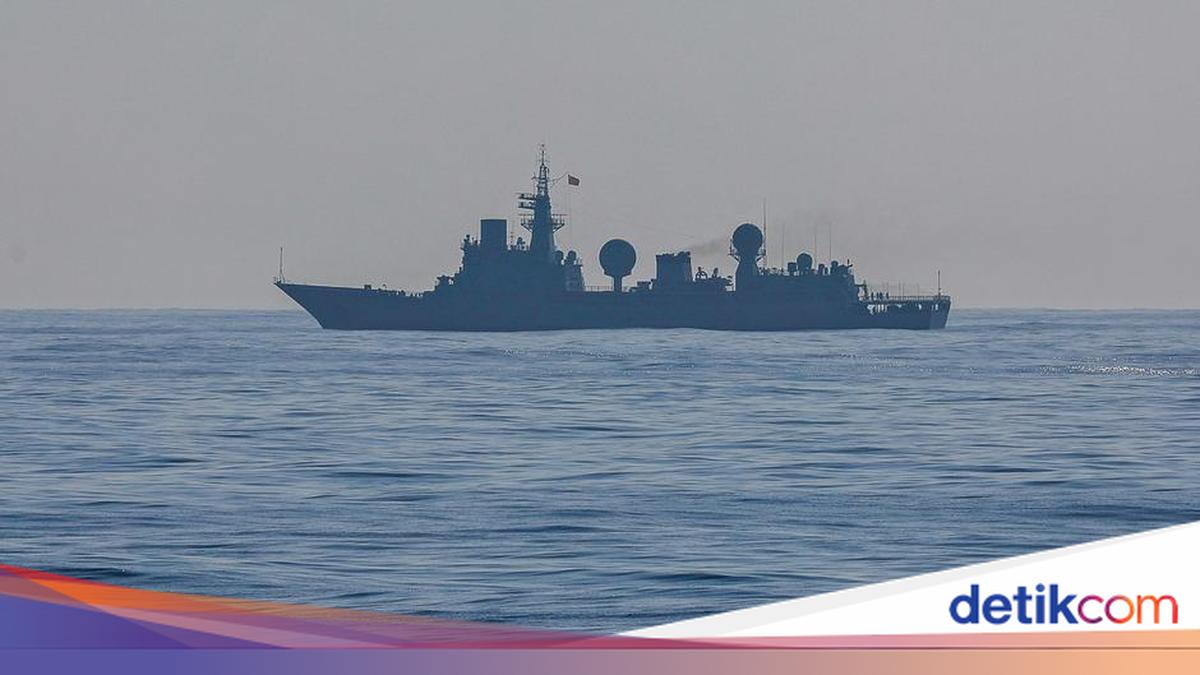
A study from a US foreign policy research institute is calling for a massive withdrawal of US troops from the regions surrounding Japan, Taiwan, and the Philippines, or the Western Pacific. According to analysts, this is triggering concerns among US long-standing allies in the Indo-Pacific.
The report was written by Jennifer Kavanagh, a senior researcher and director of military analysis at the moderately conservative Defense Priorities Foundation. Kavanagh suggests that the US should ‘narrow its defence commitments in the region’ by ending joint defence alliances with South Korea, Japan, Australia, and the US.
According to her, Washington’s priority should be protecting US domestic territory and maintaining access to key economic markets and trade routes. To achieve this, observers suggest the US needs to withdraw troops from the ‘first island chain’ which extends from Okinawa in southern Japan, through Taiwan, to the Philippines.
Kavanagh wrote that US forces should be reduced and relocated to a ‘second island chain’, stretching from eastern Japan to the Northern Mariana Islands in the central Pacific, Guam, Palau, and Papua New Guinea.
The report states that moving troops to areas further from the front line would make their position more defensible and ‘reduce the risk of a major war with China’.
The impact would be most felt in Taiwan
If implemented, the withdrawal would likely have the most significant impact on Taiwan, which Beijing considers part of its territory and must be unified with mainland China.
In her report, Kavanagh noted that the US lacks a formal commitment to assist Taiwan if the territory is attacked by China. She warned that armed conflict ‘would entail enormous costs for the United States, far outweighing any potential benefits’.
‘With such an imbalanced cost-benefit calculation, a change in US commitment to Taiwan appears prudent,’ she stated. ‘The United States should move from strategic ambiguity towards a clear policy of non-intervention in the event of military confrontation regarding Taiwan.’
The nations mentioned in the report have not yet provided official comments on the think tank’s proposal. However, William Yang, a Taiwan-based security analyst from the International Crisis Group, told DW that the report’s conclusions ‘would shock many parties’.
Yang assessed that concerns are growing because the Defense Priorities Foundation is known for its isolationist views on foreign affairs and defence. This means they prioritise domestic interests and withdraw from international affairs. The institute is also said to be close to several senior decision-makers in the White House.
US troop withdrawal deemed ‘highly accommodating to China’
According to Yang, US President Donald Trump has repeatedly threatened to withdraw troops from allied countries in Europe and Asia if his demands for larger payments or other concessions in bilateral relations are not met.
‘This is a step towards an extremely extreme containment agenda and appears to be very accommodating to China,’ said Yang.
Although there is no indication that the White House will adopt the Defense Priorities Foundation’s proposal, Yang said the idea aligns with many isolationist and transactional principles of the current US administration. He added that if the plan receives Trump’s support, the consequences would be equivalent to a ‘political earthquake’.
The Defense Priorities report was published amidst rising regional concerns regarding the resilience of US security commitments in Asia, particularly concerning tensions in Taiwan and the South China Sea.
While Kavanagh believes the risks are not as large as feared, many analysts argue that reduced US support in the region would encourage China to move swiftly to take over Taiwan. Simultaneously, North Korea, which possesses nuclear weapons, could increase its demands against South Korea. This situation also has the potential to trigger a surge in defence spending across the Western Pacific and ultimately undermine regional nuclear non-proliferation efforts.
US potentially losing influence in geopolitical dynamics
Kavanagh’s report actually attempts to mitigate these concerns by concluding that ‘China’s efforts to become a dominant power in the region will not be easy, the threat to United States territory from Asia is relatively limited, and US economic interests are unlikely to face major disruption’.
Garren Mulloy, a professor of international relations at Daito Bunka University and a military affairs expert, described the study as ‘the most mature version of the argument presented for years by Trump and his associates: that US priorities are to maintain its own territory, while the costs of overseas missions are considered unnecessary’.
‘In my view, this perspective only looks at the costs but ignores the benefits,’ said Mulloy. He highlighted several flaws in the proposal. In his view, a US withdrawal would create a vacuum of influence that would likely be filled by China, and even to a more limited extent, Russia. The US would also lose influence in the region’s geopolitical dynamics, including in the formation of international norms, standards, and rules.
‘Is this worth doing in order to save money that Trump will then distribute through tax cuts or political promises ahead of the election?’ asked Mulloy, referring to the president’s promise to provide 5,000 US dollars (approximately Rp88,000) to every adult US citizen if his party wins the mid-term Congressional elections this November.
‘This is an extreme form of short-termism that haunts diplomats around the world,’ he added.