
Proposal for Special Committee on Gibran’s Diploma Begins to Gain Traction in Parliament
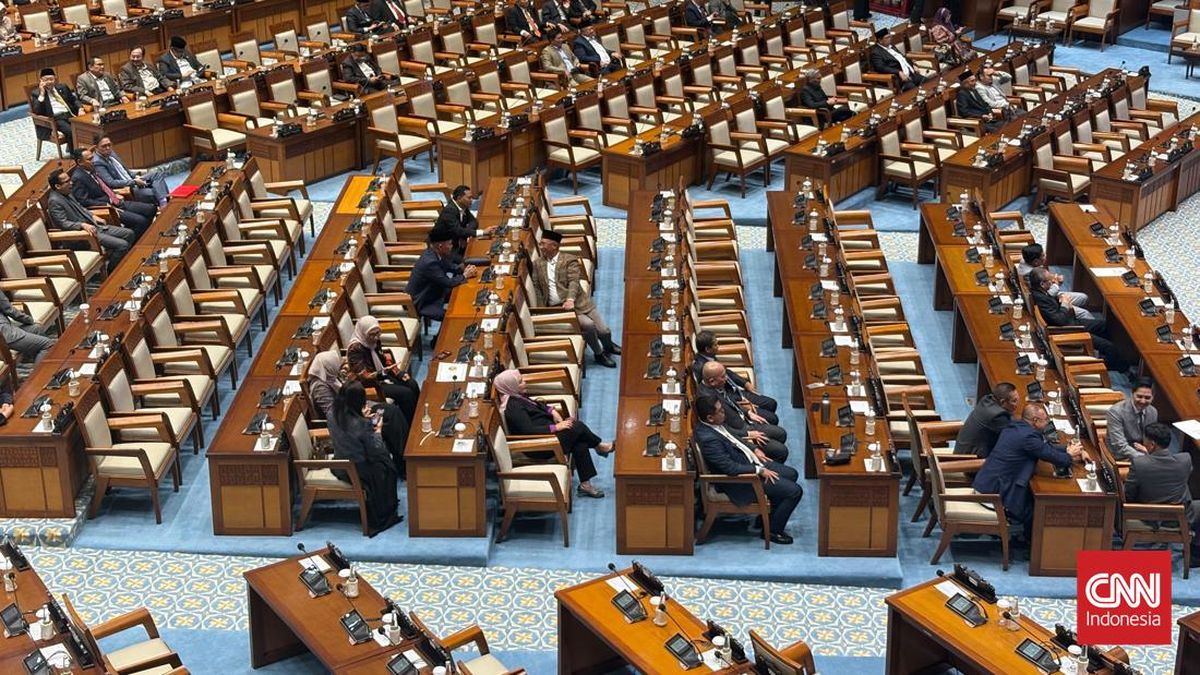
A proposal to establish a special committee to examine the Constitutional Court’s ruling on Gibran Rakabuming’s educational qualifications for his 2024 vice-presidential candidacy is gradually gaining traction in the House of Representatives (DPR).
The proposal was first raised by Eka Widodo, a member of the DPR’s Commission II from the National Awakening Party (PKB). Widodo, who is known as Edo, said the Court’s reasoning in the ruling should be considered by state institutions with the constitutional authority to ensure that presidential and vice-presidential requirements are met.
He said the DPR should respect the ruling while also carrying out its constitutional duties if there were sufficient grounds and evidence to follow up on the matter.
“We must respect the Constitutional Court’s ruling. But the Court’s reasoning must also be read in full. If there are factual issues that need to be established, then the state institutions with the relevant authority must carry out verification objectively, transparently and on the basis of evidence,” Edo said in a written statement on Thursday (8 October).
Edo noted that the 1945 Constitution sets out procedures for cases in which a president or vice-president no longer meets the eligibility requirements.
He said Article 7A of the 1945 Constitution provides for the possibility of dismissing the President and/or Vice-President if they are proven to have committed certain violations or no longer meet the requirements for office.
Article 7B, meanwhile, sets out the dismissal process, including the DPR’s role in expressing an opinion and the Constitutional Court’s authority to examine, hear and decide on that opinion before the process proceeds to the People’s Consultative Assembly (MPR).
In his view, if strong evidence is found and a constitutional issue requires further action, the DPR has oversight instruments and can use the mechanisms provided for in the Constitution.
“One option could be establishing a special committee, if deemed necessary, to conduct a comprehensive investigation,” Edo said.
Ahmad Doli Kurnia, a Commission II member from the Golkar Party, disagreed, saying there was no need for a special committee, an inquiry motion or any other form of investigation in this case.
He said Commission II should simply summon election organisers, namely the General Elections Commission (KPU) and the Elections Supervisory Agency (Bawaslu), to follow up on the issue concerning Gibran’s diploma.
“Commission II should summon the election organisers and ask how the nomination process took place, when the Constitutional Court has now established that the diploma was not there. The KPU, Bawaslu and the others should explain,” Doli said.
Dede Yusuf, deputy chair of Commission II from the Democratic Party, said he had not received instructions from the party leadership on how to respond to the Constitutional Court ruling or the proposal to form a special committee. He said the issue had not been discussed within the party either.
“There have been no instructions on this. We are waiting for guidance from the Democratic Party leadership,” Dede said when contacted on Friday (9 October).
NasDem Party Secretary-General Hermawi Taslim said the party was still examining the Constitutional Court’s ruling on Gibran’s educational requirements. He said the central leadership was seeking input from party officials in the regions.
“We are collecting views from the regional leadership boards, then we will discuss them at the central level,” he said.
Mardani Ali Sera, a Commission II member from the Prosperous Justice Party (PKS), said the Constitutional Court had issued an honest and courageous ruling, making it reasonable for the Court’s reasoning to be examined as a matter of law.
Mardani said he had heard that the ruling was being discussed across party factions in the DPR, but he was not following the details of the process.
“There are many political mechanisms available in the DPR: a special committee, an inquiry motion or various other options. But it seems this is still being discussed, with talks under way,” he said.
Separately, the Indonesian Democratic Party of Struggle (PDI-P) supports forming the special committee. Deddy Yevry Sitorus, a Commission II member from the party, said it would give the DPR a complete picture of the case.
He said this would allow the DPR to summon not only the KPU and Bawaslu, but also the Ministry of Primary and Secondary Education and even the Ministry of Finance.
Deddy added that the House could also summon the schools Gibran attended in Australia and Singapore, which issued certificates of attendance or other documents.
In his view, summoning only the KPU and Bawaslu would not clarify the matter or provide certainty.
“This includes the schools, and, if necessary, the institutions in Singapore and Australia that issued certificates of attendance or other documents. If we summon only the KPU and Bawaslu, we will not obtain a comprehensive account or certainty,” Deddy said when contacted on Friday (9 October).
Source: jawawa.id (https://jawawa.id/newsitem/proposal-for-special-committee-on-gibrans-diploma-begins-to-gain-traction-in-parliament-1791597100)
Originally published by CNN Indonesia (https://www.cnnindonesia.com/nasional/20261009203138-32-1413737/wacana-pansus-ijazah-gibran-mulai-bergulir-di-dpr), translated from Indonesian