
Proposal for Limiting Cash Use and Reforming Election Funding
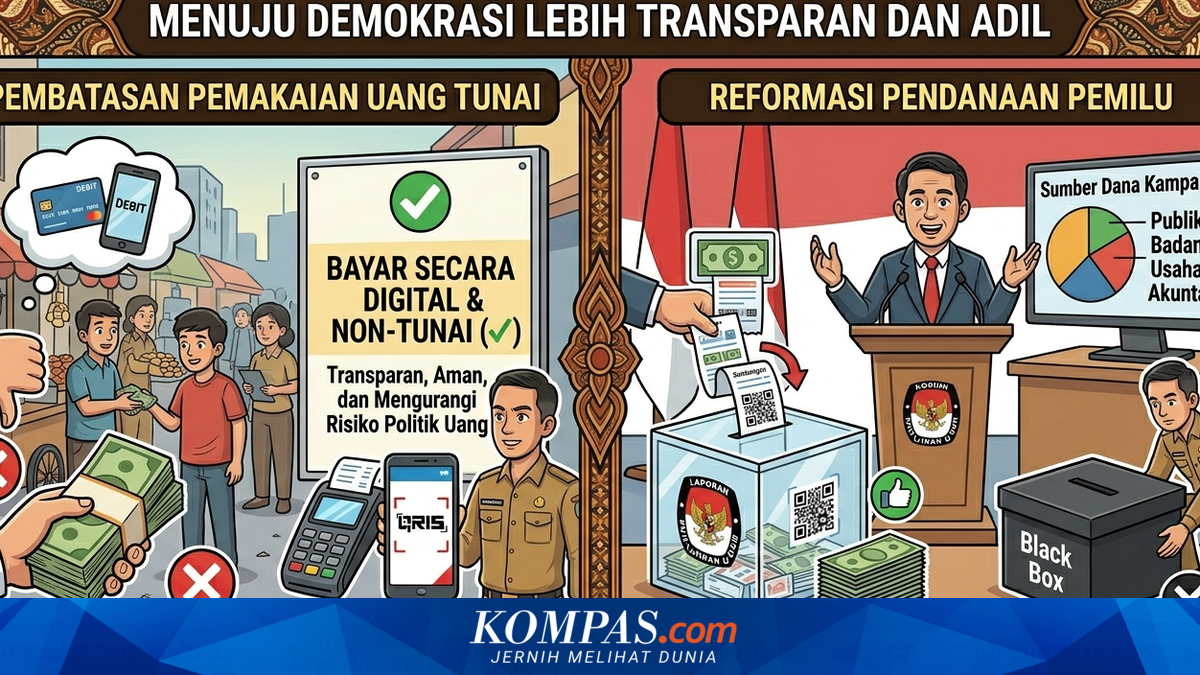
JAKARTA, KOMPAS.com - Professor of Political Science at the University of Indonesia (UI) Lili Romli believes that the Corruption Eradication Commission’s (KPK) proposal to limit the use of cash or banknotes during the general election (election) stages could serve as a reform for funding the democratic festival.
“I think yes, as part of the reform in election funding to make it accountable,” Lili said when contacted by Kompas.com on Sunday (26/4/2026).
“With the limitation, there will be equality in the competition, where visions and programmes will be pitted against each other,” she stressed.
Lili believes this KPK proposal can prevent money politics practices in elections.
The restriction is considered important because money politics practices tend to increase from one election to the next.
She added that if all parties are serious about the issue of money politics, this proposal needs broad support.
“Besides to suppress money politics, it is also to suppress the high cost of elections. The complaint about expensive elections is actually due to money politics practices,” she said.
“Each candidate can spend extravagantly on money politics, so hundreds of millions or even billions come out of the candidates’ pockets,” she added.
On the other hand, Lili assured that limiting cash usage would not hinder campaign activities.
She believes campaign methods can adapt to technological developments, such as through social media, podcasts, or dialogue programmes on television, as well as reducing open campaigns in the form of public gatherings.
KPK spokesperson Budi Prasetyo said the regulation is necessary because cash usage during election stages has so far been dominant.
“This condition is seen to increase the chances of vote buying, or money politics, which has so far been a classic problem in electoral democracy,” Budi said to journalists in Jakarta on Saturday.
“Four groups of sources, namely representatives of parliamentary and non-parliamentary political parties, election organisers, electoral experts or observers, and academics,” he said.