
Proposal for Incentives and Social Assistance for Indonesia’s Middle Class in Deciles 5–6
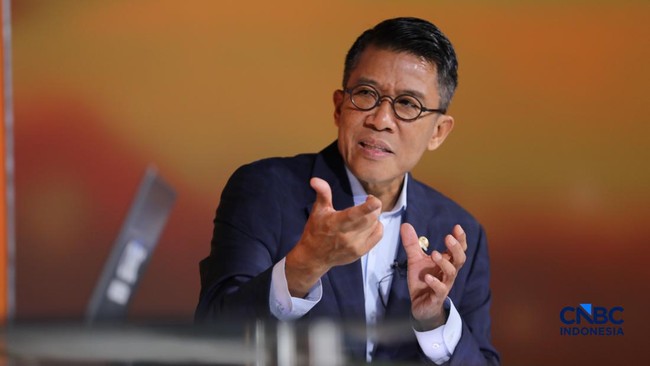
Jakarta, CNBC Indonesia – Mukhamad Misbakhun, chairman of Commission XI of the House of Representatives (DPR), has proposed that the government provide targeted incentives for middle-class households in deciles five and six.
The Golkar Party politician stressed that government social assistance has so far been concentrated on lower-income deciles. Vulnerable households in deciles five and six, meanwhile, have not received social assistance.
Until now, they have benefited only indirectly from fuel and transport subsidies. Misbakhun warned that if the government did not support the middle class, some people could fall into poverty.
“If they are not strengthened, and their vulnerability continues without support, this will become a problem. They will fall into a lower economic class. I have predicted this for a long time in many discussions,” Misbakhun said after the 2026 Bank Indonesia Annual Meeting, as quoted on Saturday (28 November 2026).
Misbakhun said the government needed to find a suitable form of targeted incentives for the middle class. These could include incentives for home ownership loans (KPR) and motor vehicles.
Another possible measure would be an electricity tariff subsidy for households with a 2,200-volt-ampere (VA) connection. At present, subsidised electricity tariffs are available to households with 450-VA and 900-VA connections.
“We need to work out the right format and think it through together, because these vulnerable groups must not be allowed to fall into a lower class. Why? The middle class is the main pillar of our consumption,” he said.
Misbakhun said he had not yet formally discussed the proposal with the government, but indicated that it could be raised at a working meeting between Commission XI and the government.
Earlier, senior economist Raden Pardede, founder of the CReco Research Institute, said Indonesia’s economic growth might still be insufficiently inclusive. The economy grew by 5.47 per cent year on year in the third quarter of 2026.
One sign of the lack of quality in growth, he said, was the downward mobility of middle-class households. Pardede defined the middle class as families earning between Rp11 million and Rp30 million per month. At the same time, the number of people moving towards the middle class has increased. According to data compiled by Pardede, this group now numbers 143 million.
“There are now 143 million people in what is called the group moving towards the middle class. They do not receive social assistance, but neither are they a middle class that can adequately meet its needs,” Pardede said on the Cuap Cuap Cuan programme, as quoted on Wednesday (11 November 2026).
Source: jawawa.id (https://jawawa.id/newsitem/proposal-for-incentives-and-social-assistance-for-indonesias-middle-class-in-deciles-5-6-1795848632)
Originally published by CNBC Indonesia (https://www.cnbcindonesia.com/news/20261128102006-4-789282/ada-usul-kelas-menengah-ri-desil-5-6-dapat-insentif-bansos), translated from Indonesian